
1-805-484-2992
Quotes - Engineering - Sales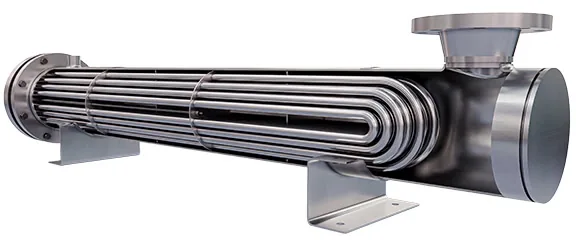
U-Tube Heat Exchanger Applications
Stock, Custom and Replacement Units
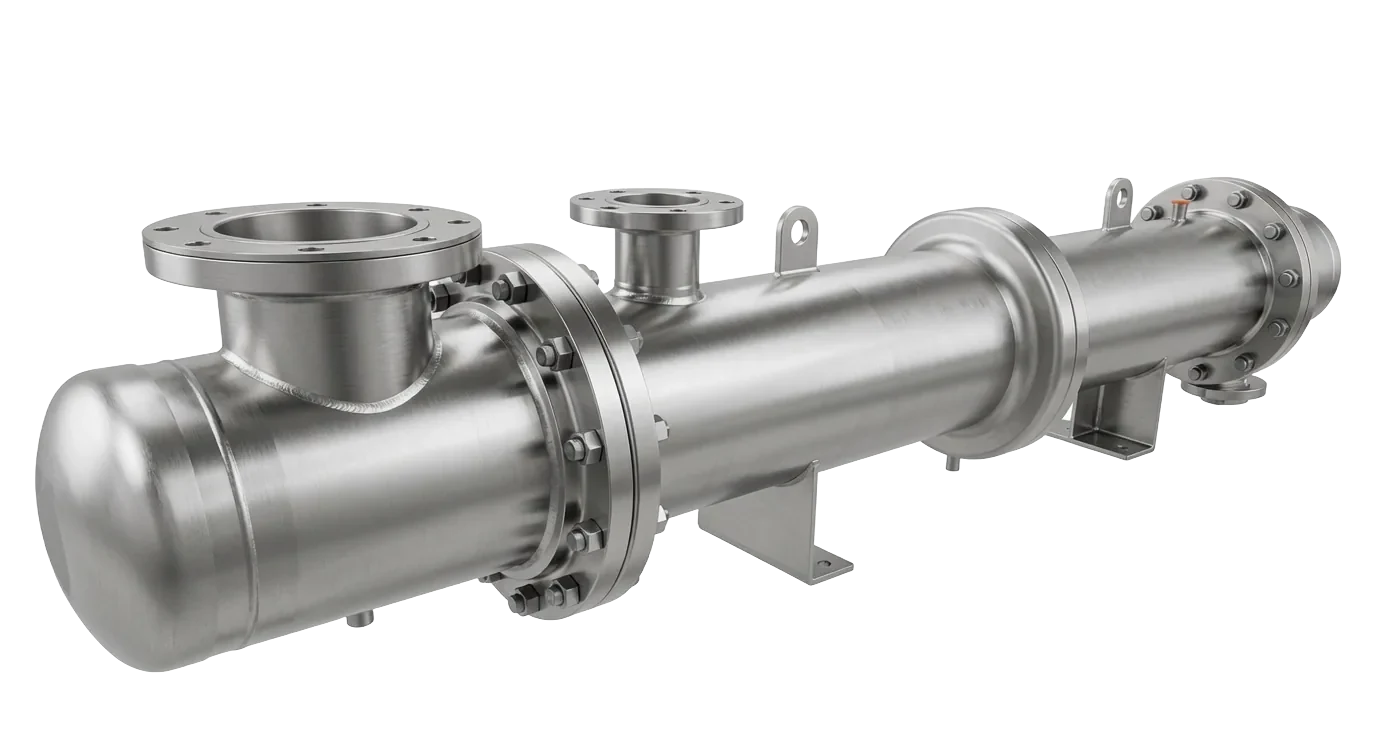
A U-tube exchanger is the cheapest removable-bundle design you can buy, and for a great many duties it is simply the right answer. It is also the wrong answer more often than most suppliers will admit, because the U-bend cannot be brush-cleaned and the pass count can never be odd. We size against the real operating envelope, then recommend the construction the duty needs.
- Sanitary & Clean Steam: Drainable 316L bundles for CIP heating, pasteurizing and product duty, polished to a specified Ra and built for 3-A.
- Pharmaceutical & Bioprocess: ASME BPE construction with double tubesheets where a tube leak cannot be allowed to reach WFI or product.
- Steam & Thermal Fluid: Steam-to-water and hot oil duty, where the differential temperature would need an expansion joint in any fixed tubesheet unit.
- High Pressure & Temperature: Tube-side pressure beyond what a floating head seal will hold, with one fewer pressure-boundary joint at the rear.
- Replacement Bundles: A failed bundle rarely means a failed shell. Bundle-only replacement keeps the original nozzle geometry and cuts both cost and lead time.
- Honest Comparisons: When a floating head or fixed tubesheet unit is the better exchanger for your duty, that is the recommendation you will get.
U-Tube Duties


Why the U-Bend Solves Two Problems at Once
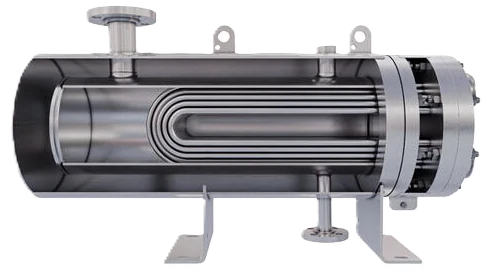
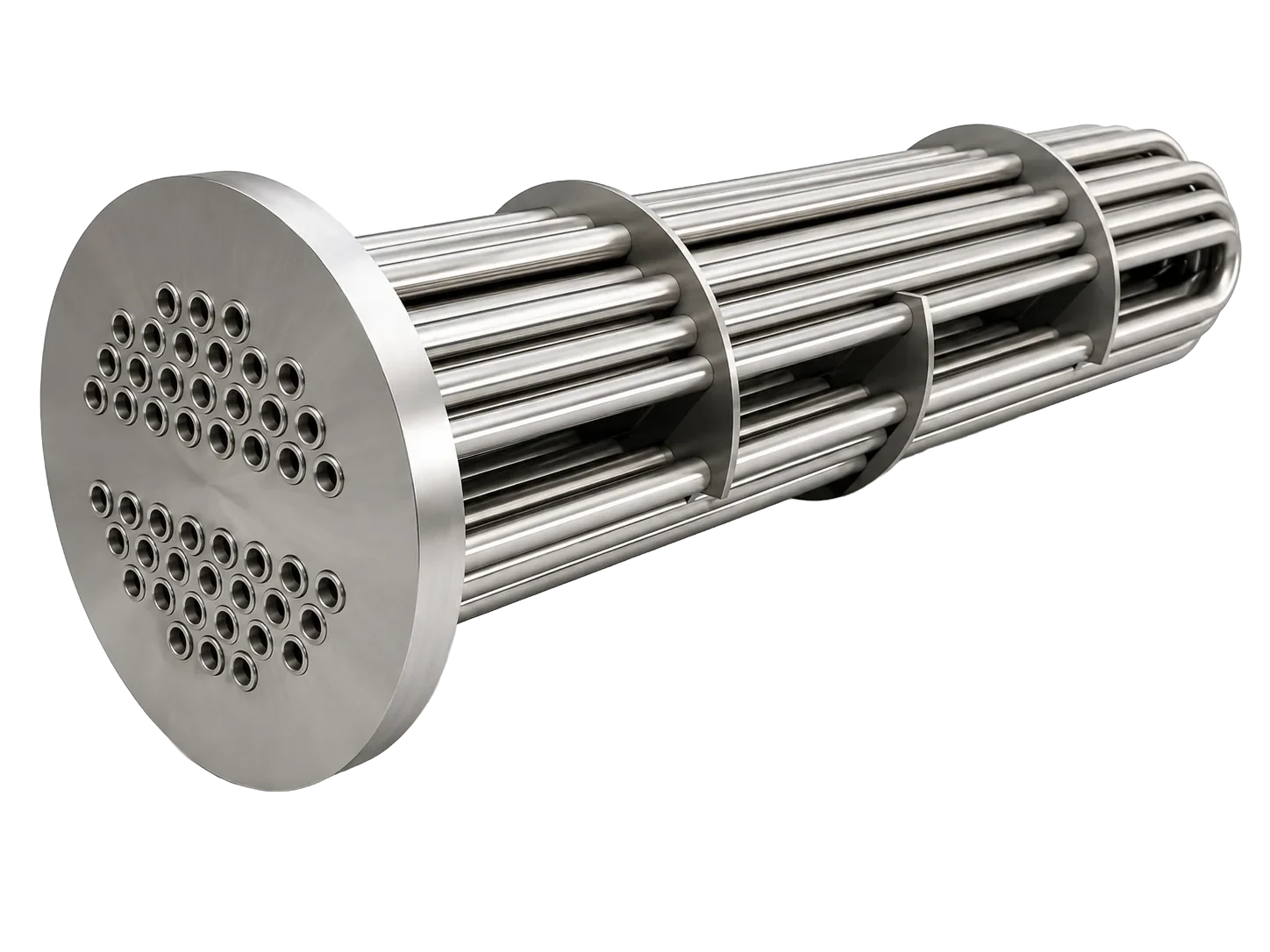
Every tube in a U-bundle is anchored at one end and free at the other. Heat it and the tube grows, the bend radius shifts slightly, and nothing transmits load into the tubesheet or the shell. That single fact removes the expansion joint from the drawing, and with it the most common leak path on a fixed tubesheet exchanger in cycling service.
The second consequence is access. With one tubesheet and no rear head to unbolt, the bundle withdraws from the shell as a single assembly. The shell interior and the outside of every tube can then be inspected, hydroblasted or brushed. On any duty where the fouling fluid is on the shell side, that is the difference between an exchanger you can maintain and one you can only flush and hope.
The trade-off is real and we would rather state it plainly. A brush or lance will not negotiate a 180 degree bend, so tube-side mechanical cleaning is effectively off the table. Put the clean fluid in the tubes of a U-tube unit. And because fluid enters one leg and leaves the other, the pass count is always even, which means a genuine temperature cross needs an F-shell or a different rear head entirely.
We supply U-tube exchangers because they suit an enormous range of duty, not because they suit all of it. Tell us the vapor or liquid rate, the pressures, the coolant you have and the pressure drop you can afford, and we will tell you honestly whether this is the right family of exchanger.
Call and talk it through with an engineer: 1-805-484-2992
Start Here
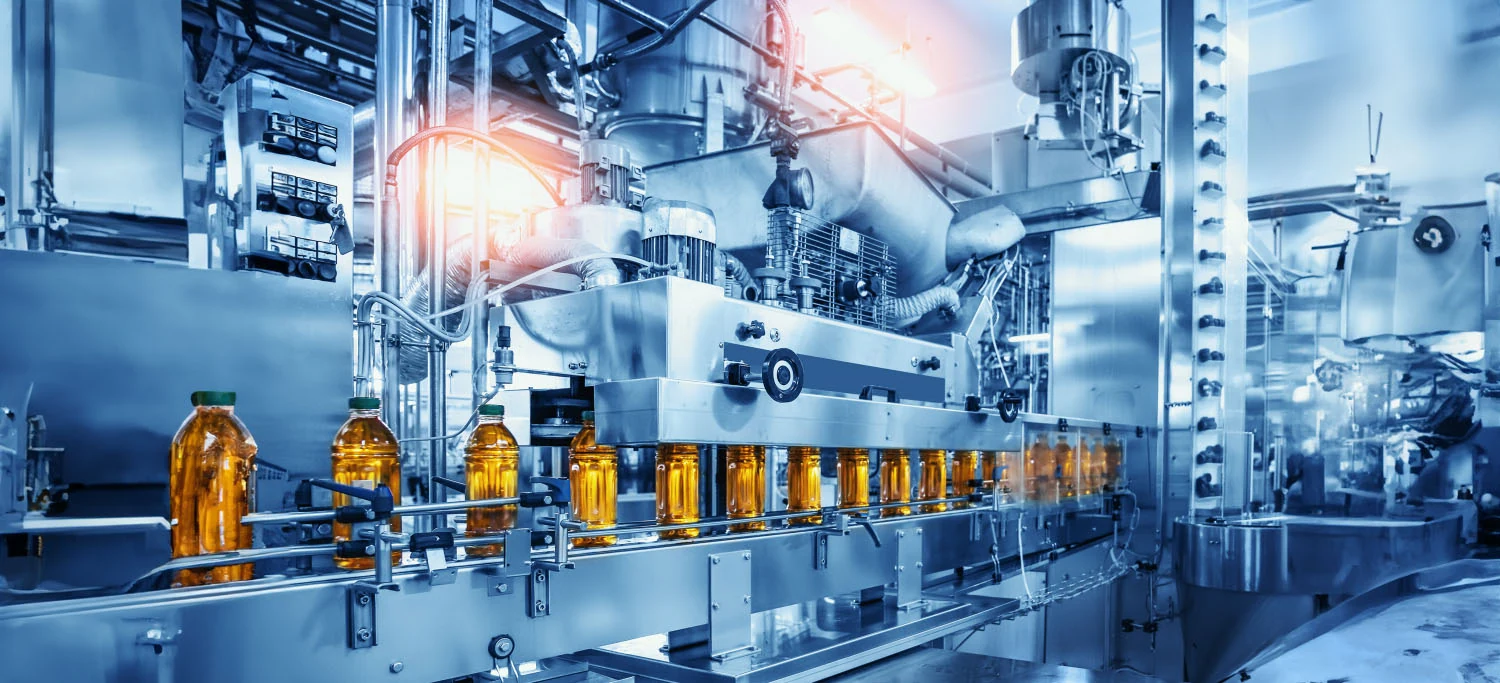
Sanitary & Pharmaceutical
316L polished to spec, tri-clamp connections, drainable geometry, double tubesheets, 3-A and ASME BPE. Built to hit the thermal duty and pass the audit.
SELECT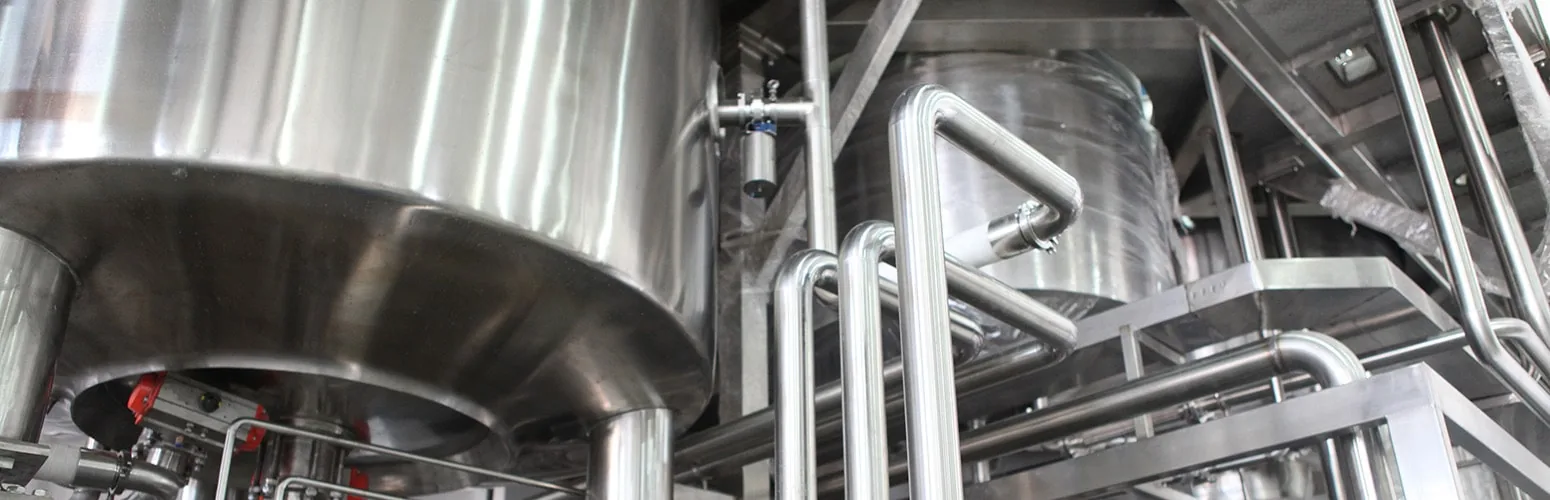
Industrial & Process
Carbon steel through Hastelloy, TEMA R, B or C, ASME code stamped, shells to 48 inches, nozzle loadings and seismic cases applied as specified.
SELECT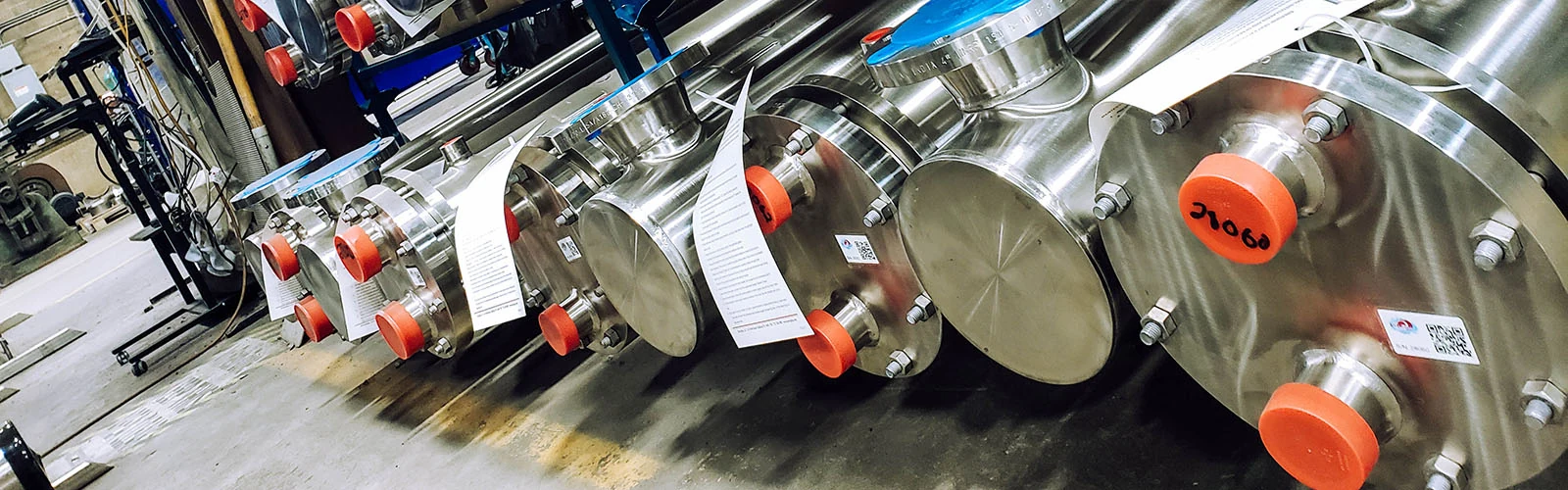
Stock & Replacement
Standard two-pass steam-to-liquid units and stock bundles, plus reverse-engineered replacements built from a nameplate, a U-1 form or a photograph.
SELECT