
1-805-484-2992
Quotes - Engineering - SalesIndustrial U-Tube Heat Exchangers
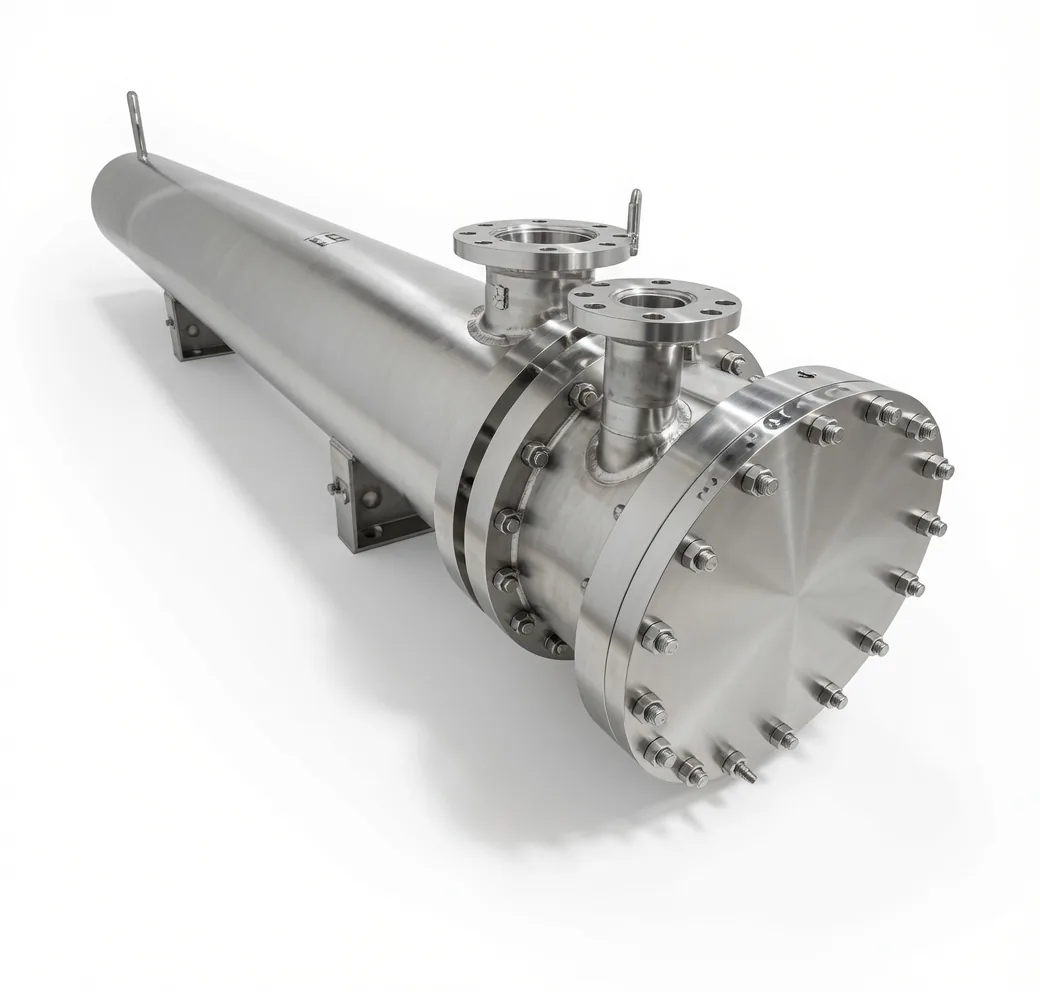
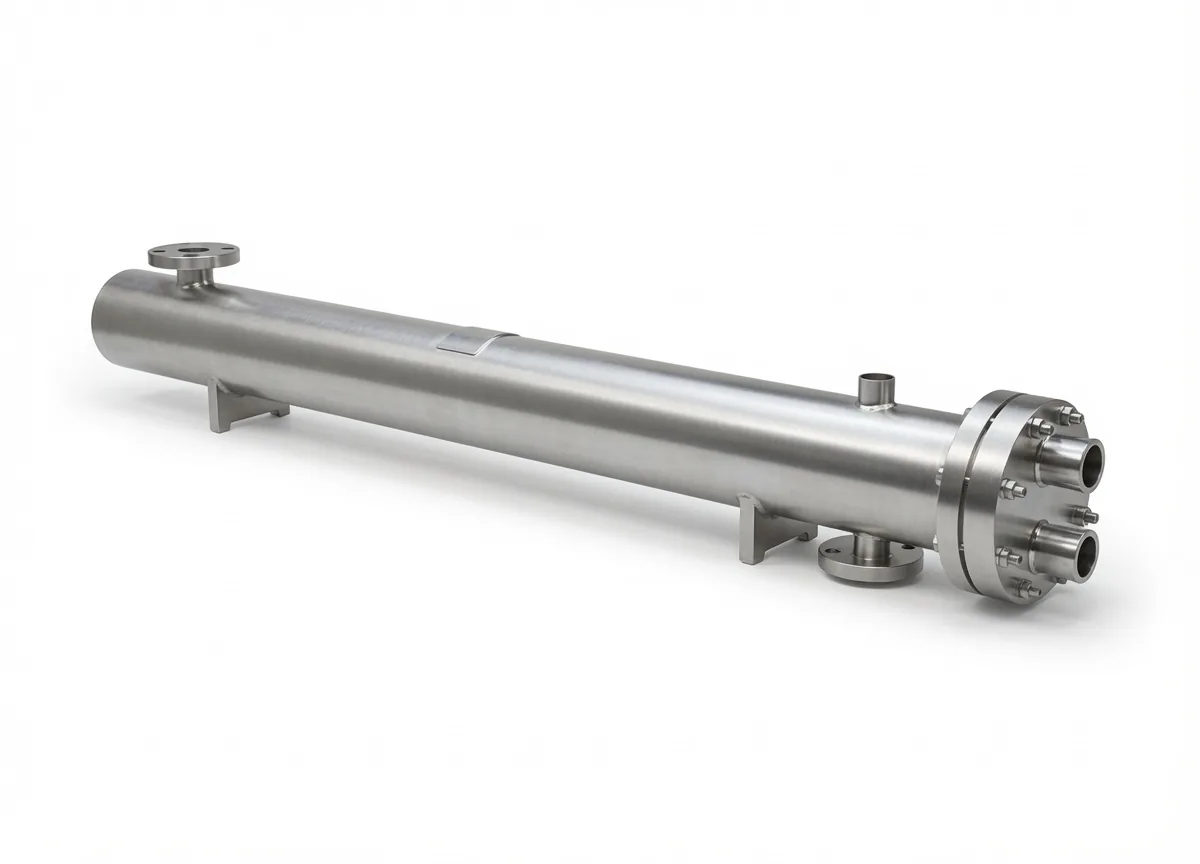
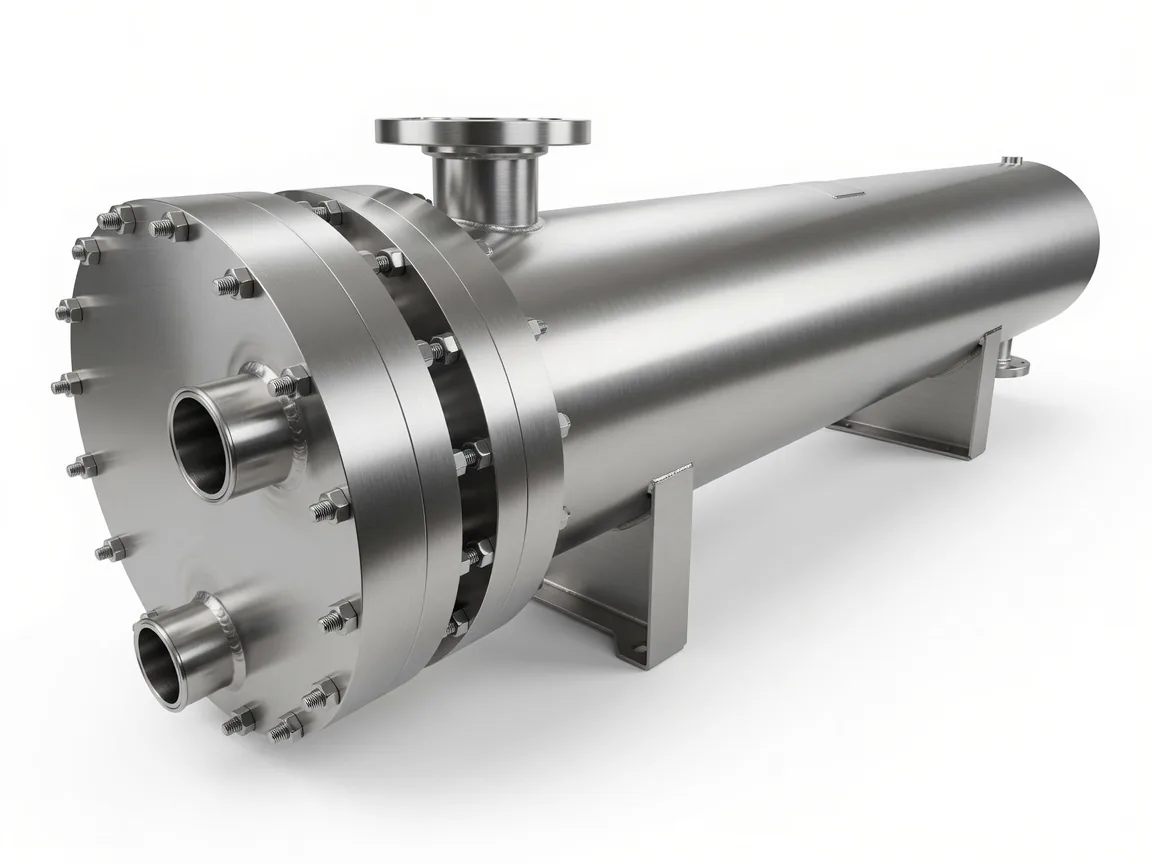
Industrial duty is where the U-tube geometry stops being a convenience and starts being the reason the exchanger survives. Large differential temperatures, thermal cycling and high tube-side pressure all favor a bundle that expands freely.
These are ASME code stamped units built to TEMA R, B or C depending on the severity of the service, in materials from carbon steel through duplex, Alloy 20, Hastelloy and titanium. Shells run to roughly 48 inches, above which a removable bundle becomes a handling problem rather than a maintenance feature. Nozzle loadings, seismic cases and site-specific requirements are applied as specified rather than assumed.
- Free thermal expansion. No expansion joint, no floating-head seal. Each tube grows independently, which is why U-tube units dominate steam and hot oil service.
- Removable bundle. The shell side can be hydroblasted and inspected. On fouling shell-side duty this is the difference between maintainable and disposable.
- High pressure capability. One fewer pressure-boundary joint at the rear than a floating head, which is why U-tube wins as tube-side pressure climbs.
- Broad alloy range. Carbon steel, 304L and 316L, duplex, Alloy 20, Monel, Hastelloy, AL-6XN and titanium, selected against the film chemistry rather than the bulk.
- TEMA class to suit. Class R for severe refinery service, B for chemical process, C for general commercial. The class sets construction rigor, not geometry.
- Practical maintenance. Davit arms, inspection ports, saddle supports and lifting lugs specified so the unit can actually be serviced where it sits.
- Removable bundle
- Free thermal expansion
- ASME code available
- Removable bundle
- Free thermal expansion
- ASME code available
- Removable bundle
- Free thermal expansion
- ASME code available
Industrial U-Tube Heat Exchangers
Where U-Tube Beats the Alternatives Industrially
Three conditions push a selection toward U-tube construction, and industrial duty produces all three regularly. A large or cycling temperature difference between shell and tubes, which a fixed tubesheet unit can only handle with an expansion joint. A fouling shell-side stream that needs mechanical cleaning. And high tube-side pressure, where the absence of a rear pressure-boundary joint is worth real money.
The condition that rules it out is a fouling tube-side stream, because the bend cannot be rodded. When we see that combination we will recommend a floating head or a fixed tubesheet unit instead, even though it is not what this site sells.



Sizing Against the Real Envelope
Industrial exchangers fail on the conditions nobody wrote down: startup transients, upset cases, seasonal cooling water temperature, and the turndown that happens when the plant runs at sixty percent for a year.
The design point is the easy part. Tell us the range, the fouling history of the streams, and what happens during a trip, and the resulting exchanger will be sized for the plant you actually operate.
Industrial U-Tube Heat Exchangers

U-TUBE • CONSTRUCTION
Stock & Custom Units
Shelf units that ship in days, or an engineered build.
+ Learn MoreIndustrial Service Answers
The high-pressure stream, the corrosive stream, or the clean stream, in that order of priority when they conflict. Tube-side pressure is contained by small-diameter tube wall and a single tubesheet, while shell-side pressure has to be carried by the shell plate and every flange on it, so high pressure in the tubes keeps wall thickness and cost down. Corrosive fluid in the tubes limits the alloy to the bundle rather than the whole vessel. Clean fluid in the tubes leaves the shell side, which the removable bundle makes cleanable, for the stream that fouls.
TEMA sets 1/8 inch on carbon steel pressure parts for Class R and 1/16 inch for Classes B and C, with none on tubes or on alloy parts unless you ask for it. The allowance is added to the calculated thickness of shell, heads, tubesheet and nozzles, so a Class R allowance on a large shell is a real weight and cost item. Tubes get no allowance because they are selected by wall gauge directly. Specify the allowance against the corrosion rate you expect over the design life rather than defaulting to the heaviest class.
Yes: mechanical shell-side cleaning needs square or rotated square pitch so a lance passes between tube rows, while triangular pitch packs more tubes into the same shell but closes the lanes. TEMA calls for square pitch wherever the shell side is to be cleaned mechanically. The price of square pitch is a lower tube count per shell diameter, which on a fouling duty is recovered the first time the bundle is cleaned in a day rather than replaced. Decide the pitch at inquiry, because it fixes the tubesheet drilling and the baffle pattern.
For a single exchanger that stops the plant when it is out, yes, and the time to order it is with the original unit. A spare bundle built from the same drawings fits the shell without a site survey, and the plugged or corroded bundle comes out while the spare goes in during the same outage. The spare also settles the alloy upgrade decision in advance rather than under outage pressure.
Then a U-tube bundle is only half the answer, and the honest recommendation may be a different exchanger type. The shell side can be hydroblasted with the bundle out, but the tube side can only be cleaned chemically because nothing mechanical passes the bend. If the tube-side fouling is soft and responds to circulation cleaning, the U-tube still works with the heavier fouler on the shell side. If both streams deposit hard scale, a straight-tube unit that can be rodded on both sides is the better machine, and HeatX will say so at inquiry rather than sell a bundle that needs replacing early.