
1-805-484-2992
Quotes - Engineering - SalesDEU High-Pressure U-Tube Exchangers
Special High-Pressure Closure
When tube-side pressure outgrows a bolted flange, the front head stops being a cover and becomes a forged closure. That is the D head, and a U-tube bundle behind it gives you the fewest sealed joints available at pressure.
A D-type front head uses a forged, integral or specially designed closure rather than a conventional bolted flange. It exists because flange weight and bolt loading rise disproportionately with pressure and diameter, to the point where a standard head becomes impractical.
Why pair it with a U-tube. A U-tube bundle has no rear pressure-boundary joint at all. Combining the highest-integrity front closure with the rear head that has no joint gives the minimum number of high-pressure seals in a removable-bundle exchanger.
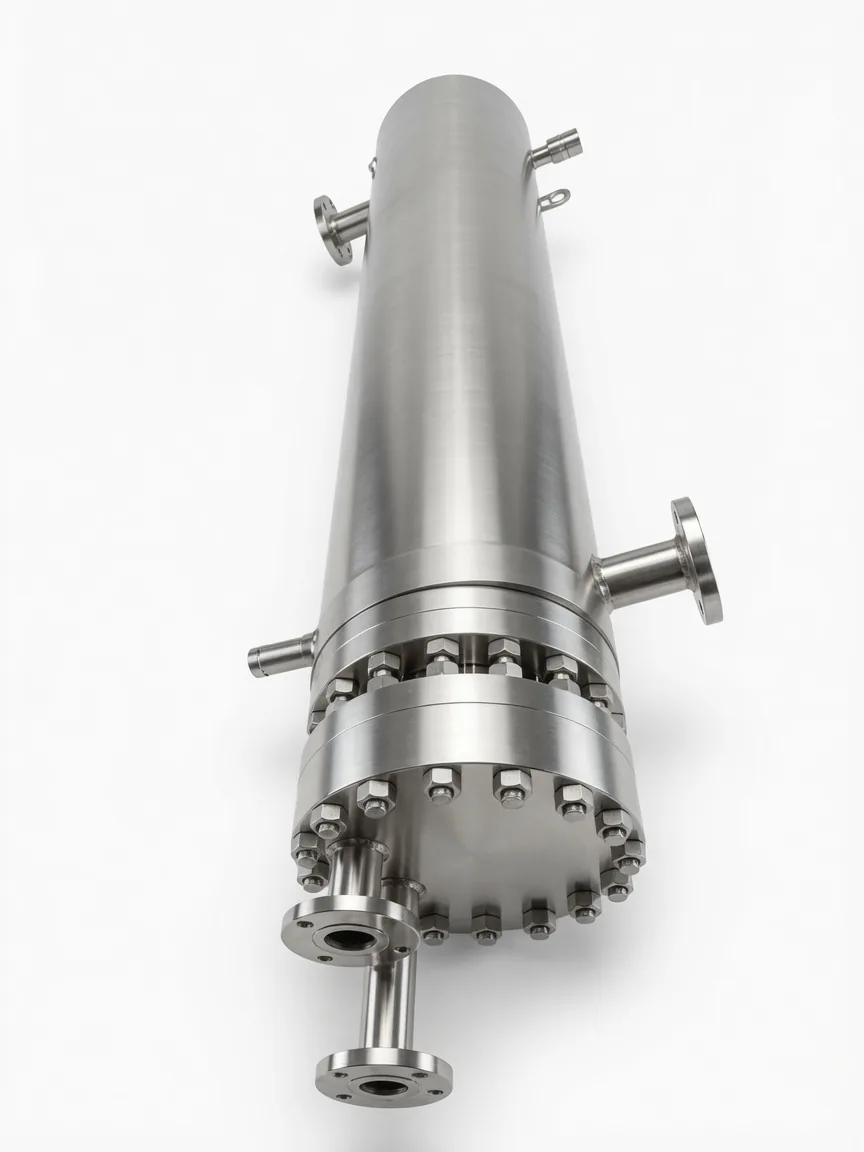
Typical Construction
- Front head: D - special high-pressure closure
- Shell: E - single pass
- Rear head: U - U-tube bundle, no rear joint
- Pressure range: Into the thousands of psi, service dependent
- Tubesheet: Thickness driven by differential pressure and diameter
- Tube joints: Frequently strength welded
- Examination: Increased radiographic or ultrasonic coverage
- Typical duty: Feedwater heaters, high-pressure gas cooling, hydroprocessing
- Materials: Carbon and low alloy steels, stainless, higher alloys
- Codes: ASME Section VIII Division 1 or 2; API 660 where specified
A front head closed by a forged, integral or special closure instead of a conventional bolted flange, used when tube-side pressure outgrows what flange weight and bolt loading can carry.
DEU High-Pressure U-Tube Exchangers
Typical service. High-pressure feedwater heaters in power generation, high-pressure gas coolers, hydrogen and hydrocracker service, and any duty where tube-side pressure runs into the thousands of psi.
What comes with it. Thick tubesheets, heavier examination coverage, strength-welded tube joints in many cases, and longer lead times driven by forging availability rather than shop capacity.
Lead Time Is Driven by Material
On DEU work the schedule is usually set by forging and heavy plate availability rather than by the fabrication itself. Thick tubesheets and forged closures are long-lead items and they are not held in stock in useful sizes.
Start the conversation early. A design that could be simplified to a bolted head at a slightly lower design pressure is worth identifying before the forging is ordered, not after.
High-Pressure Closure Questions
Three forms are common: a threaded breech-lock plug, a shear-key ring that locks a cover inside the channel barrel, and a bolted cover with a thin welded diaphragm as the pressure seal. All three move the pressure load off a bolted flange and into the forged barrel, which is why bolt count and gasket area stop growing with pressure. Each opens differently, and the diaphragm type has a seal weld that must be cut and remade at every opening. Agree on the closure type before the drawing is approved, because it sets the tools, the lifting gear and the outage time for the life of the unit.
No. The TEMA tubesheet formula makes thickness proportional to diameter times the square root of pressure over allowable stress, so doubling pressure adds about 41 percent while doubling diameter doubles it. Diameter, not pressure, is therefore the lever to pull when a tubesheet forging is on the critical path: a narrower, longer bundle at the same surface takes a thinner and more readily available forging. A thinner tubesheet also shortens the tube hole, which makes the expanded or welded joint easier to make and inspect.
Often, yes. Division 2 permits higher allowable stresses than Division 1 in exchange for design-by-analysis, tighter material control and fuller examination, and the thickness saving on a forged closure and a thick tubesheet can pay for the extra engineering. The gain is largest where sections are thickest, which is exactly where a D head lives. In small diameters Division 1 stays simpler and cheaper. HeatX can run the comparison on the actual duty before the forging is ordered.
Because a tube carries pressure in a wall sized by its own small diameter, while the shell has to carry the same pressure across the full shell diameter. Hoop stress is pressure times diameter over twice the wall, so a tube with one-twentieth the diameter of the shell needs one-twentieth the wall for the same stress. Put the high-pressure stream in the tubes and the D closure and tubesheet handle it while the shell stays an ordinary vessel. Reverse it and the shell becomes the forging, the shell flange at the tubesheet becomes the problem joint, and the removable-bundle advantage is spent on a closure nobody wanted to pay for.
Related
CONFIGURATION • TEMA
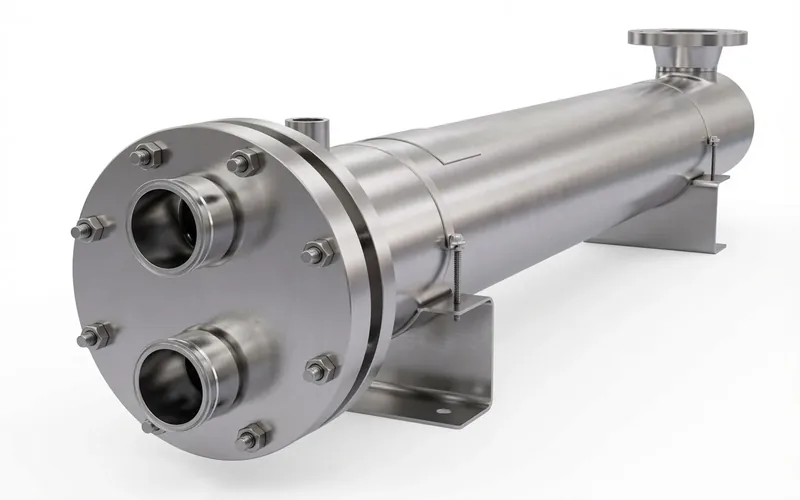
BEU Heat Exchangers
The least expensive removable-bundle exchanger.
+ Learn More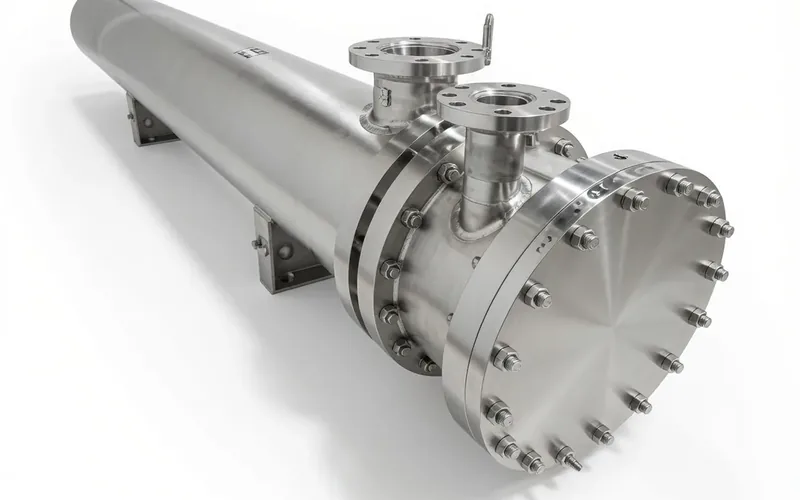
CONFIGURATION • TEMA
AEU Heat Exchangers
A removable cover, so the tube side opens in place.
+ Learn More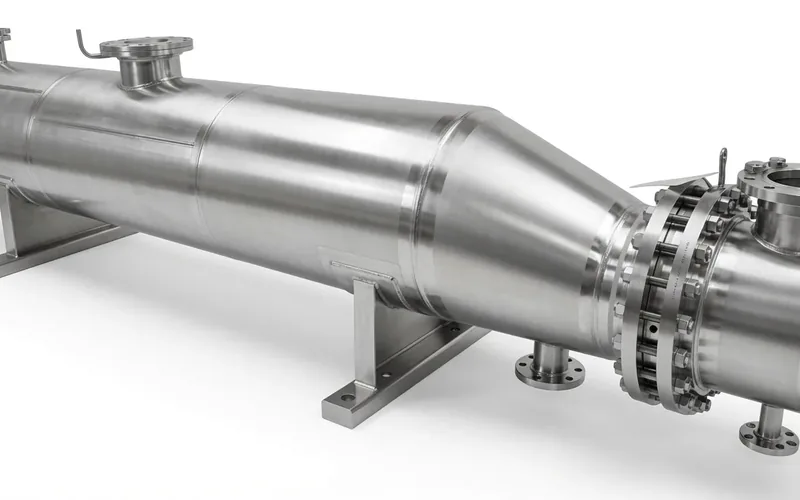
CONFIGURATION • TEMA
BKU Kettle Reboilers
Kettle reboilers and vaporizers on a U-bundle.
+ Learn More