
1-805-484-2992
Quotes - Engineering - SalesStock and Custom U-Tube Heat Exchangers
Two ways to buy the same duty. A shelf unit in a standard size that ships almost immediately, or an engineered build rated against the conditions you actually have. Most projects are better served by one or the other, rarely by both.
Standard two-pass steam-to-liquid U-tube exchangers cover an enormous amount of sanitary and general utility duty, and because they sit on a shelf they solve the problem that matters most during a shutdown: time. Custom builds exist for everything else — unusual alloys, awkward geometry, high pressure, tight approach temperatures, and any duty where the operating envelope is wider than a catalog unit was designed for.
- Shelf availability. Standard sanitary steam-to-liquid units in common shell sizes, ASME hydro-tested and code stamped, frequently shipping the next business day.
- Standard sizing. Two-pass U-tube construction across a range of shell diameters and lengths, in 304L and 316L with tri-clamp process connections.
- Thermal check first. We will run your conditions through the rating software before you buy, so a stock unit is confirmed rather than hoped for.
- Engineered to order. Shells to roughly 48 inches, alloys through Hastelloy and titanium, design pressures into the thousands of psi.
- Applied site conditions. Client nozzle loadings, seismic cases, wind loading and third-party inspection applied where the site requires them.
- Accessories specified in. Sight glasses, vacuum breakers, insulation jackets, annular distributors, davit arms and saddle supports designed in rather than bolted on.
- Removable bundle
- Free thermal expansion
- ASME code available
- Removable bundle
- Free thermal expansion
- ASME code available
- Removable bundle
- Free thermal expansion
- ASME code available
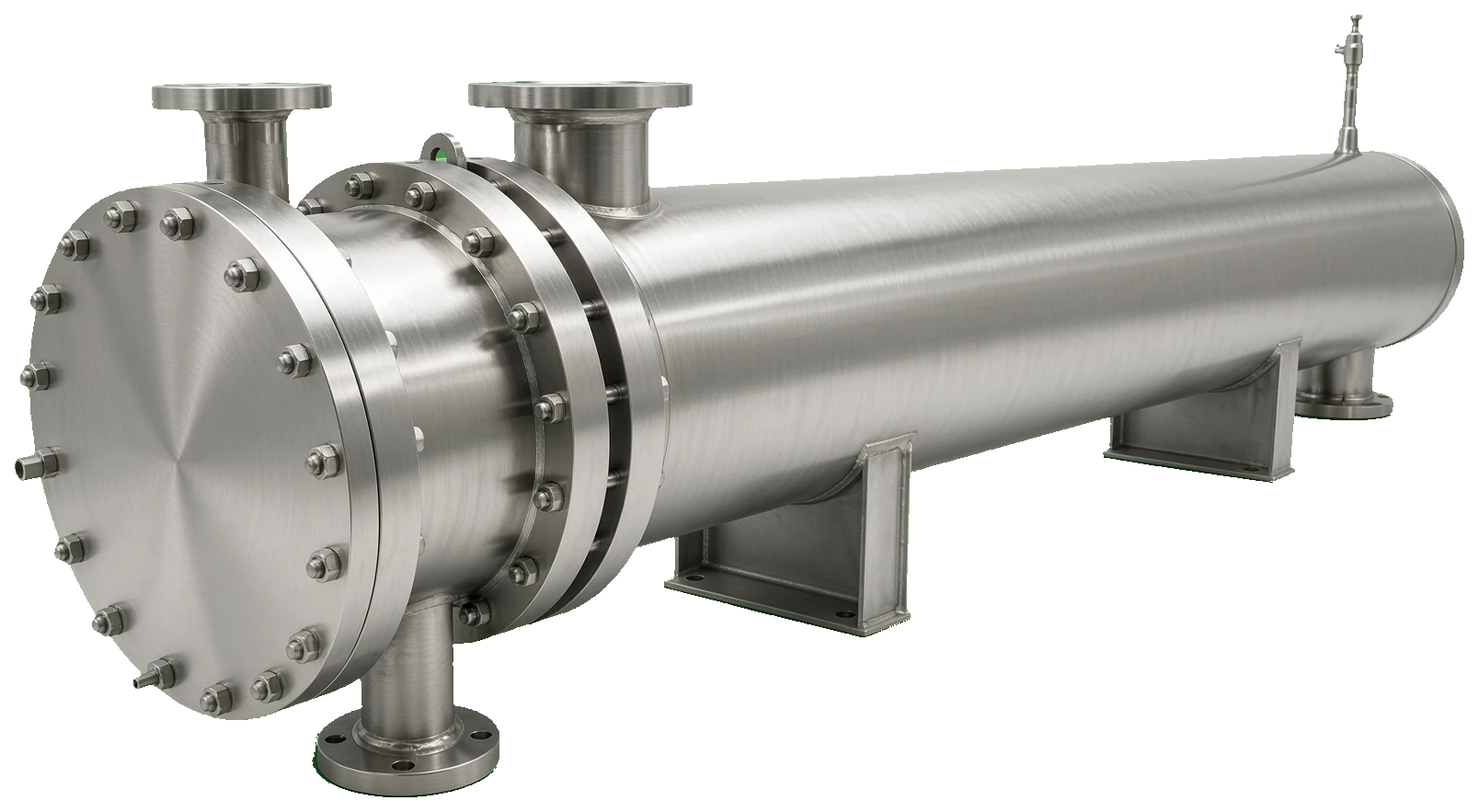
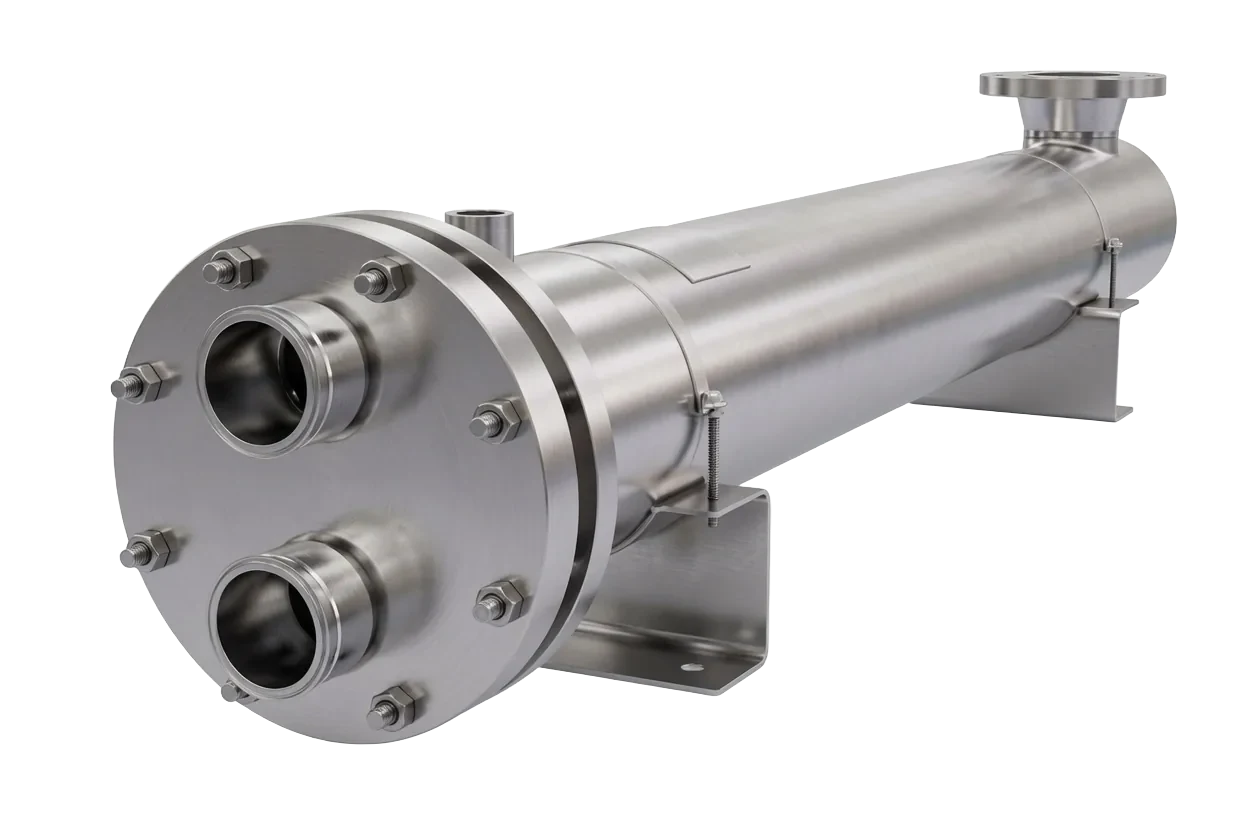
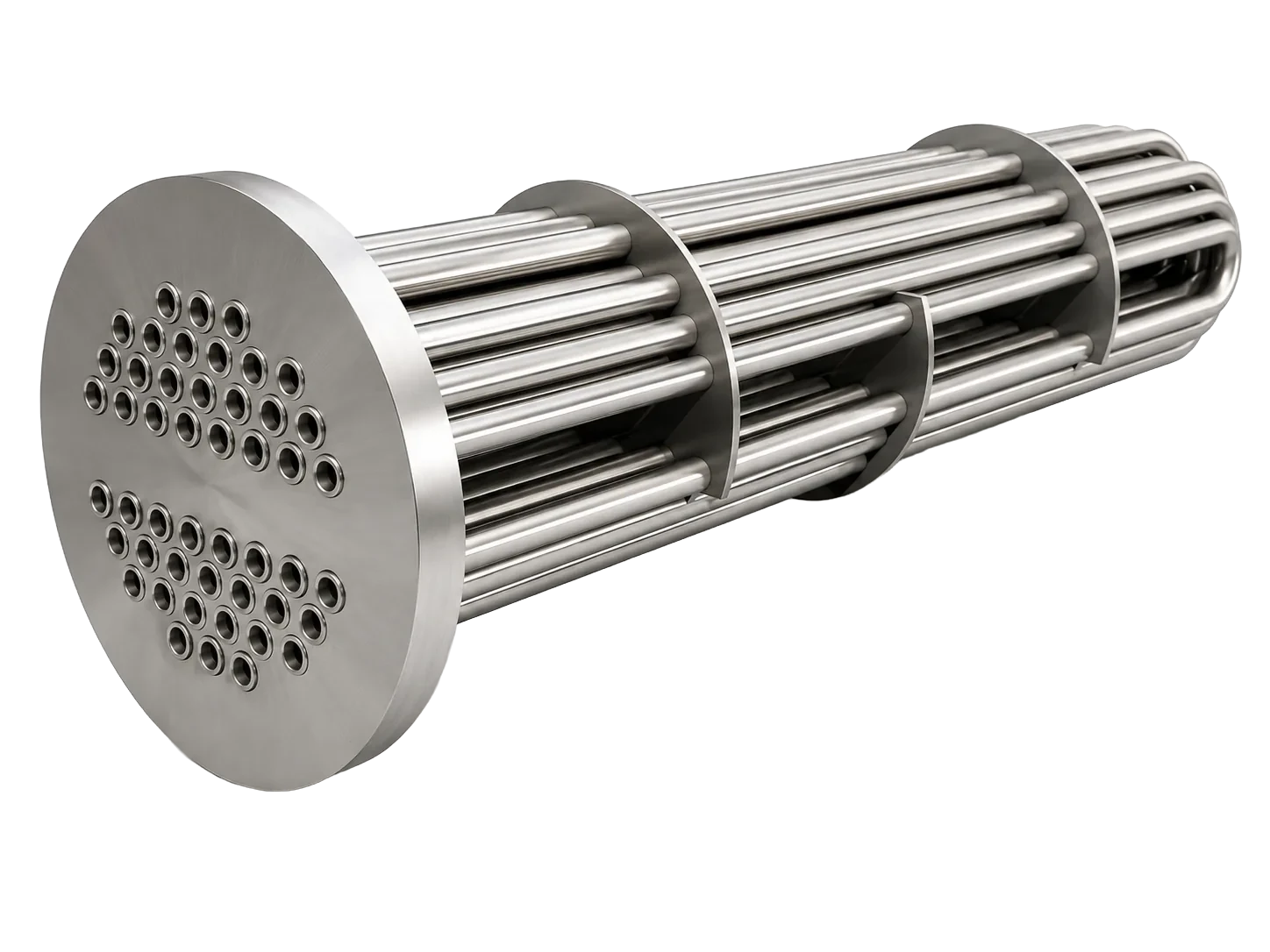
Stock and Custom U-Tube Heat Exchangers
When a Stock Unit Is the Right Call
Three situations account for most stock sales. A unit failed and production is down. A shutdown window is shorter than a fabrication lead time. Or the duty is genuinely ordinary and there is no reason to engineer it from scratch.
The thing that makes stock units work is honest rating. A shelf exchanger that does not quite make the duty is not a bargain. Send us the conditions and we will confirm against the actual rating rather than the catalog surface area.




When It Is Not
Custom is the right path when any of the following is true: the alloy is not stainless, the design pressure is beyond standard ratings, the approach temperature is tight, the fluid fouls in a way that dictates geometry, the unit has to fit a specific footprint, or the documentation requirement goes beyond a standard package.
The lead-time diffrence is real, and planning for it is far cheaper than discovering mid-project that the stock unit was a compromise nobody costed.
Stock and Custom U-Tube Heat Exchangers

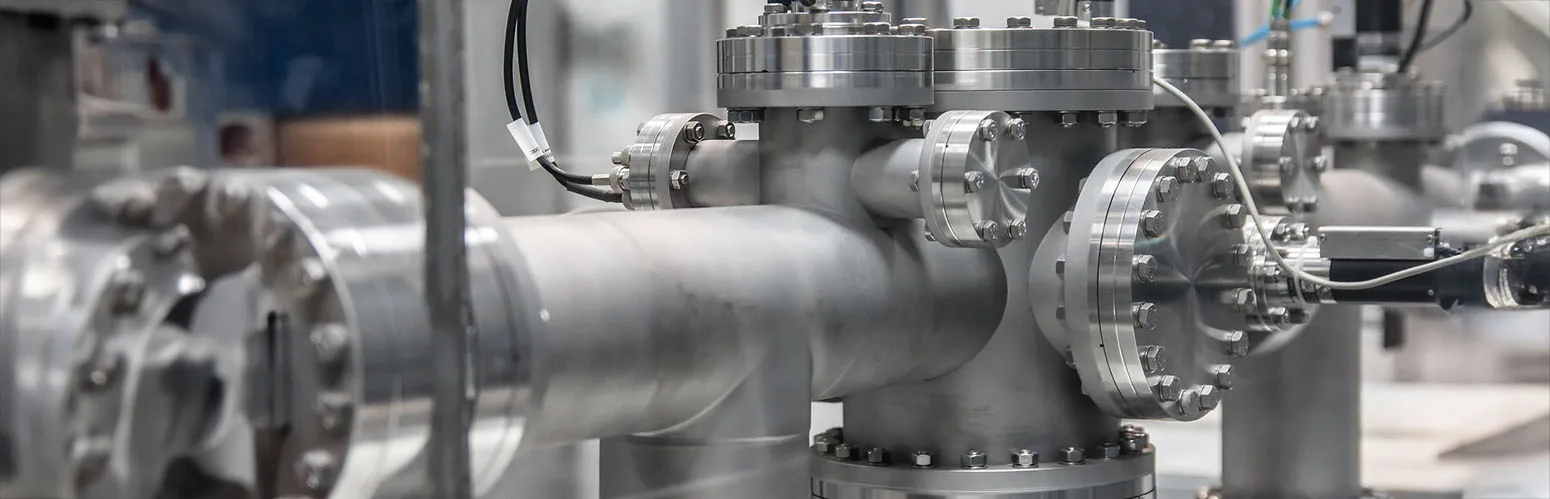
U-TUBE • CONSTRUCTION
Industrial U-Tube
Code stamped, TEMA R, B or C, carbon steel to alloys.
+ Learn MoreStock Versus Custom
Sometimes, but it has to be rated, because the stock units are designed around condensing steam in the tubes. A liquid in the tubes gives a far lower coefficient than condensing steam, so the same bundle moves much less heat, and the two-pass arrangement that suits steam may give a poor velocity on a liquid at your flow rate. Send both flows and all four temperatures and the unit is run as a liquid-to-liquid case. Where it falls short, two stock units in series often reach the duty.
Three options come before a custom build: raise the steam pressure available at the exchanger, accept a slightly lower outlet temperature, or run two stock units in series. Raising steam pressure widens the temperature difference and the duty rises with it, within the nameplate rating of the unit. Series units split the temperature rise and both run at good velocity. Each option is checked in the rating software against your figures, so the result is a confirmed number rather than a hope.
Where it can, yes, because a standard tubesheet drilling and shell size cut both lead time and cost. A custom unit that only needs a different alloy or a longer bundle keeps the stock geometry. One that needs a different pass count, a higher pressure or a different shell diameter is engineered from the duty. The quotation states which, so you know whether you are buying a modified standard or a new design.