
1-805-484-2992
Quotes - Engineering - SalesTEMA U-Tube Heat Exchanger Types
Three letters describe every shell and tube exchanger: front head, shell, rear head. On a U-tube unit the third letter is always U. What changes is the first two, and they decide almost everything about cost and access.
TEMA assigns a letter to each of the three components. Front heads run A through D, shells E through X, rear heads L through W. A U-tube bundle is rear head type U, so every U-tube designation ends in that letter. Reading the code backward tells you what you are looking at: the U says removable bundle and free thermal expansion, the middle letter says how the shell-side fluid travels, and the first letter says how much access you have to the tube side.
- BEU. Bonnet front head, single-pass E shell, U-tube rear. The cheapest removable-bundle exchanger there is, and the most common U-tube arrangement built.
- AEU. Channel with a removable cover instead of a bonnet. You can open the tube side without breaking the process piping, which is what the premium buys.
- BKU. Kettle shell with an enlarged vapor space. Reboiler and vaporizer duty, where the U-bundle sits below a liquid level and the vapor disengages above it.
- DEU. Special high-pressure front head closure for tube-side pressures beyond what bolted A and B heads hold comfortably. Feedwater heaters are the classic case.
- BFU and AFU. F shell with a longitudinal baffle, giving two shell passes and restoring counterflow when a temperature cross would otherwise defeat the design.
- BJU. Divided-flow J shell, used where shell-side pressure drop is the binding constraint rather than surface area.
Three letters describe every shell and tube exchanger. On a U-tube the last one is always U.
- Front head A through D decides how the tube side is opened
- Shell E through X decides how the shell-side fluid travels
- Rear head U is the U-bend itself, so there is no rear joint to seal
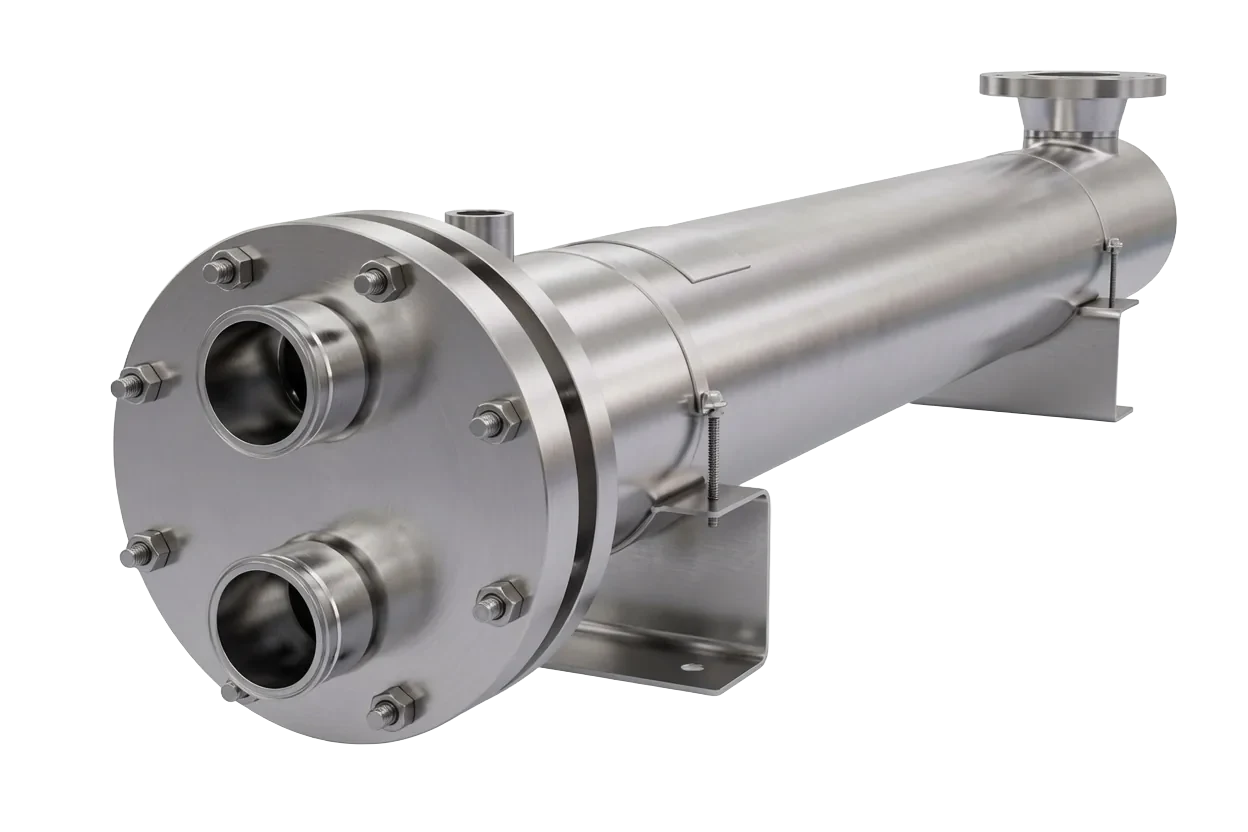
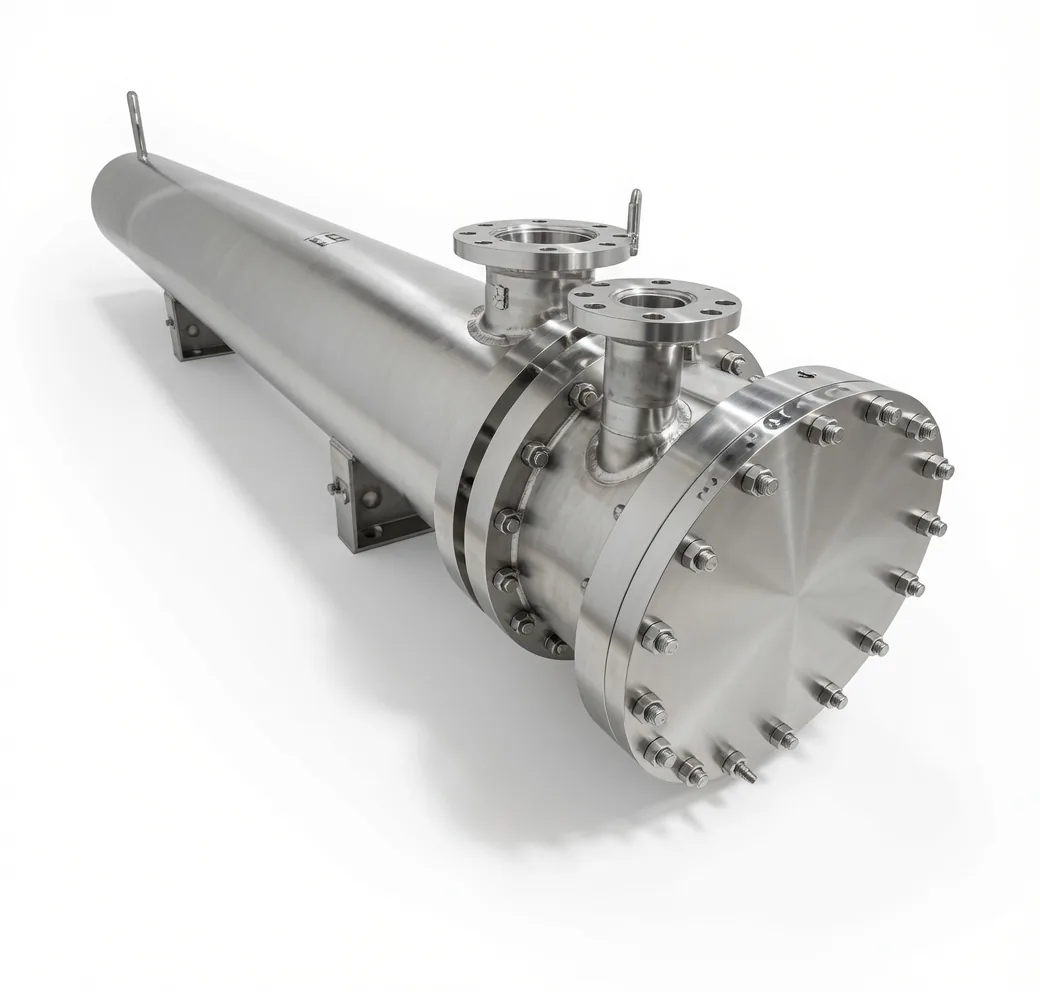
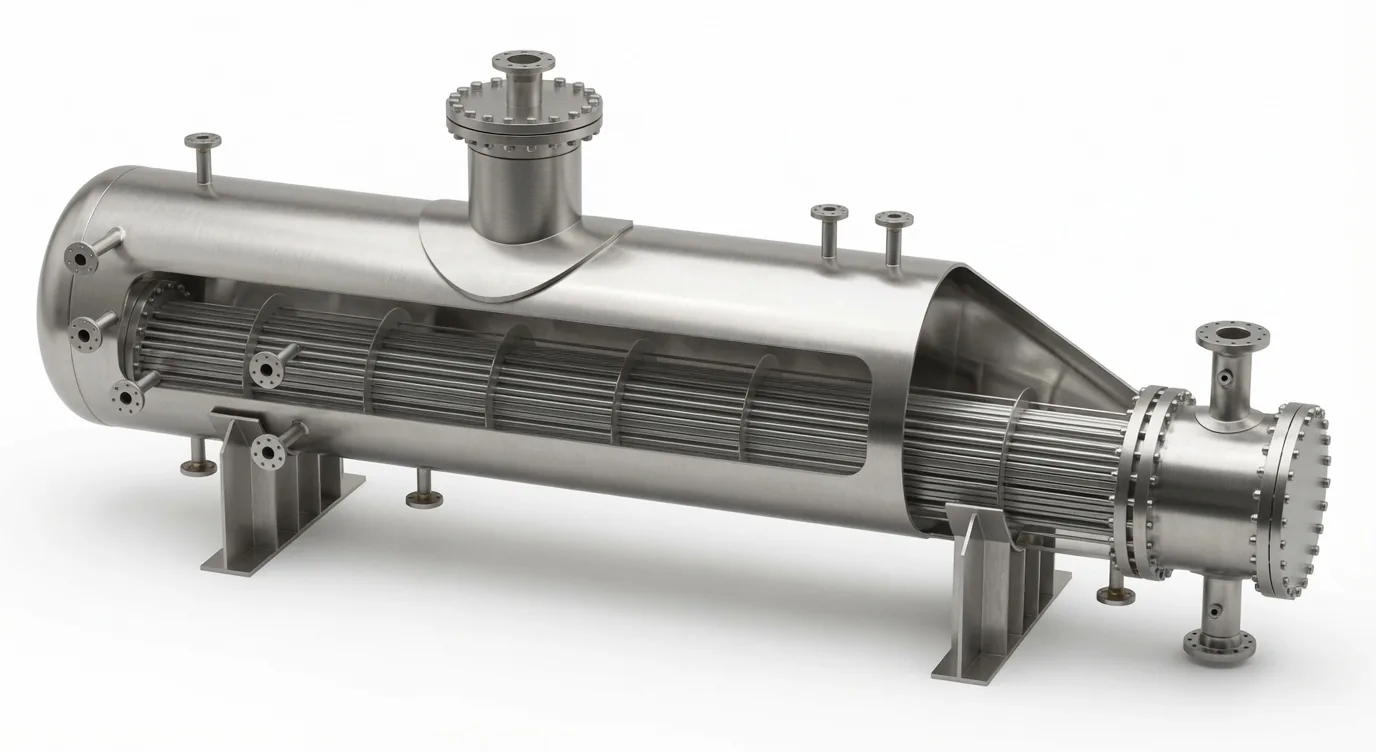
TEMA U-Tube Heat Exchanger Types
Why the Front Head Is the Real Decision
The rear is fixed once you have chosen a U-tube bundle. The shell follows from the thermal problem. That leaves the front head, and the question it answers is simple: how often will someone need to look inside the tube side?
A bonnet has to be unbolted and lifted away, and on most installations that means breaking the tube-side piping. A channel with a removable cover comes off without disturbing anything. If the tube side fouls or gets inspected on a schedule, that difference pays for itself quickly. If the tube side is clean utility water, it does not.
Reading a Designation on a Nameplate
Old exchangers frequently carry a TEMA designation on the nameplate and nothing else useful. It is worth knowing how to read it, because those three letters plus the size numbers tell you most of what a replacement bundle needs.
The size is given as nominal shell diameter followed by tube length, so a 23-192 BEU is a 23 inch shell with 192 inch tubes in a bonnet, single-pass, U-tube arrangement. Send us that and a photograph and we can usually get a long way toward a quotation.
TEMA U-Tube Heat Exchanger Types
CONFIGURATION • TEMA
U-Tube vs Other Designs
Honest comparisons, including where U-tube is wrong.
+ Learn More