1-805-484-2992
Quotes - Engineering - SalesU-Tube Bundle Gaskets and O-Rings
Selecting the Seal
The most common reason a serviced exchanger leaks is not the bundle, the welds or the tubesheet. It is a gasket that was reused, was the wrong material, or was the right material at the wrong thickness.
A removable bundle needs seals, and those seals sit at the boundary between two fluids at different pressures and temperatures. They are small, cheap components carrying a disproportionate share of the exchanger's reliability.
Temperature first, then chemistry. EPDM handles steam, hot water and caustic well and is the usual sanitary default. Viton suits hydrocarbons and many acids but degrades in steam. PTFE and filled PTFE such as Gylon handle almost any chemistry and high temperature, at the cost of resilience — virgin PTFE creeps under sustained load and needs retorquing after thermal cycling.
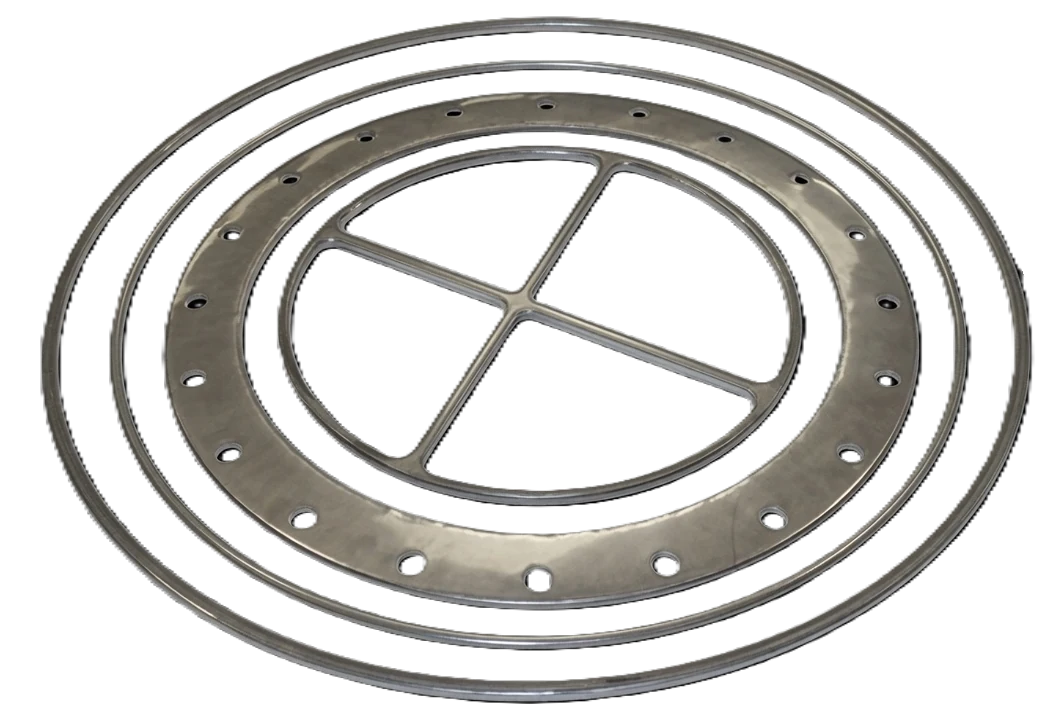
| PRODUCT | STYLE | TEMA TYPE | BUNDLE |
| U-Tube Heat Exchanger | U-Tube, single tubesheet | BEU / AEU / BKU | Removable |
Typical Construction
- EPDM: Steam, hot water, caustic; good resilience; poor with hydrocarbons
- Viton (FKM): Hydrocarbons and many acids; not suitable for steam
- PTFE: Broad chemical resistance, high temperature; creeps under load
- Filled PTFE / Gylon: Chemical resistance with improved recovery
- Buna-N (NBR): General industrial oils and water; limited temperature
- Silicone: Wide temperature range; limited mechanical strength
- Graphite and spiral wound: High temperature and pressure industrial duty
- Sanitary requirement: FDA compliant elastomers, crevice-free groove
- Replacement policy: Renew whenever the joint is opened
- Torque: Follow the specified sequence and value; retorque after thermal cycling where applicable
U-Tube Bundle Gaskets and O-Rings
Sanitary versus industrial. On product-contact duty the elastomer has to be FDA compliant and it sits in a controlled groove with no crevice. On industrial duty the choice widens considerably and compressed fiber, graphite and spiral wound gaskets all become options.
Thickness and stack height matter. A replacement gasket of the correct material but different thickness changes the compressed stack and therefore the bolt load and the bundle position. It is a small detail that produces a leak nobody can explain.
Why Reused Gaskets Fail
An elastomer takes a compression set. Once it has been squeezed into a groove and heated, it no longer has the recovery it had when new, and refitting it means relying on a seal that has already used most of its available deflection.
The economics are absurdly one-sided. A gasket set costs a fraction of the labor to open the exchanger, and a leak discovered after reassembly costs that labor twice. Renew whenever the joint is opened, without exception.
Torque Sequence Is Not Optional
Bolted joints on exchanger bonnets and tubesheets are tightened in a crossing pattern in stages, not in a circle in one pass. Doing it wrong cocks the flange, loads one side of the gasket and leaves the other under-compressed.
On PTFE and filled PTFE joints subject to thermal cycling, a retorque after the first heat-up is normal practice rather than an admission of failure. Build it into the commissioning checklist.
Seals, Torque and Service
EPDM usually can, since it handles steam, hot water and caustic, which is why it is the default elastomer on sanitary steam heaters that are cleaned in place. It fails where the CIP cycle uses an acid with a hydrocarbon-based additive or where a product oil reaches the seal, and then a filled PTFE such as Gylon is the material that covers both duties. The mistake is a maintenance crew replacing EPDM with Viton because Viton is the shop standard: it holds the acid and softens in the steam. Write the material on the drawing and on the spares list.
No; compression set does not show, so an o-ring that looks perfect has already given up most of its recovery and will seal on assembly and weep after the first thermal cycle. Compare the cost: a sanitary o-ring is a few dollars, and opening the bonnet a second time to find a weep is hours of labor plus a lost batch. Keep a sealed packet of the correct size and material in stores against the exchanger's serial number so the fitter is never tempted.
Yes; thickness sets the compressed stack height, which fixes the bolt load at a given torque and the axial position of the bundle, so a thicker gasket of the right material can move the baffles off the nozzles. On a removable U-bundle the tubesheet gasket also carries the pass partition rib, and a thicker gasket lets that rib compress unevenly, letting tube-side flow bypass from inlet to outlet without going down the tubes. That shows as a unit that cannot reach outlet temperature with no fouling to blame. Order gaskets by drawing dimension, not by nominal flange size.
Because PTFE and filled PTFE creep under sustained load as they warm, so bolts tightened cold lose preload after the first thermal cycle and the gasket relaxes. The cure is a retorque once the unit has reached operating temperature and cooled, done in the same crossing pattern as the original tightening and recorded on the commissioning sheet. EPDM and the other elastomers recover rather than creep, so an elastomer joint that leaks after heat-up is more likely a reused ring or a flange cocked by tightening in a circle. The torque record tells you which of those it was.
Yes, the bonnet gasket or o-ring and the tubesheet seal ship with every replacement bundle, cut to the drawing dimension so there is no thickness mismatch with the shell. Order a second set at the same time for the next planned service; it comes from the same drawing and material. If the shell flange face is scored or the groove worn, say so when ordering, because a softer seal can be specified to recover it until the face is machined.
Related
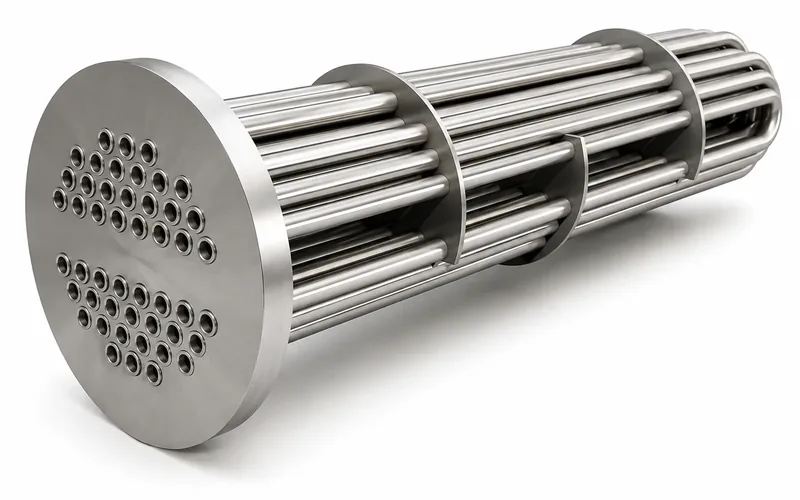
U-TUBE • CONSTRUCTION
Replacement U-Tube Bundles
Bundles built to fit the shell you already have.
+ Learn More