
1-805-484-2992
Quotes - Engineering - SalesU-Tube vs Fixed Tubesheet Exchangers
The Two Questions That Decide It
This is the most searched comparison in shell and tube, and it comes down to two things: which side fouls, and how big the temperature difference is.
A fixed tubesheet exchanger welds both tubesheets to the shell. Tubes run straight through, so they can be rodded, brushed or lanced end to end. Nothing comes apart, which makes it the cheapest construction per square foot.
What fixed gives up. The bundle is not removable, so the shell side can only be cleaned chemically. And because the tubes are anchored at both ends, differential expansion between shell and tubes has nowhere to go. Past a modest temperature difference the shell needs a bellows expansion joint, which is the most fatigue-sensitive component in the assembly.

Typical Construction
- Fixed tubesheet strength: Lowest cost, tube side rodded end to end, odd passes possible
- Fixed tubesheet weakness: No shell-side mechanical cleaning, expansion joint needed
- U-tube strength: Free expansion, removable bundle, high pressure capability
- U-tube weakness: No tube-side rodding, even pass counts only
- Expansion joint: Fatigue-sensitive; the usual first failure on cycling duty
- Cleaning decision: Governed by which stream fouls and which side it runs on
- Cycling decision: Frequent startup, trip or batch operation favors U-tube
- Cost ranking: Fixed lowest, U-tube next, floating head highest
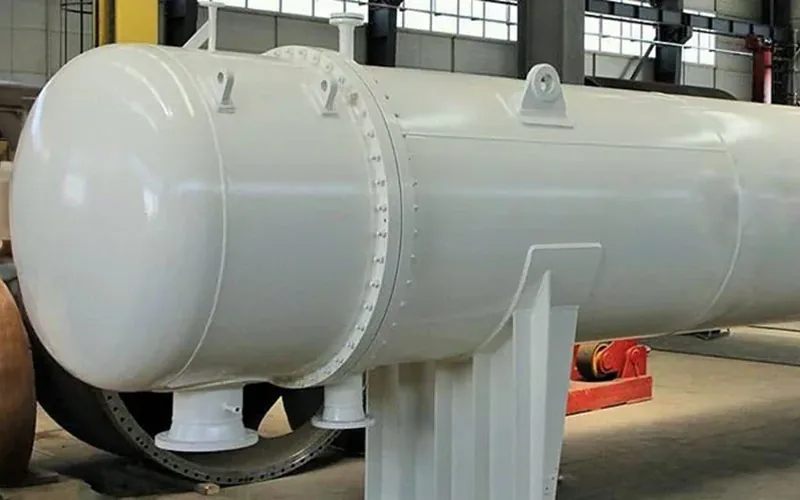
A shell and tube construction with both tubesheets welded to the shell. The straight tubes can be cleaned end to end, but the bundle never comes out and the shell must carry the full thermal expansion.
U-Tube vs Fixed Tubesheet Exchangers
What U-tube gives up. Tube-side mechanical cleaning, because nothing rigid passes the bend. And the option of an odd number of tube passes, which matters when the duty needs a temperature cross.
How to choose. Clean on both sides, modest and steady temperature difference, cost sensitive: fixed tubesheet. Fouling shell side, or large or cycling temperature difference: U-tube. Fouling tube side: neither, look at a floating head.
Individual Tube Replacement Is a Real Fixed Advantage
On a fixed tubesheet unit a failed tube can be pulled and replaced individually, because it is straight and accessible from both ends. On a U-tube bundle the practical field repair is plugging, and every plug costs surface area.
On a duty where occasional tube failures are expected and plugging would accumulate, that difference favors fixed tubesheet more than the headline comparison suggests.
Deciding Between the Two
Carbon steel grows roughly 0.08 inch per 10 feet of length for every 100°F rise, and austenitic stainless tube grows about half again as much. In a fixed tubesheet exchanger the shell and tubes are welded into one assembly, so the difference between those two growths is what loads the tube joints or the bellows. Over a long shell with steam on one side and a cool liquid on the other, that difference adds up to a measurable fraction of an inch with nowhere to go. A U-tube bundle is anchored at one tubesheet only, so the whole number drops out of the mechanical design.
Yes. A fixed tubesheet unit that holds one steady temperature for years can live with modest differential stress, while the same unit cycled daily accumulates fatigue at the tube-to-tubesheet welds and in any bellows. Batch heating, steam heaters that trip on low demand, and duties that start cold every morning all count as cycling. The failure shows as weeping tube joints at the tubesheet face after a few hundred cycles rather than a sudden rupture. U-tube bundles take the same cycling without fatigue because each tube grows on its own.
The shell-side surface fouls, cannot be mechanically reached, and the exchanger loses capacity until chemical cleaning stops recovering it. The symptom is an outlet temperature that drifts a few degrees each quarter, a steam pressure raised to compensate, and finally a unit replaced long before its pressure parts are worn out. It usualy starts when tower water or a dirty process stream was assigned to the shell because the tube side was reserved for something else. On a U-tube exchanger the same mistake is recoverable: the bundle pulls and the shell side can be brushed or water-jetted.
Not as a bundle swap, because the fixed design has no removable bundle and both tubesheets are welded into the shell. The replacement is a complete U-tube exchanger built to the same nozzle positions, face-to-face dimension and support spacing so the piping does not move. HeatX does this routinely when a fixed unit has failed from expansion joint fatigue or shell-side fouling. Send the nameplate data and a sketch of the nozzle layout with your Request a Quote, and say whether the new unit must keep the same shell diameter or may go shorter and wider.
Related
CONFIGURATION • TEMA
U-Tube vs Floating Head
Both pull and both expand; tube-side cleaning decides.
+ Learn More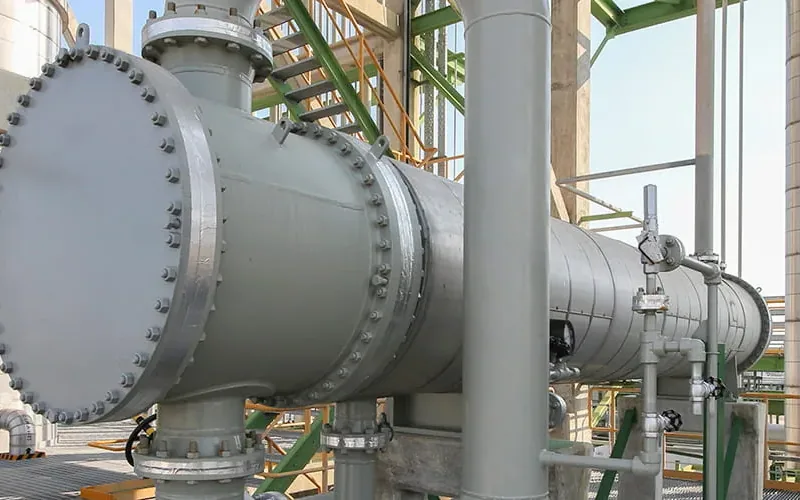
CONFIGURATION • TEMA
U-Tube vs Straight Tube
One tubesheet and one head, against rodding the bend.
+ Learn More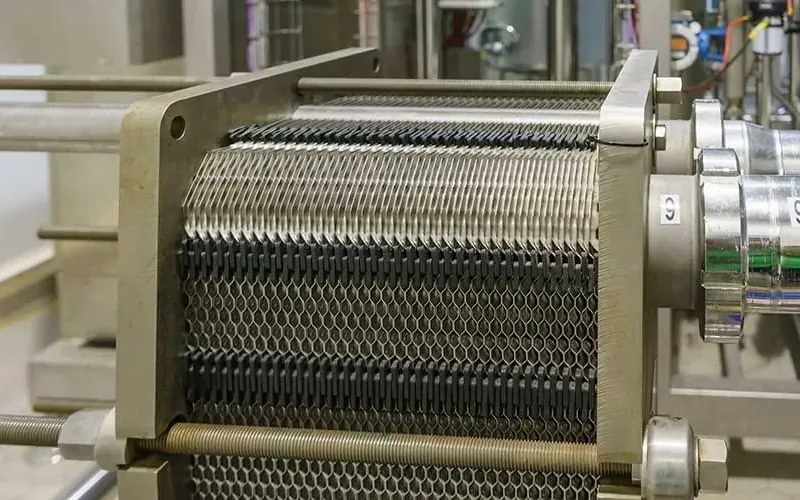
CONFIGURATION • TEMA
U-Tube vs Plate & Frame
Approach temperature and footprint against pressure limits.
+ Learn More