
1-805-484-2992
Quotes - Engineering - SalesElectropolished U-Tube Exchangers
What Electropolishing Actually Does
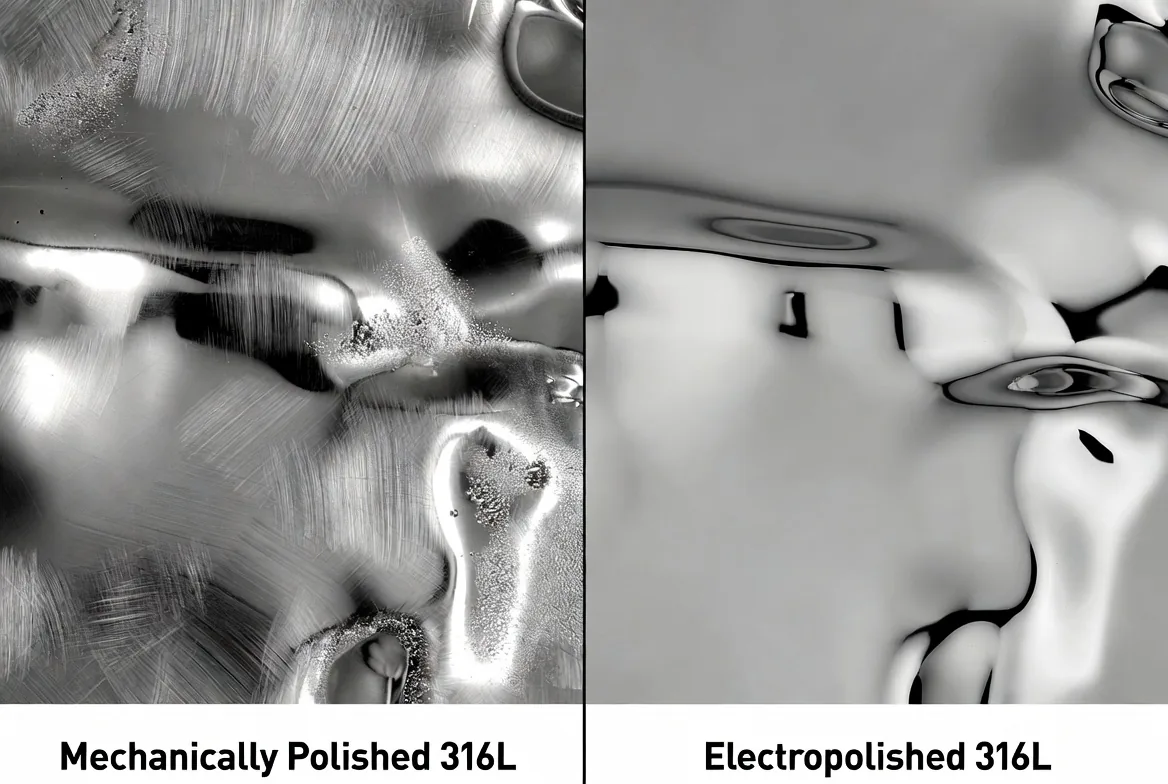
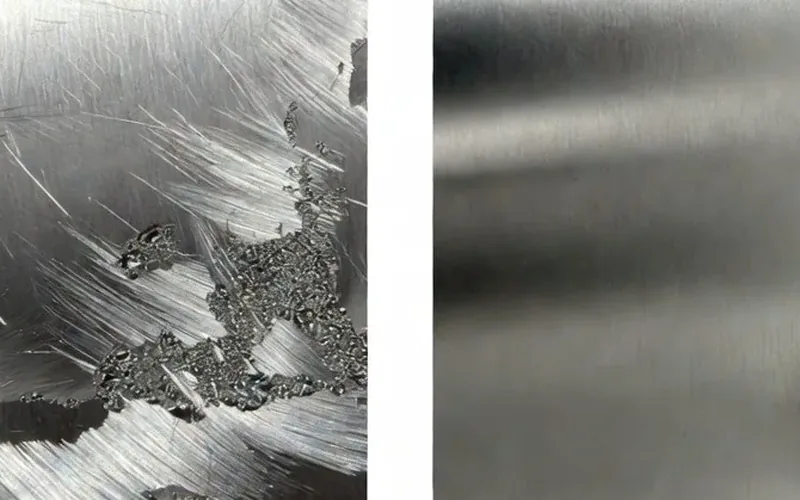
Mechanical polish removes metal with abrasive. Electropolish removes it electrochemically, taking the peaks preferentially and leaving a chromium-enriched surface behind. The difference matters more for corrosion resistance than for the Ra number.
Electropolishing is an electrochemical process: the part becomes the anode in an acid electrolyte and metal is removed ion by ion. Because current density concentrates at high points, peaks dissolve faster than valleys, so the surface levels as it thins.
The finish improves, but that is the smaller benefit. The larger one is chemical. Electropolishing preferentially removes iron relative to chromium, leaving a surface layer richer in chromium oxide than the parent metal. That layer is more passive and more resistant to pitting and chloride attack than a mechanically polished surface of the same measured roughness.
| FINISH METHOD | TYPICAL Ra | SURFACE CHEMISTRY | U-BEND INTERIOR |
| Mill finish | Varies | As supplied | As supplied |
| Mechanical polish | 32 Ra typical | Work hardened, embedded abrasive possible | Limited access |
| Electropolish | 15 Ra and below | Chromium enriched, passive | Not reliably achievable |
Electropolished Construction Options
- Base material: 316L, dual certified, low ferrite welds
- Typical electropolished Ra: 15 Ra and below on accessible surfaces
- Pre-polish requirement: Mechanical polish prior to electropolishing
- Surface chemistry: Chromium-enriched passive layer
- Passivation: Included or specified separately
- U-bend interior: Not reliably electropolished; specify accordingly
- Verification: Ra measurement and certification on accessible surfaces
- Weld treatment: Welds ground and blended before finishing
- Typical duty: WFI, high purity water, bioprocess, ultra-clean product
- Standards: ASME BPE surface designations where specified
Specifying an Electropolished Exchanger
It also removes what mechanical polishing leaves behind. Abrasive polishing can smear metal over a defect and can embed particles from the media. Electropolishing dissolves the smeared layer, which is why it tends to reveal underlying weld and material defects rather than hide them — useful during fabrication, occasionally uncomfortable.
The limitation is line of sight and flow. Electropolishing depends on getting electrolyte and current to the surface. The interior of a tight U-bend is exactly where that becomes unreliable. On product-contact duty where every wetted surface must be electropolished, this is a genuine argument for running product on the shell side.
Decide Which Surfaces, Not Just Which Finish
The most common specification problem we see is a blanket requirement for electropolished product-contact surfaces on a unit where the product runs through the tubes. The straight tube sections are achievable. The bend interiors are not, at least not with the consistency that a verification step would demand.
There are two clean resolutions. Put the product on the shell side, where the shell interior, tubesheet face and tube exteriors are all accessible. Or accept mechanically polished bend interiors and say so explicitly in the specification, so it is a documented decision rather than a discovery during qualification.
Electropolish and Passivation Are Different Steps
They get conflated constantly. Passivation is a chemical treatment that removes free iron and encourages the natural chromium oxide layer to reform. Electropolishing is a metal-removal process that happens to leave a chromium-enriched surface as a by-product.
An electropolished surface is generally passive when it comes out of the bath, but many specifications still call for a separate passivation step afterward, particularly where handling or fabrication occurred after electropolishing. Decide which you want and in what order, and make sure the certification you receive reflects it.
Where the Cost Is Justified
High-purity water systems, bioprocess duty and any service where the exchanger sits in a validated loop are the usual homes for electropolished construction. The argument is partly cleanability and partly corrosion resistance, and in hot WFI loops running continuously at sanitization temperature the corrosion argument is the stronger of the two.
For general food and dairy duty, a well-executed mechanical polish to 32 Ra with proper passivation is normally the right level of specification. Electropolishing there adds cost without adding much that the cleaning regime will notice.
Finish Specification Details
With a profilometer on the accessible product-contact surfaces, recorded on a finish certificate that names the designation, the locations measured and the readings. Tube interiors are verified on the tubing supplier's certificate, because a stylus cannot be run down a bundle after assembly; the tubesheet face, channel and shell interior are measured directly. A surface that cannot be reached is not reported as meeting the designation, and the certificate says so. If your qualification protocol expects a reading from every wetted surface, agree at inquiry which surfaces will be measured and which will be certified by material record, because that is what a validation engineer will ask about and it cannot be fixed after the unit is closed up.
Yes, by a small but real amount, because it removes metal rather then redistributing it. On straight tubing the removal is uniform and is already allowed for in the tubing wall tolerance. The place to think about it is the U-bend, where the outside of the bend has thinned during forming and any further removal comes off an already reduced wall. The design wall is therefore specified before finishing, with the bend thinning and the polishing allowance both deducted, and the tube gauge is chosen so the minimum wall after both still meets the pressure calculation. Ask for the minimum bend wall on the drawing rather than the nominal tube gauge.
Before, as electropolished tubing from the mill, since the bore of a bent tube cannot be processed afterward. The straight legs keep their certified finish and chromium-enriched surface through bending. In the bend the surface is strained, the outside stretches and the inside compresses, and while the electropolished layer is still there it can no longer be measured or certified. So the bend remains the surface the specification has to accept as unverified, whichever route is taken. Pre-polished tubing is still the better route, because it gives the bend the best starting surface available. Bending after polishing also requires clean tooling and a lubricant that passivation will remove.
Normal CIP with caustic and nitric or phosphoric acid does not; those chemistries clean the surface and reinforce the passive layer. What removes it is pickling, meaning a nitric-hydrofluoric bath used to strip heat tint, and repeated aggressive derouging. If a loop rouges and is derouged often, each cycle takes a little of the chromium-enriched layer with the oxide, and after enough cycles the surface behaves like mechanical polish. Chloride-bearing sanitizers are a separate issue: they pit the surface rather than strip it. If a derouging program is planned, tell us at inquiry so the finish specification accounts for it.
Not measurably. The roughness differences involved are far below anything that affects the heat transfer coefficient, and the wall thinning is too small to matter. Where it helps is in keeping the clean condition longer: a smoother, more passive surface holds less soil and rouge, so the fouling allowance in the design is reached more slowly and the unit stays nearer its clean rating. That is a maintenance benefit, not a sizing one, and we rate an electropolished unit with the same fouling factors as a mechanically polished one. If a supplier offers a smaller exchanger on the strength of the finish, ask what fouling factor was used, because that is where the surface went.
Related Finishing and Construction
ENGINEERING • FINISH
Polish & Passivation
Ra values, polishing methods, passivation chemistry and how each is verified.
+ Learn More
PHARMA • BPE
ASME BPE Units
Where the SF surface designations replace a bare Ra number and documentation becomes part of the build.
+ Learn More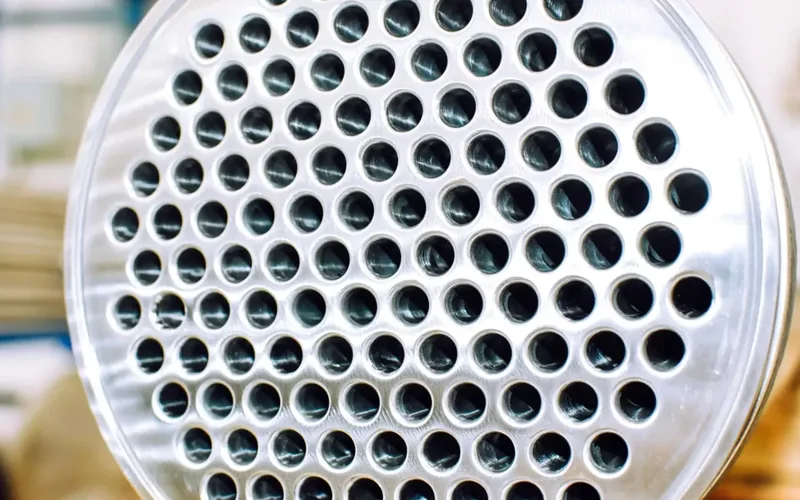
MATERIAL • STAINLESS
304L & 316L
Why 316L dominates hygienic work, and where chloride stress-corrosion cracking sets the limit.
+ Learn More