
1-805-484-2992
Quotes - Engineering - SalesU-Tube Bundles and Replacements
The shell is a pressure vessel with no moving parts and it frequently outlives several bundles. Replacing the bundle rather than the exchanger keeps your nozzle geometry, your supports and your piping exactly where they are.
A removable bundle is the U-tube's defining feature, and it turns what would be a capital replacement into a maintenance item. Stock bundles cover the common sanitary sizes. Everything else is built to match an existing shell from drawings, from the U-1 data report, or from a nameplate and a set of field measurements. Replacement is also the cheapest opportunity you will ever get to upgrade the tube alloy.
- Bundle-only replacement. The shell stays in place. Cost and lead time both drop substantially against replacing a complete exchanger.
- Stock sanitary bundles. Common sizes held in 304L and 316L with O-ring or PTFE gasket sealing and a polished finish.
- Reverse engineered builds. Matched from old drawings, the U-1 form, or a nameplate photograph plus measured dimensions when the OEM is gone.
- Alloy upgrades. Change the tube material to suit what the process turned out to be, while keeping the fit identical.
- Gaskets and o-rings. The correct sealing components supplied with the bundle, because the wrong gasket is the most common post-service leak.
- Inspection first. Eddy current testing and a hydrostatic check will often tell you whether replacement, retubing or plugging is the right call.
- Removable bundle
- Free thermal expansion
- ASME code available
- Removable bundle
- Free thermal expansion
- ASME code available
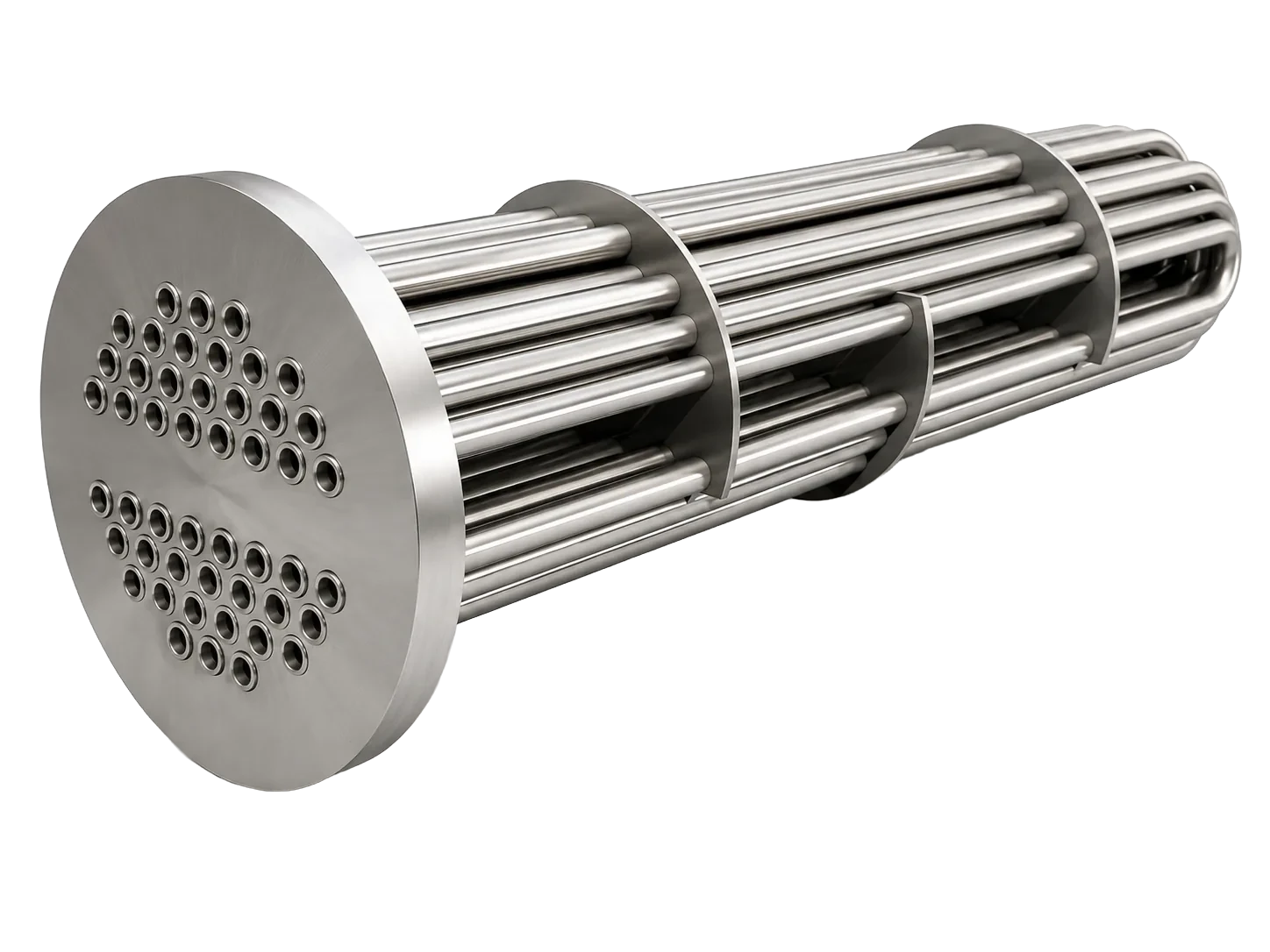
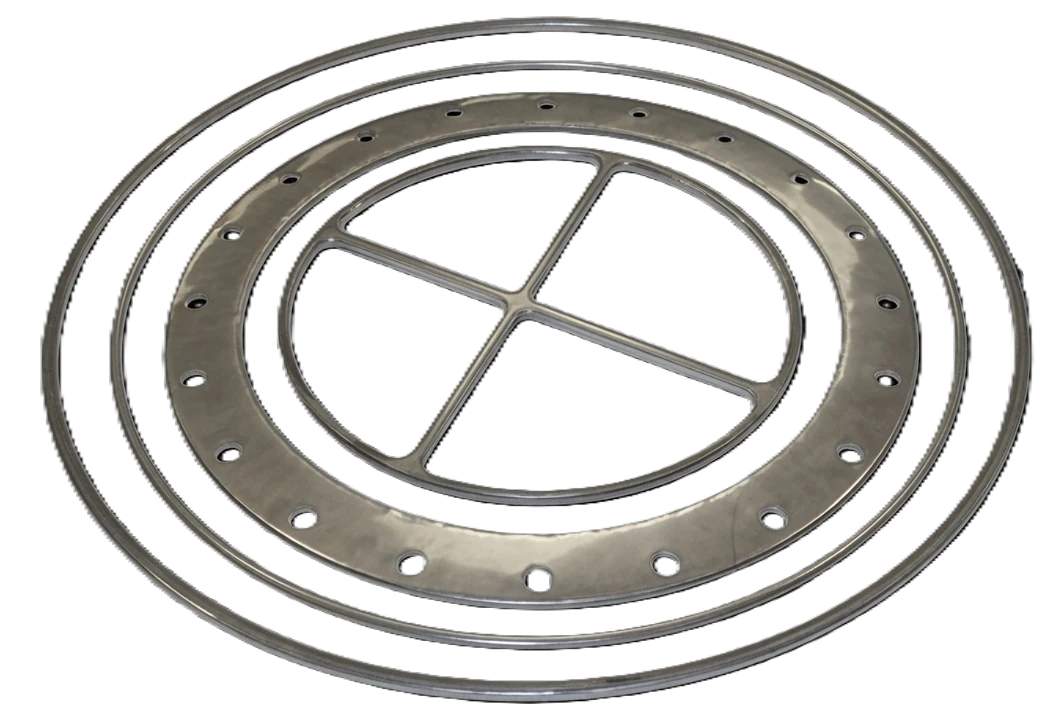
U-Tube Bundles and Replacements
Repair, Retube or Replace
Tube plugging is the fast field fix, and it works until it does not: every plugged tube removes surface area and disturbs the flow distribution, and plants routinely run past the point where the exchanger can still make its duty. As a rough guide, once plugging passes a few percent of the tube count it is worth costing a replacement bundle.
Retubing an existing bundle is viable where the tubesheet and the shell are sound and the tubes are the only problem. Where the tubesheet is eroded or the joints have been reworked repeatedly, a new bundle is usually the better economics.




What Makes Bundle Replacement Straightforward
Send whatever you have: manufacturer and serial number, National Board number, the U-1 data report, original drawings, or clear photographs of the nameplate. From that we can normally identify the unit or reconstruct enough to build to it.
Where nothing survives, field measurements will do. Shell diameter and length, tubesheet thickness and bolt pattern, tube count, diameter and pitch, nozzle sizes and locations, and the gasket arrangement. We will tell you exactly what to measure.
U-Tube Bundles and Replacements

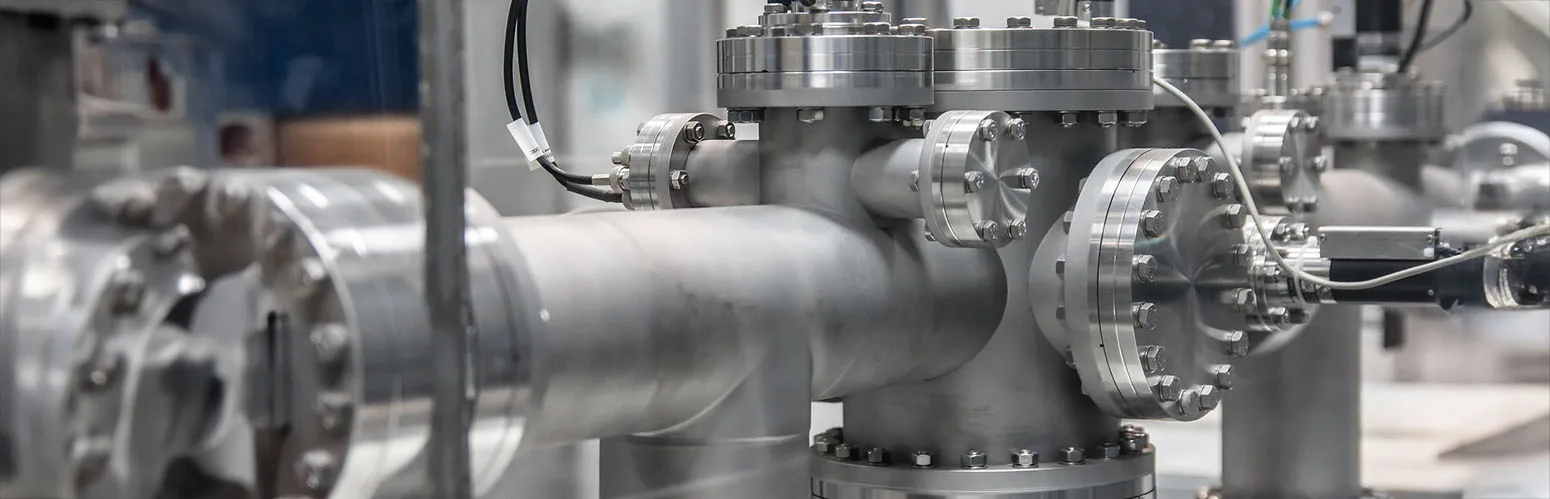
U-TUBE • CONSTRUCTION
Industrial U-Tube
Code stamped, TEMA R, B or C, carbon steel to alloys.
+ Learn MoreReplacement Bundle Answers
Yes if the corrosion is on the shell wall, since the bundle rides on its baffles with running clearance; no if the tubesheet gasket face or the shell flange is pitted, because that is the seal. Measure the shell bore at the flange and at the far end, and inspect the flange face for radial scoring. A pitted face can be machined in place if enough thickness remains, and the replacement tubesheet is then made to the new dimension.
Within the same tubesheet diameter and bolt pattern, yes. Smaller tubes on a tighter pitch add surface and raise velocity; less, larger tubes lower pressure drop. Baffle spacing can change as well. What cannot change is the shell, the nozzles and the gasket face, so shell-side pressure drop is rated against the existing connections. Send the duty as well as the drawing and the bundle is laid out for both.
Not if you have the nameplate, the U-1 form or a drawing, because the replacement can be built from those while the old bundle stays in service. Pull it only when nothing survives and the tube count, diameter, length and pitch have to be measured. Where you do pull it, measure the overall bundle length and the tubesheet thickness and diameter first, and photograph the baffle layout before anything is moved.
Wall loss. A hydrostatic test finds tubes that already leak; eddy current measures how much wall is left in tubes that have not yet failed, so it predicts the next outage instead of confirming the last one. A bundle with a handful of leaking tubes and little wall loss elsewhere is a plugging candidate. One with widespread thinning is a replacement candidate regardless of how many tubes leak today. The U-bend is harder to test than the straight legs, so a report that excludes the bends is incomplete.
Dry, indoors, in its crate, with the tubesheet face protected and the gaskets kept separately in their packaging. The tubesheet face is the seal and a dent on it is a leak. Stainless and CuNi bundles should not sit on carbon steel floors or racks where iron contamination can start pitting. Keep the shipping desiccant in place. Before installation, check the gasket face and blow the tubes through with dry air.