
1-805-484-2992
Quotes - Engineering - SalesShell and Head Options
The bundle is fixed once you choose a U-tube. The shell decides how the other fluid travels, how much pressure drop it costs, and whether the temperature profile you need is achievable at all.
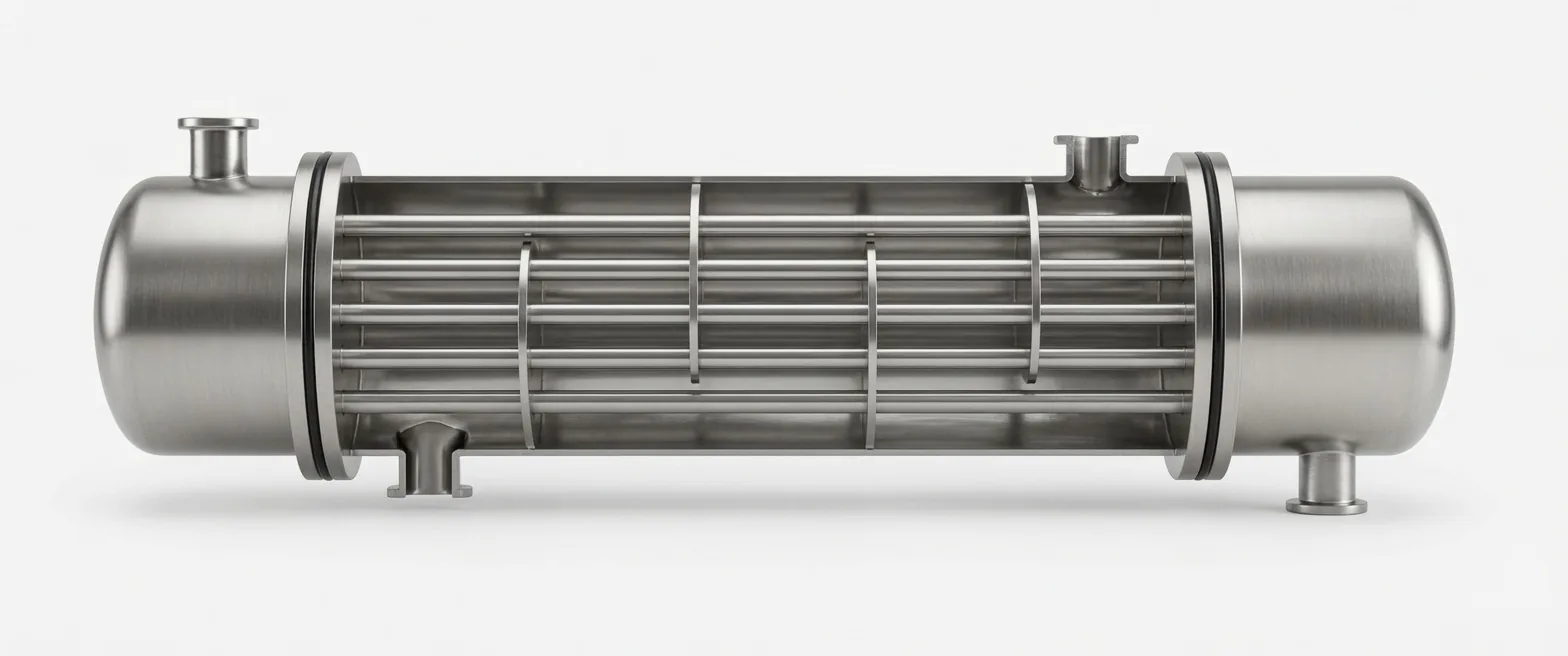
TEMA defines seven shell types. Three of them account for nearly all U-tube work: the E shell for ordinary single-pass duty, the F shell where a longitudinal baffle restores counterflow, and the K shell where boiling requires vapor disengagement space. The front head is a separate decision and turns almost entirely on how often the tube side needs to be opened.
- E shell. Single pass, shell-side fluid enters one end and leaves the other. The default, and correct whenever pressure drop and temperature profile are not fighting you.
- F shell. A longitudinal baffle divides the shell into two passes, giving something close to true counterflow. The remedy for a temperature cross a two-pass tube side cannot handle.
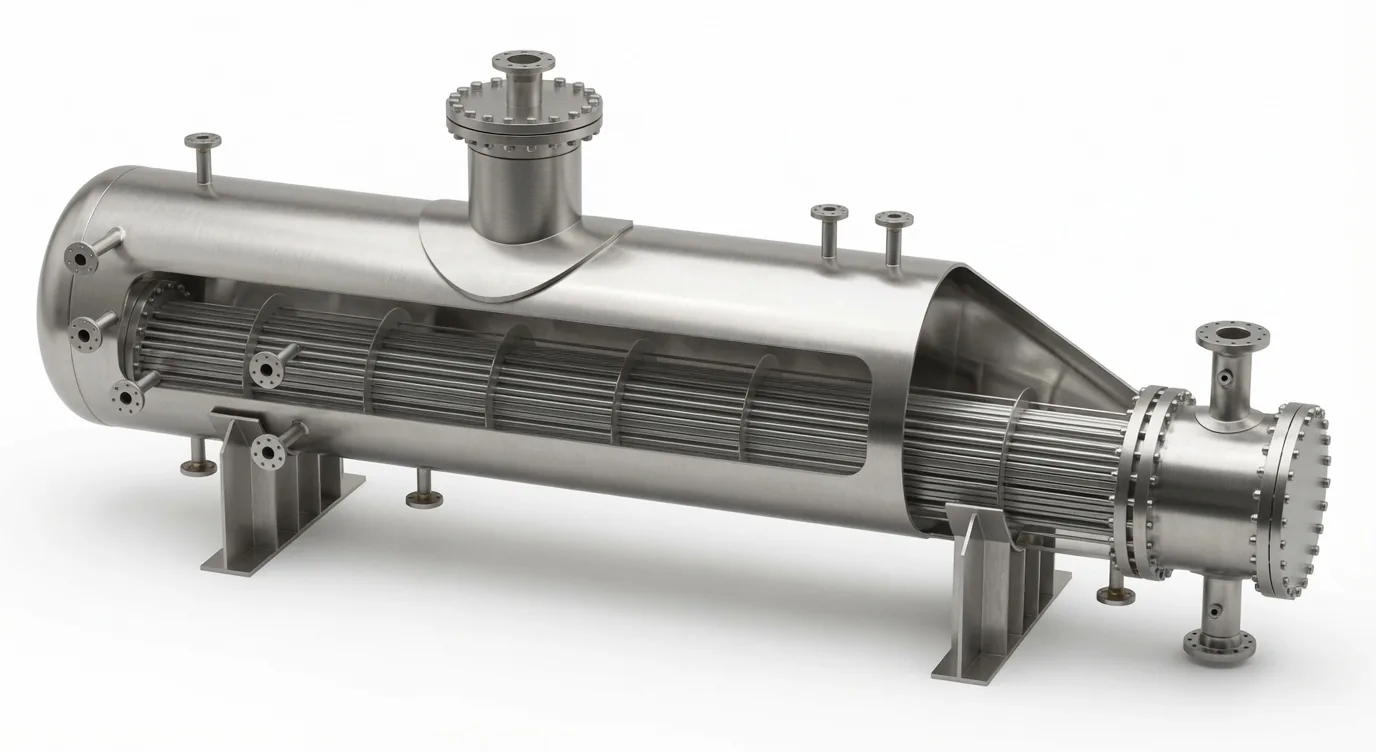
- K shell. Enlarged above the bundle for boiling duty, with a weir setting liquid level and free space above for vapor to disengage.
- J shell. Divided flow, halving the shell-side path length and cutting pressure drop sharply. Used where shell-side drop is the binding constraint.
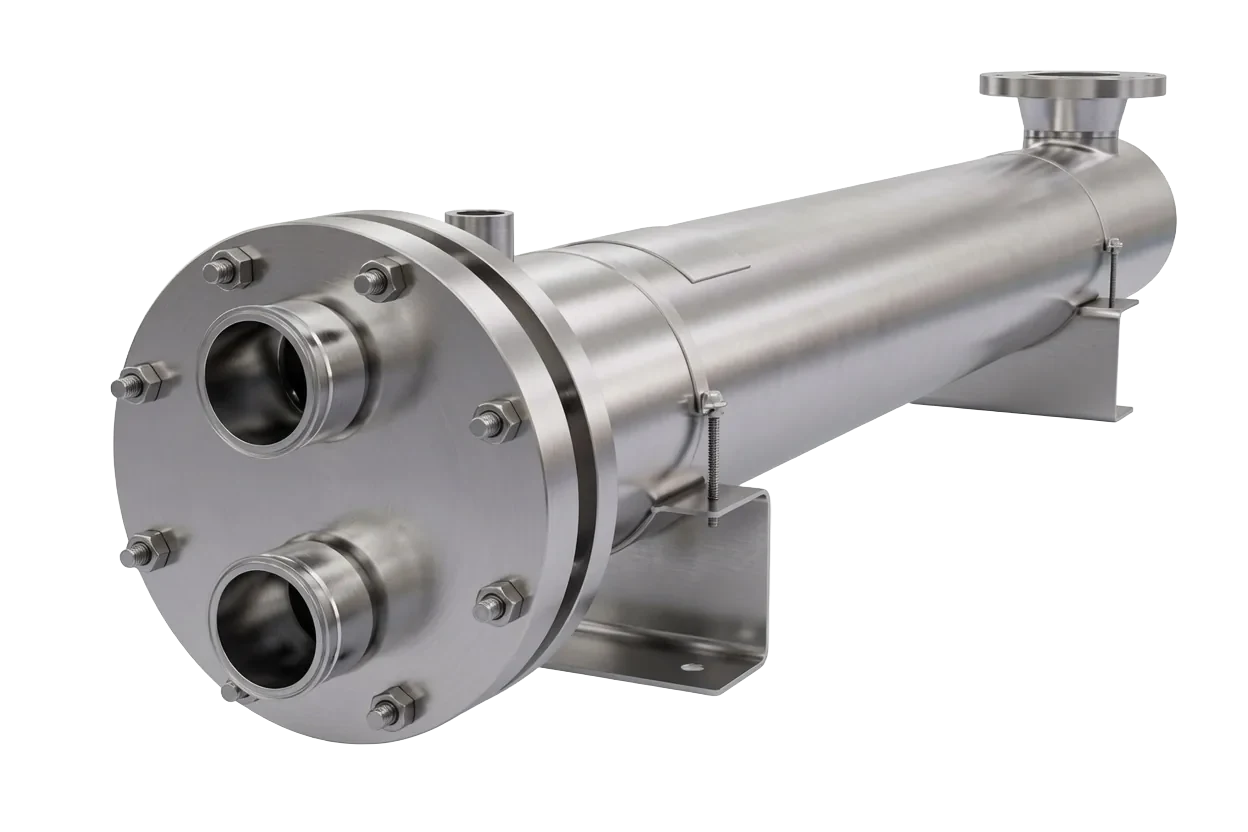
- Bonnet front head. Fewest joints and lowest cost. Opening the tube side means breaking the piping.
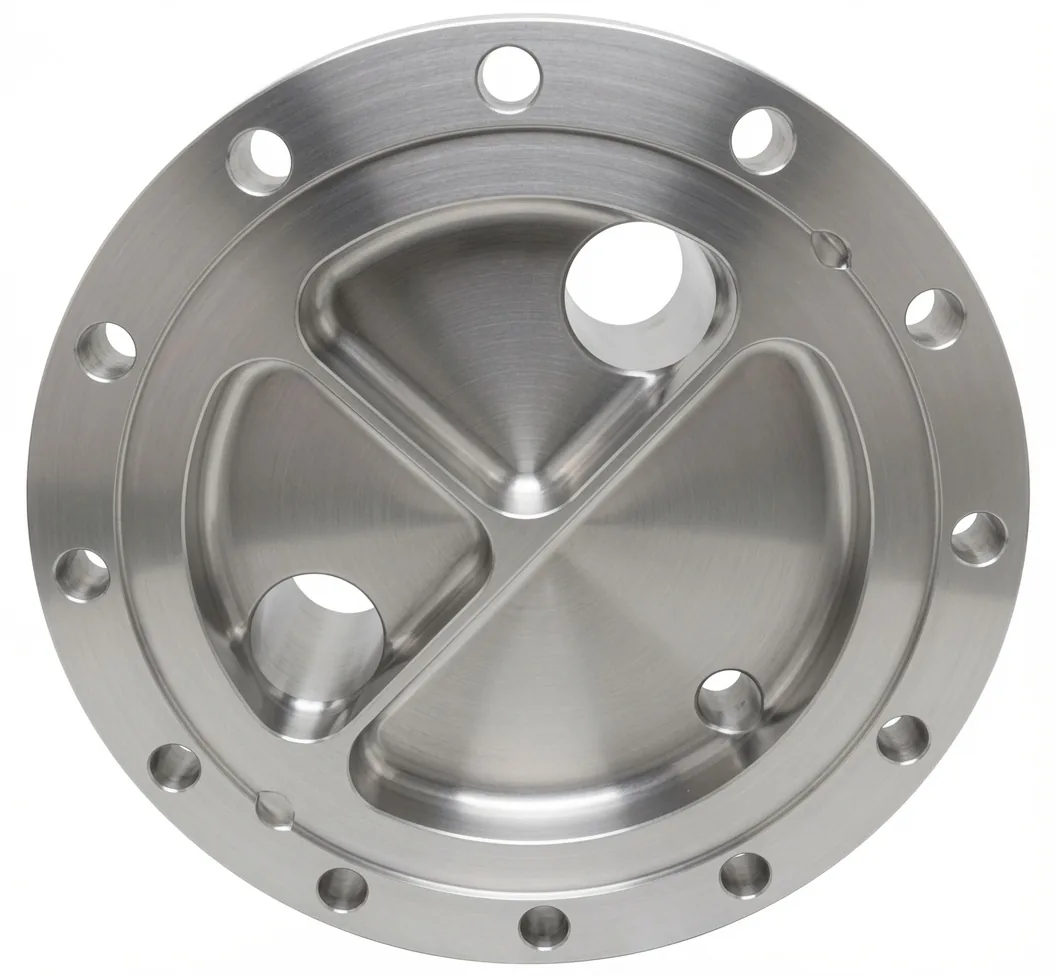
- Channel front head. Removable cover exposes the tubesheet face with the piping intact. Worth the premium when the tube side gets regular attention.
The bundle is fixed once you choose a U-tube. The shell is still yours to choose.
- E shell for ordinary single-pass duty at the lowest cost
- F shell where a longitudinal baffle restores counterflow
- K shell where boiling needs vapor space above the bundle
Shell and Head Options
Baffles Belong to the Shell Decision
Shell type sets the flow path; baffles set the velocity and the heat transfer coefficient along it. Segmental baffles are standard, with the cut and spacing chosen together to get useful cross-flow without excessive pressure drop or unsupported tube span.
On a U-bundle the bend region needs its own support arrangement, because tubes there are longer, curved and more prone to vibration than anywhere else in the bundle.
The F Shell Caveat
A longitudinal baffle only delivers two genuine shell passes if it seals against the shell. Leakage across it short-circuits flow and erodes the counterflow advantage you paid for, and the leakage tends to worsen as the unit ages and the baffle distorts.
Where the temperature cross is severe, two shells in series is a more robust answer than one F shell, at the cost of more hardware and more nozzles.
Shell and Head Options

CONFIGURATION • TEMA
TEMA U-Tube Types
BEU, AEU, BKU and DEU, and what the front head decides.
+ Learn More
CONFIGURATION • TEMA
U-Tube vs Other Designs
Honest comparisons, including where U-tube is wrong.
+ Learn More