
1-805-484-2992
Quotes - Engineering - SalesU-Tube Compared to Other Designs
We sell U-tube exchangers, so it is worth saying plainly: they are the wrong answer for some duties. These pages set out where and why, because a buyer comparing options is trying to eliminate them, not be sold to.
Two questions settle most shell and tube selections. Does the tube side need mechanical cleaning? Does the design need to accommodate large or cycling thermal expansion? Answer both and the rear head chooses itself. Fixed tubesheet where neither applies, U-tube where expansion matters and the tube side is clean, floating head where both apply. Plate and frame is a separate conversation about approach temperature and footprint.
- Versus fixed tubesheet. Fixed is cheaper and lets you rod the tubes end to end. It cannot clean the shell side mechanically and needs an expansion joint at large differential temperature.
- Versus floating head. Both remove the bundle and both absorb expansion. Floating head lets you clean the tube side; U-tube costs less and has fewer sealed joints at pressure.
- Versus straight tube. One tubesheet and one head instead of two is the cost argument. Against it: no rodding through the bend, and pass count must be even.
- Versus plate and frame. Plate wins on close approach and footprint in clean liquid duty. U-tube wins on pressure, temperature, viscosity, particulates and steam.
- The disqualifying condition. A fouling tube-side stream. If the fluid that scales has to run inside the tubes, choose something you can rod.
- The deciding condition. Thermal cycling. Nothing else in the shell and tube family handles repeated large temperature swings as simply.
Two questions settle most shell and tube selections.
- Does the tube side need mechanical cleaning, or will chemical cleaning do?
- Does the duty carry large or cycling thermal expansion between the fluids?
- Which side fouls, and can that fluid go on the shell side where the bundle comes out?
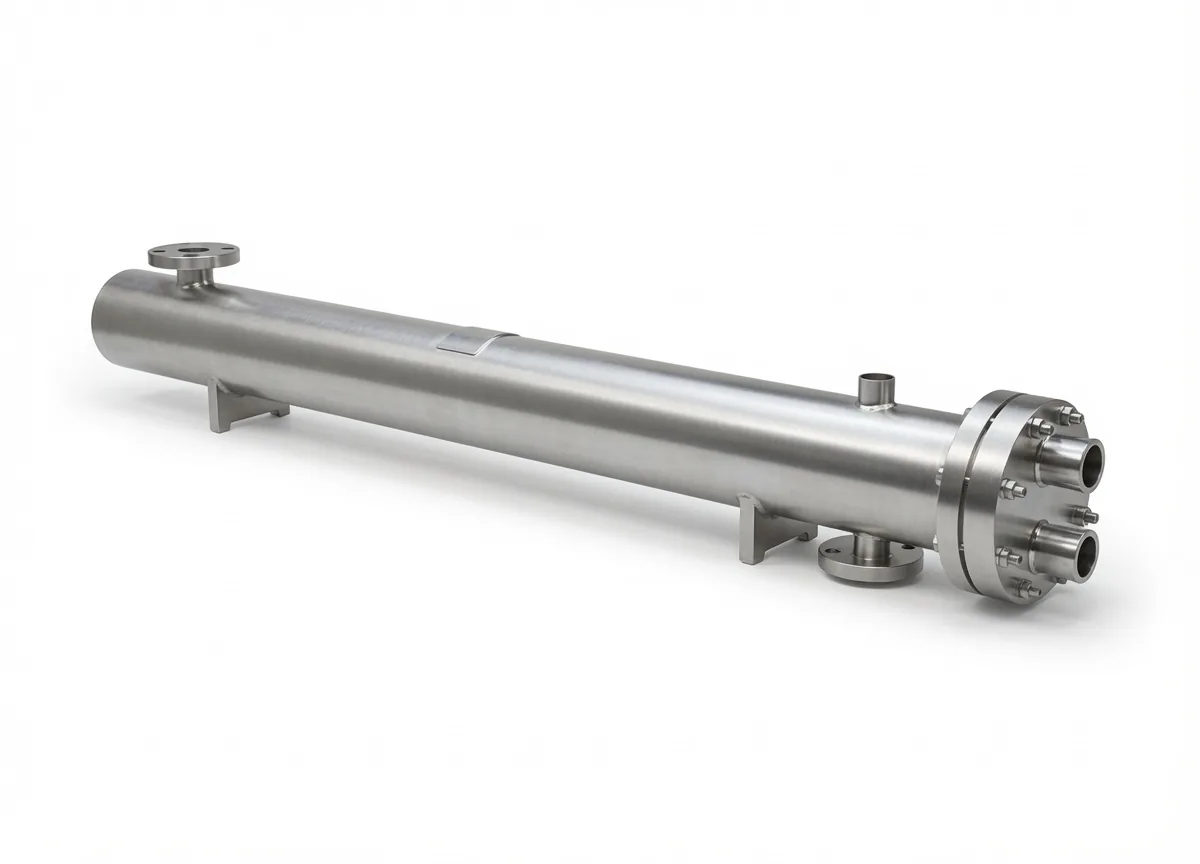
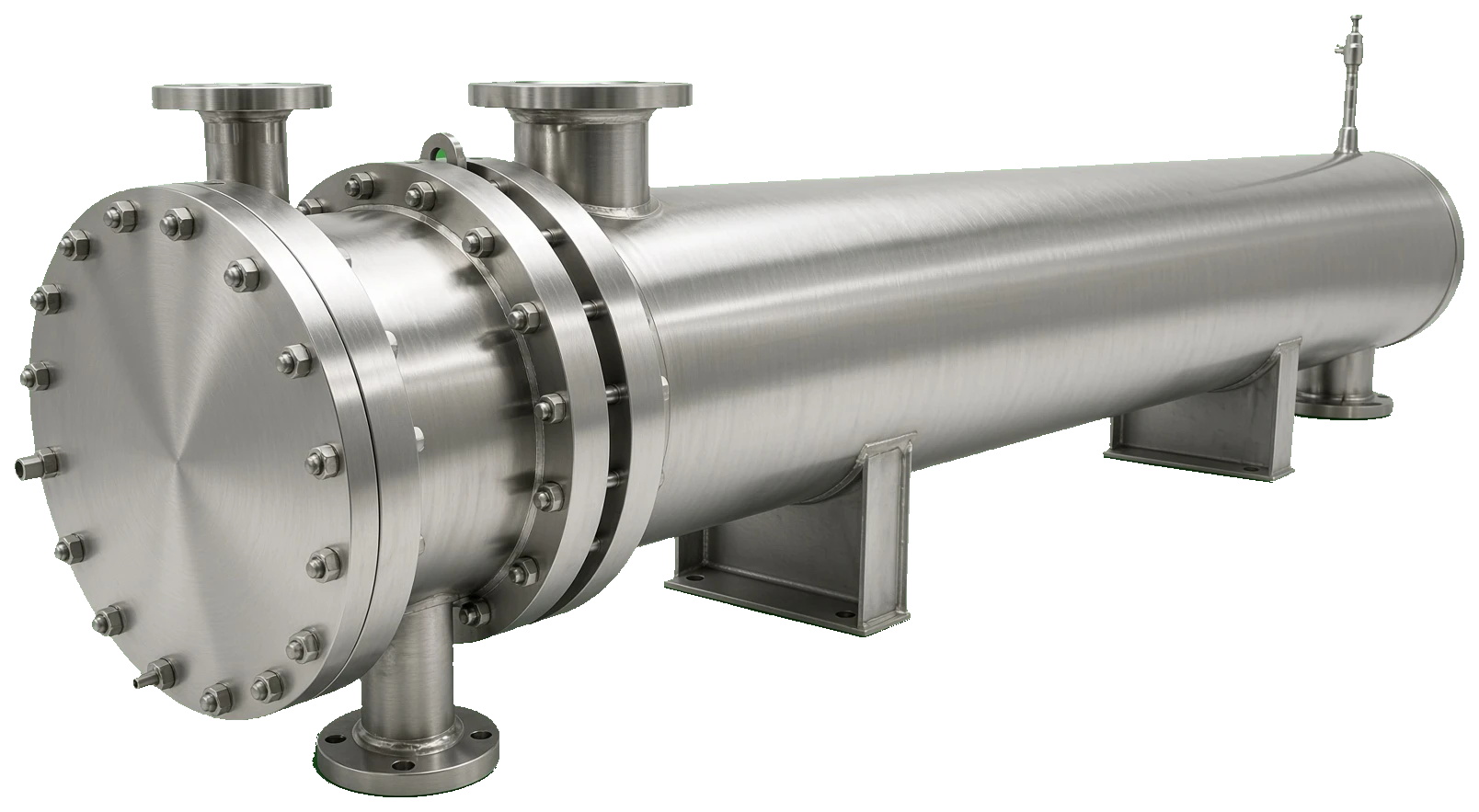
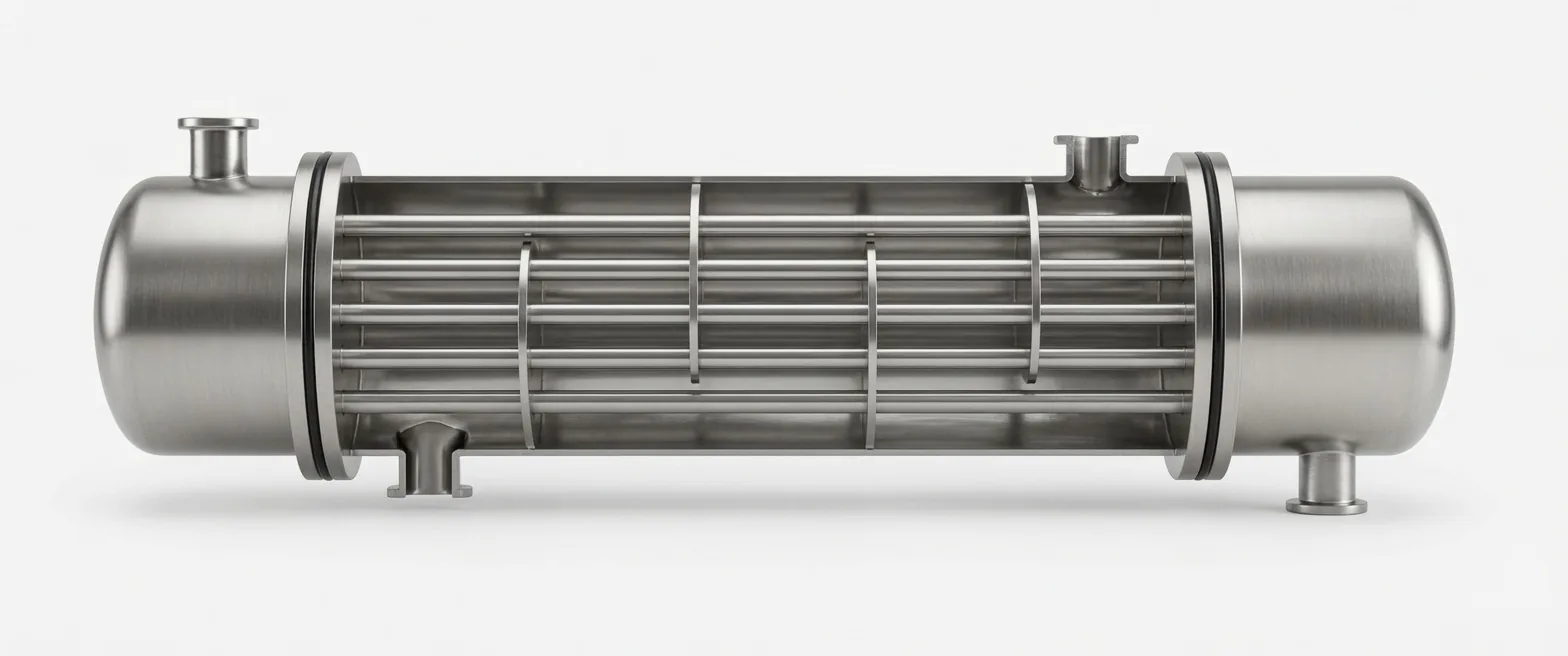
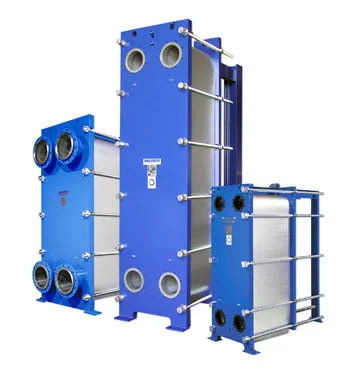
U-Tube Compared to Other Designs
A Two-Question Selection Method
Start with cleaning. Which stream fouls, and which side will it be on? If the fouling stream must run tube-side and needs mechanical cleaning, a U-tube is out irregardless of everything else.
Then look at expansion. Take the difference between shell and tube metal temperatures, including startup and upset. If it is large or it cycles, fixed tubesheet needs an expansion joint and the comparison shifts toward U-tube or floating head.
Cost Is the Third Question, Not the First
For the same surface area, fixed tubesheet is cheapest, U-tube next, floating head most expensive. That ranking is stable and it tempts people to start there.
Starting with cost produces exchangers that are cheap to buy and expensive to own. The cleaning and expansion questions decide whether the unit works; price decides between the options that survive them.
U-Tube Compared to Other Designs
CONFIGURATION • TEMA
TEMA U-Tube Types
BEU, AEU, BKU and DEU, and what the front head decides.
+ Learn More
CONFIGURATION • TEMA
Orientation & Mounting
Orientation and mounting for U-tube heat exchangers. How horizontal, vertical and tank-mounted arrangements change venting, draining, and supports.
+ Learn More