1-805-484-2992
Quotes - Engineering - SalesBEU U-Tube Heat Exchangers
The Default U-Tube Arrangement
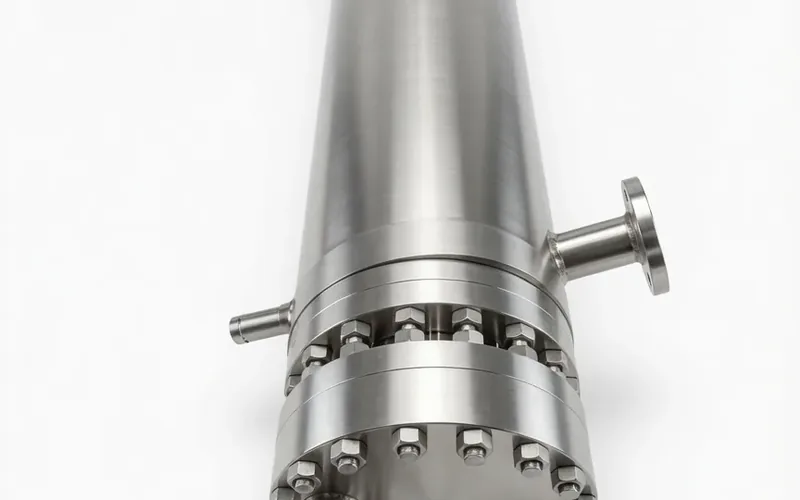
A bonnet, a single-pass shell and a U-bundle. It is the cheapest way to buy a removable bundle, and for a very large share of industrial duty it is simply the correct exchanger.
BEU is what you get when nothing in the duty argues for something else. The bonnet is a single welded head that bolts to the shell. The E shell carries the shell-side fluid from one end to the other in a single pass. The U-bundle handles expansion and lifts out for cleaning.
Where it fits. Clean tube-side fluid, a shell side that may foul, a temperature difference large enough to rule out fixed tubesheet, and no requirement to open the tube side frequently. Chemical, petrochemical and refining service is full of exactly that combination.
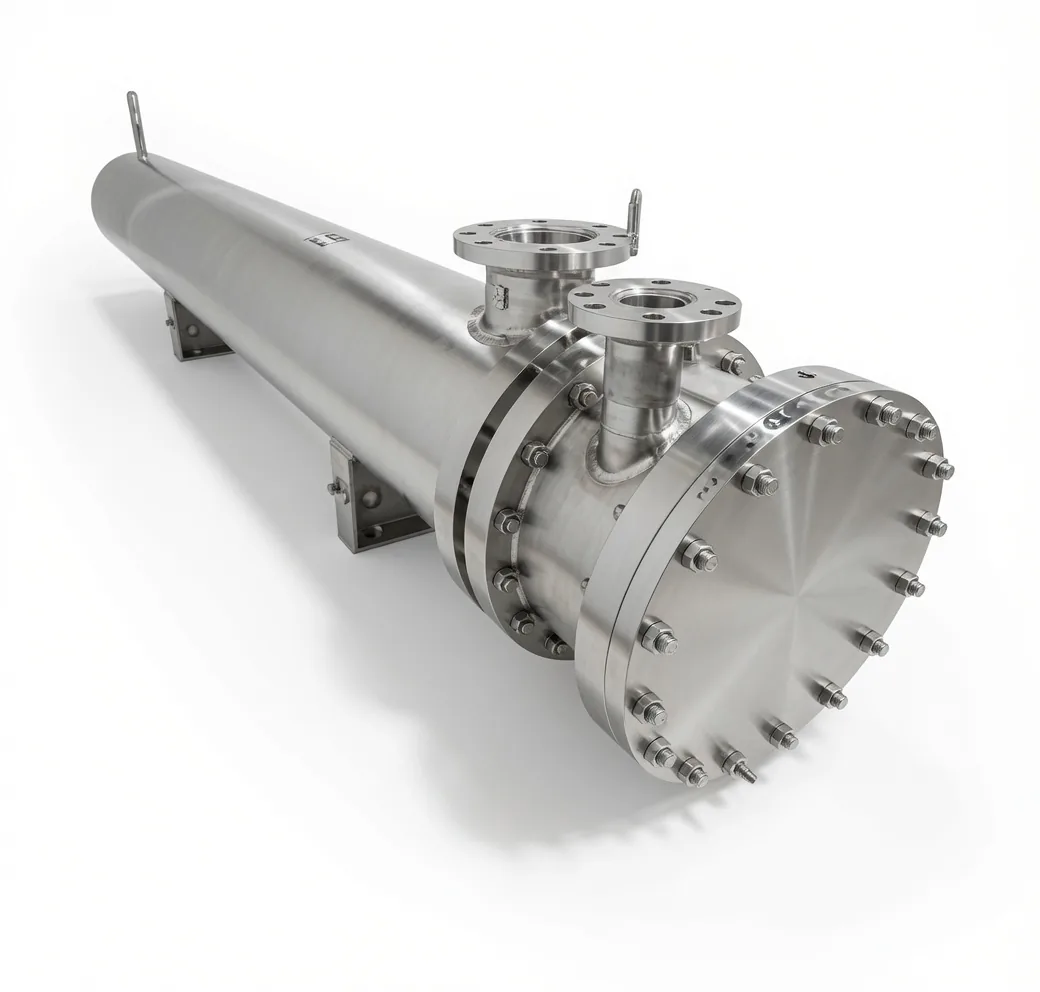
Typical Construction
- Front head: B - bonnet, integral cover
- Shell: E - single pass
- Rear head: U - U-tube bundle
- Bundle: Removable
- Tube passes: Two minimum, even numbers only
- Expansion: Accommodated by the bundle; no expansion joint
- Tube-side access: Requires bonnet removal
- Shell-side cleaning: Mechanical, with the bundle withdrawn
- Typical materials: Carbon steel through high alloys
- Codes: ASME Section VIII, TEMA R, B or C
Bonnet front head, single-pass E shell, U-tube rear. The cheapest way to buy a removable bundle, and the correct exchanger whenever nothing in the duty argues for something else.
BEU U-Tube Heat Exchangers
What it gives up. Opening the tube side means unbolting and removing the bonnet, which on most installations means breaking the tube-side piping first. If that is a routine task, AEU is the better buy.
Cost position. Fewer joints than a channel head, no rear head at all, one tubesheet. Among removable-bundle exchangers there is nothing cheaper, which is why it dominates.
When to Step Up From BEU
Move to AEU when the tube side needs regular inspection or mechanical access. Move to BKU when the duty is boiling and vapor has to disengage. Move to DEU when tube-side pressure excedes what a bolted bonnet holds economically. Move to BFU when the temperature profile crosses.
If none of those apply, BEU is the answer and paying for anything else is paying for capability the duty will not use.
Bonnet Head and Bundle Notes
You cut it, which is why tube-side nozzles on a BEU should be flanged with a short removable spool on each. Hard-piped bonnets are the most common reason a removable bundle never gets removed. Both tube nozzles are on the bonnet, so both spools come out before it moves. Leave room to swing the head clear and set it down, and leave the bundle-pull length open beyond that.
Yes; the two design pressures are set independently and the tubesheet is designed for the worst differential. The check that gets missed is the tube wall under external pressure, and on a U-tube it is worst at the bend, where the outer radius thins during forming. TEMA requires the wall before bending to be the design wall multiplied by one plus the tube OD over four times the bend radius. At the TEMA minimum centerline radius of 1.5 times OD that is 17 percent extra wall on the innermost rows. Specify the shell-side design pressure honestly, including any relief or vacuum case, so that allowance is in the tube order.
No, and mixed builds are routine: stainless or 90/10 CuNi tubes in a carbon steel tubesheet, or carbon steel tubes in a clad tubesheet. A rolled joint works between dissimilar metals because it relies on the tube expanding past yield into the hole. A strength-welded joint needs a compatible filler and often a weld overlay on the tubesheet face. The galvanic question lives on the tube-side wetted face, where a large area of noble tube metal meets a small area of carbon steel; in aggressive water, specify that face clad.
Yes. The bundle is free to grow, but the tubesheet is not: steam on one face while the other is at ambient sets up a gradient through the plate that tries to dish it, and the tube joints at the hot face take the strain. Rolled joints loosen under repeated shock, and the symptom is weeping at the tubesheet that appears months after a unit was commissioned with a snap-open steam valve. Establish tube-side flow first, then bring steam on over several minutes through a bypass or a slowly opened valve. The U-bend handles the differential growth; the warm-up protects the joints.
No; absorbing that difference is the job the U-tube does. Stainless grows about 9.6 millionths of an inch per inch per degree F and carbon steel about 6.5, so a 120 inch stainless bundle running 200 F above ambient grows about 0.23 inch while a carbon steel shell at 100 F above ambient grows about 0.08 inch. A fixed tubesheet unit forces that 0.15 inch into the tube joints or into a bellows. In a BEU the bend simply flexes.
Related
CONFIGURATION • TEMA
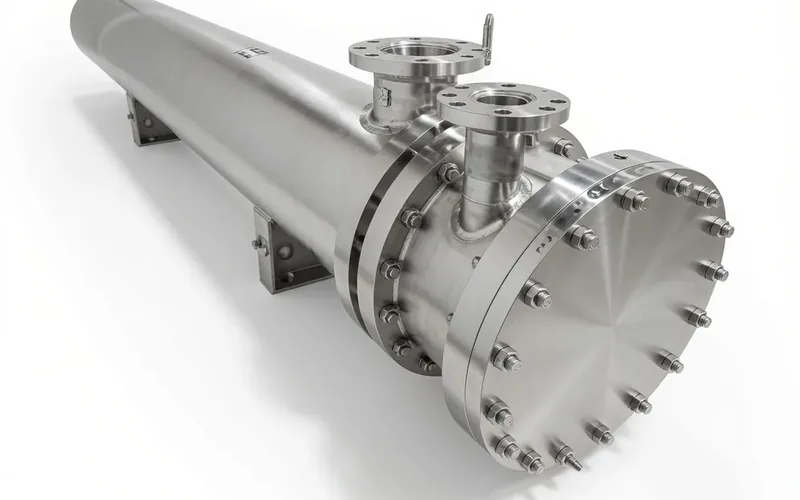
AEU Heat Exchangers
A removable cover, so the tube side opens in place.
+ Learn More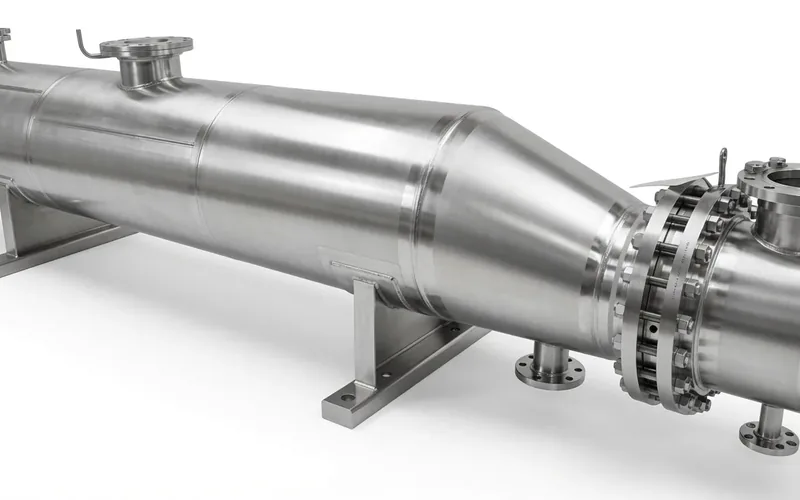
CONFIGURATION • TEMA
BKU Kettle Reboilers
Kettle reboilers and vaporizers on a U-bundle.
+ Learn More