
1-805-484-2992
Quotes - Engineering - SalesTank & Suction Heating U-Tube Bundles
Heating Inside the Vessel
Heating an entire tank of heavy product so that a fraction of it can be pumped is expensive and slow. Heating only the volume about to leave is neither, and it is usually the better engineering as well as the cheaper one.
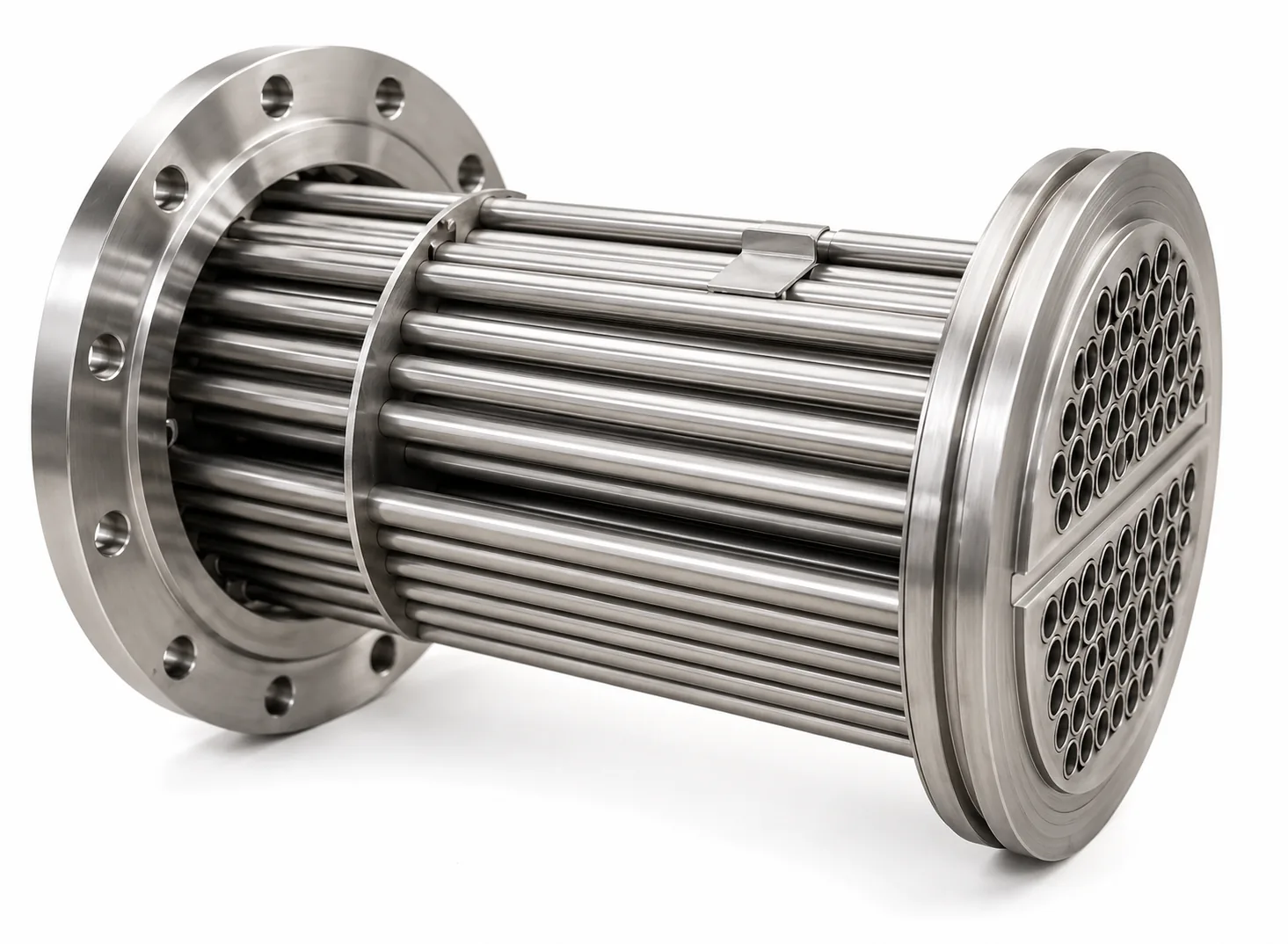
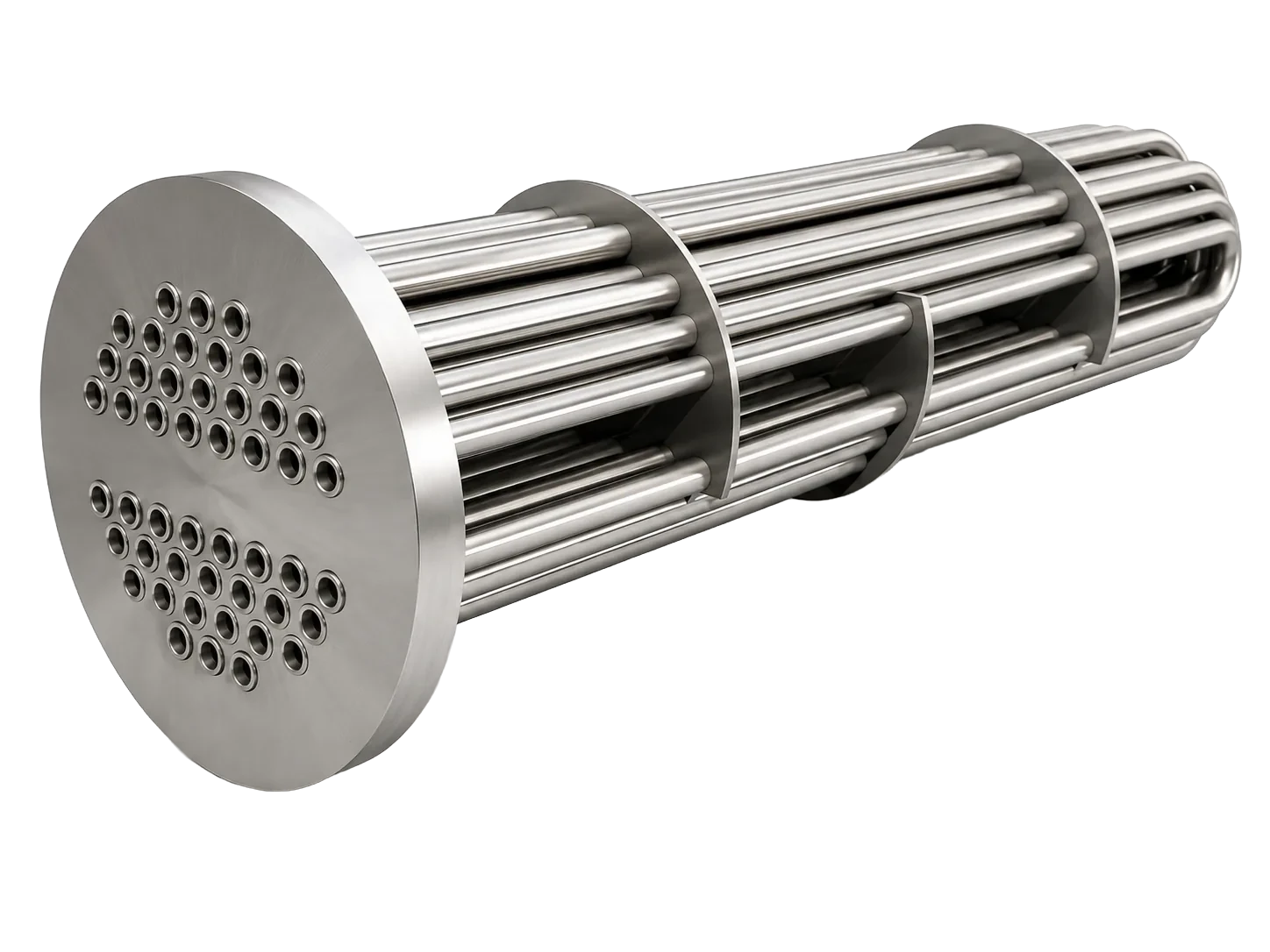
An immersion bundle is a U-tube assembly on a mounting flange that bolts to a tank nozzle or manway. Steam or hot oil runs through the tubes and the tank contents are the shell side — there is no shell, because the tank is the shell. It is one of the few places a heat exchanger is bought without a pressure vessel around it.
Whole-tank heating. A bundle sized to raise the entire contents to temperature. Simple, slow, and the correct answer where the whole inventory genuinely has to be uniform: asphalt held for loading, tallow that must not stratify, or product being conditioned before a batch operation.
Suction heating. A smaller bundle located at the pump suction, conditioning only the volume about to be drawn off. It uses a fraction of the energy, reaches pumpable condition far sooner, and leaves the bulk cold. On heavy fuel oil and heavy crude storage this is very often the right answer, and it is frequently overlooked because whole-tank heating is the more obvious idea.
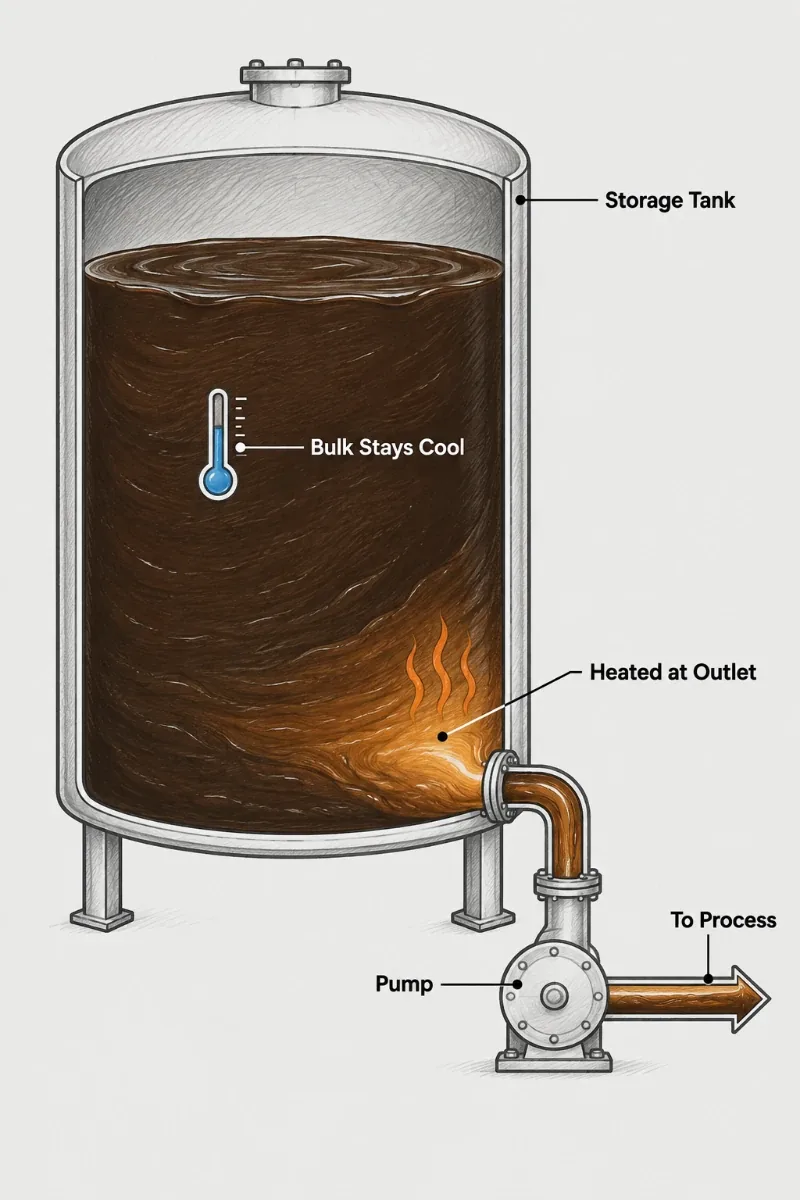
A whole-tank bundle raises the entire inventory. A suction heater conditions only the volume being drawn off, using a fraction of the energy to reach pumpable condition.
Request a QuoteTank & Suction Heating




Design Notes
Fins belong on the tank side. The controlling resistance is outside the tubes, where a viscous product moves only by natural convection. Adding plain tube area helps a little; adding fin surface on that side helps a great deal, because it puts area where the resistance actually is. The exception is any product that carbonizes or leaves residue, where fins clog faster than they earn their surface and plain tube with more of it is the more maintainable choice.
Watch skin temperature. Heating heavy product with high-pressure steam overheats the fluid at the tube surface and carbonizes it onto the bundle. That deposit insulates, which raises surface temperature further, which makes the deposit worse. Lower-pressure steam or a hot oil medium at a controlled temperature keeps the surface below the product's degradation point and keeps the bundle clean.
Practical constraints. The bundle is cantilevered from its mounting flange, so support and vibration have to be considered rather than assumed. Removal means withdrawing it back through the same opening, which sets a clearance requirement outside the tank equal to the bundle lenght — worth confirming on a tank in a bunded area or hard against a structure before the order rather than at the first outage.
Related pages: tank-mounted and immersion bundles, thermal fluid heating, industrial U-tube exchangers and replacement bundles.
Immersion Bundle Answers
On the pumping rate, not the tank volume. A suction heater raises only the flow drawn off, so the duty is the pumped mass flow times the product's specific heat, which for heavy oil is well below the 1 BTU/lb-F of water, times the temperature rise. The design temperature difference is between the steam and the cold bulk, since the bundle sits in product at storage temperature. The common mistake is sizing on an average inventory temperature; on a cold morning the inlet is colder and the viscosity far higher, and that is the case the pump needs covered.
Whatever opening the tank already has, usually a manway or a dedicated nozzle, and the bundle is designed to pass through it. The bundle diameter is set by the nozzle bore, so tube count and length follow from the opening rather than from the duty. A long bundle through a small flange works thermally but cantilevers further, so a support foot or guide inside the tank is specified. Give us the nozzle size, its elevation above the tank bottom and the distance to the far wall.
Yes, provided the flange size, bolt pattern and bundle length match the opening, which is why we ask for the nameplate or a sketch of the existing bundle. A replacement immersion bundle is a complete assembly of tubesheet, bends and flange, so nothing from the old unit is reused except the tank nozzle. Alloy can change at the same time: 90/10 copper-nickel for sulfur-bearing fuel oil, stainless where carbon steel has pitted. Fin pattern and tube pitch can also change if the old bundle fouled faster than it should have.