
1-805-484-2992
Quotes - Engineering - SalesU-Tube Heat Exchangers For
Tube Passes and Flow Arrangement
U-Tube Duty
Passes are how you buy velocity. Velocity buys heat transfer and fouling resistance, and it is paid for in pressure drop that rises far faster than the benefit does.
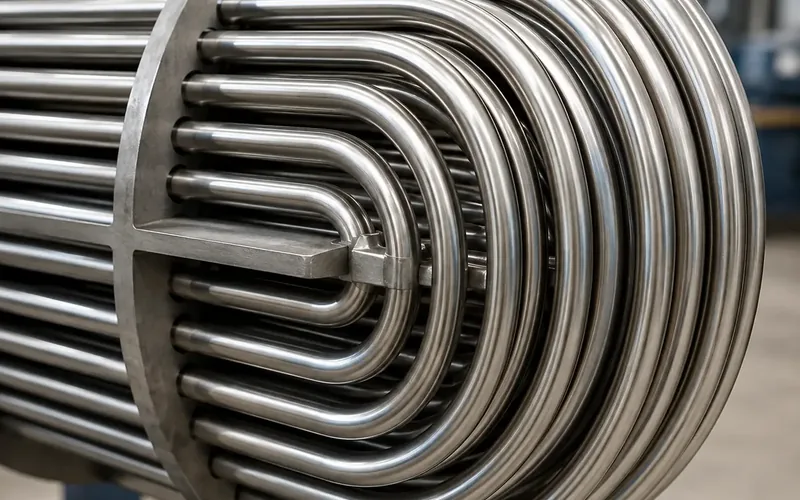
A U-tube bundle is two-pass minimum. Adding partition plates to the channel makes it four, six or eight. Each additional pass sends the fluid across the bundle again through fewer tubes, so velocity rises.
Why velocity matters. Below turbulent flow the tube-side coefficient collapses, and low velocity lets particles settle and deposits build. Most liquid duty targets a velocity band that keeps flow turbulent without eroding the tube wall.
Where the Extra Pass Stops Paying. Adding passes reduces the surface area needed, which reduces exchanger cost. It also raises pressure drop, which raises pumping cost and may exceed what the system can deliver.
There is usually a clear optimum, and it is frequently at two or four passes rather than higher. If a rating comes back needing eight passes to make the duty, that is a signal to look at a different shell or a larger unit rather than to accept the pressure drop.
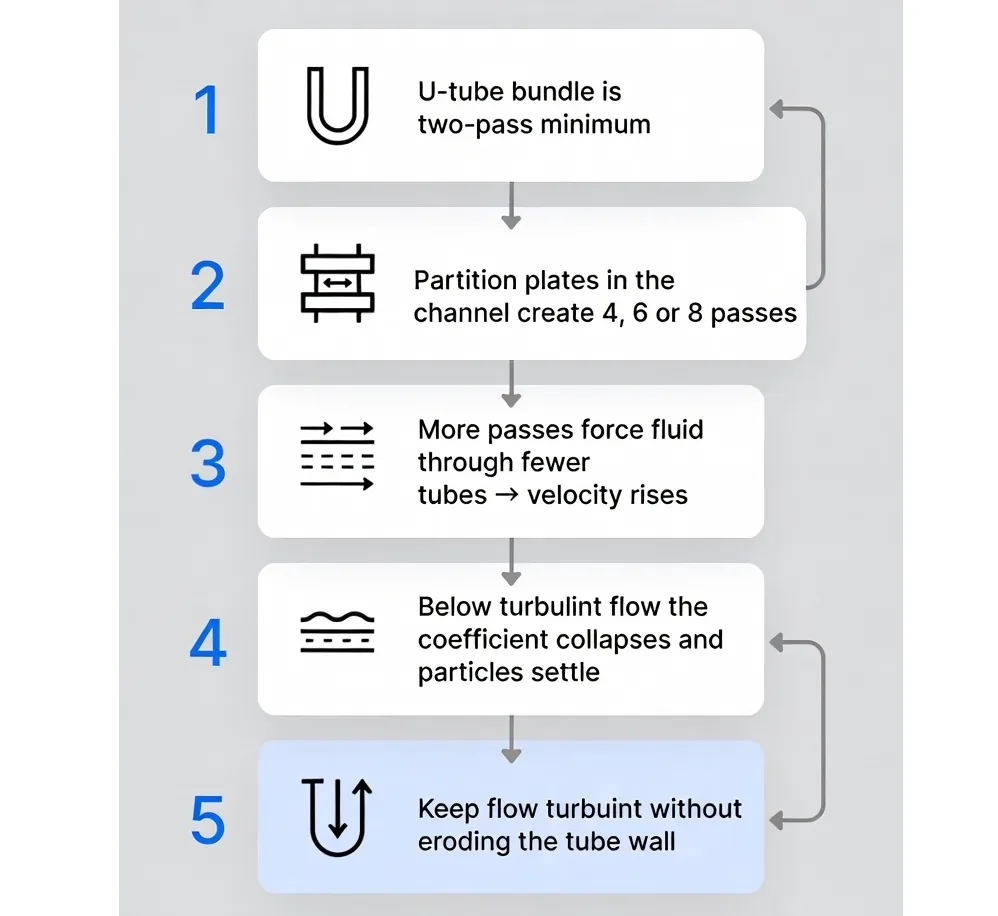
The even-pass constraint. Never forget it. Two, four, six, eight. If the duty needs a temperature cross, no pass arrangement fixes it; the shell or the rear head has to change.
Request a Quote



Passes, Velocity and Pressure Drop
A U-tube bundle is two-pass minimum; partition plates in the channel make it four, six or eight. Each additional pass sends the fluid accross the bundle again through fewer tubes, so velocity rises. Velocity buys heat transfer and fouling resistance and is paid for in pressure drop that rises far faster than the benefit does. The pass count is always even.
Two Pass
Four Pass
Six & Eight Pass
Related
TUBE BUNDLE DESIGN • DESIGN
U-Bend Radius & Bending
Minimum radius, wall thinning and stress relief.
+ Learn More
TUBE BUNDLE DESIGN • DESIGN
Baffles & Tube Supports
Baffle cut and spacing, and flow-induced vibration.
+ Learn More
DESIGN • CONSTRUCTION
Tube Bundle Design
Bend radius, layout, passes, baffles and span.
+ Learn More