
1-805-484-2992
Quotes - Engineering - SalesU-Tube Heating Applications
Because saturated steam meeting cold liquid is a large temperature difference, and startup makes it abrupt. A fixed tubesheet exchanger would need an expansion joint; a U-tube bundle simply expands.
Almost always the tubes. Steam is clean, so it suits the side that cannot be mechanically cleaned, and containing steam pressure in tubes is cheaper than in a shell. It also puts the process fluid on the shell side where the bundle can be withdrawn for cleaning.
Condensate that cannot leave, more often than fouling. A flooded exchanger loses effective surface progressively and looks identical to fouling from the control room. Check trap sizing and the drainage arrangement before you pull the bundle.
Tell us the turndown range at sizing. An exchanger sized only for peak load leaves the control valve operating near the bottom of its range, which produces unstable temperature and, on steam duty, can cause stall where condensate will not drain against back pressure.
Occasionally, on batch processes that alternate. It requires the design to be checked at both conditions and at the transition, and the thermal cycling that results is exactly what U-tube construction handles best.
Heating is the largest single family of U-tube duty, and the reason is thermal. Steam meeting cold water is a large temperature difference by definition, and a U-bundle absorbs it without an expansion joint.
Whether the heating medium is steam, hot water, glycol or thermal oil, the same two questions decide the exchanger. How large is the temperature difference between the shell and the tubes, and which side fouls? Heating duty routinely produces a large answer to the first, which is why U-tube construction dominates it.


What Decides the Design
Heating duty is defined by the medium and its temperature, the required outlet condition, the flow and turndown range of the heated stream, and the pressure drop available on each side. On steam duty the condensate route matters as much as the surface area: an exchanger that cannot drain loses surface progressively and behaves exactly like one that is fouling.
Why U-Tube Suits Heating
The heating medium is almost always the clean side, so it belongs in the tubes where mechanical cleaning is unavailable. That leaves the process stream on the shell side where the bundle can be pulled and the surface reached. Free thermal expansion handles the large differential and the startup transient, with no expansion joint to fatigue.
Related
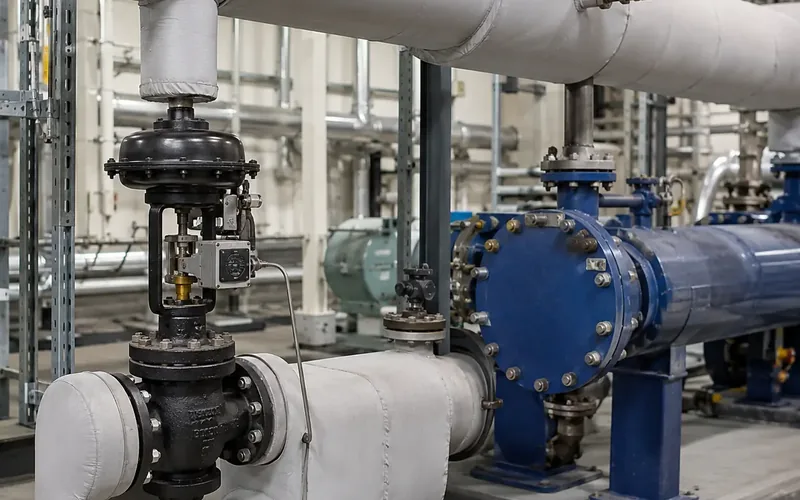
HEATING • APPLICATION
Steam-to-Water Heating
Pass arrangement, trap sizing, turndown and stall.
+ Learn More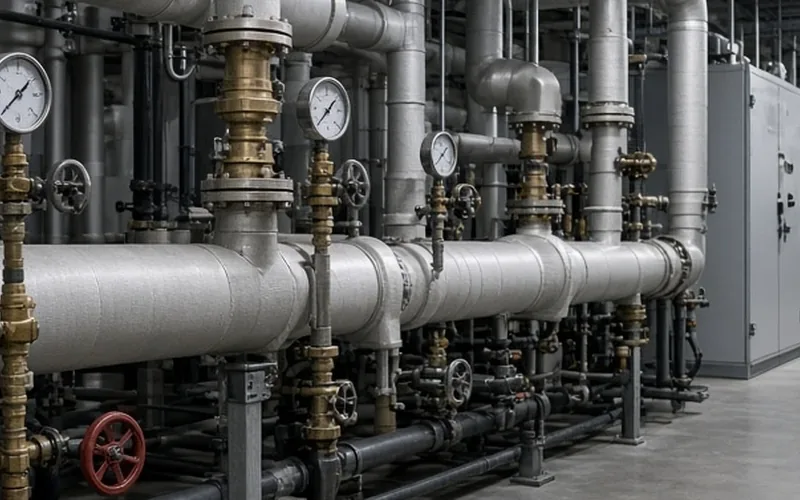
HEATING • APPLICATION
Hot Water & Glycol
Hot water and glycol U-tube heat exchangers for liquid heating loops. Glycol concentration effects on viscosity and heat transfer, freeze protection and water quality.
+ Learn More
HEATING • APPLICATION
Thermal Fluid Heating
Hot oil duty and the film temperature limit.
+ Learn More