
1-805-484-2992
Quotes - Engineering - Sales3-A Sanitary U-Tube Exchangers
What the Standard Actually Requires
3-A is not a marketing claim. It is a published sanitary standard with third-party verification behind it, and a symbol authorization that appears on the nameplate. If your auditor asks for it, nothing less will do.
The 3-A Sanitary Standards govern the design of equipment that contacts milk and milk products, and by extension a great deal of other food processing equipment. The standard is prescriptive about the things that decide cleanability rather than the things that decide thermal performance, which is why a unit can meet its duty perfectly and still fail a 3-A review.
Materials and finish. Product-contact surfaces must be 316L or an equivalent corrosion-resistant alloy, finished to at least the specified smoothness and free from pits, folds and crevices. The finish requirement is about soil release, not appearance.
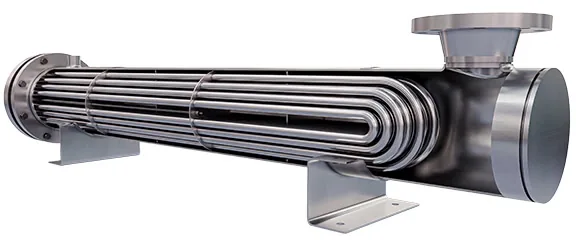
| PRODUCT | CONSTRUCTION | STANDARD | BUNDLE |
| Sanitary Heat Exchanger | U-Tube, single tubesheet | 3-A Sanitary Standard | Removable |
| Wetted Material | 316L stainless steel | Dual certified, passivated | 32 Ra typical |
Typical 3-A Sanitary U-Tube Construction
- Wetted material: 316L stainless steel, dual certified
- Non-wetted material: 304L or 316L stainless steel
- Product contact finish: 32 Ra maximum, mechanically polished and passivated
- Exterior finish: 40 Ra typical, or mill finish where permitted
- Tube joints: Seal welded, full penetration, crevice free
- Product connections: Sanitary tri-clamp or extended tube weld ends
- Gasket materials: PTFE, EPDM, Viton or Gylon to suit chemistry
- Orientation: Sloped for positive drainage in installed position
- Bundle: Removable for inspection and manual cleaning
- Code: ASME Section VIII Division 1, U-stamp available
3-A Duty in Practice
Drainability. The unit has to self-drain in its installed orientation. That means sloped shells, drain connections at the true low point, and no horizontal run that holds liquid when the process stops. On a U-tube exchanger this is largely a question of how the shell is sloped and where the nozzles sit.
No crevices or dead legs. Tube-to-tubesheet joints are seal welded so there is no annular gap behind a rolled joint. Gaskets sit in grooves that are themselves cleanable. Instrument connections and vents are kept within dead-leg ratio limits.
Symbol authorization. The 3-A symbol is granted to a manufacturer for a specific product following third-party verification, and it is renewable. A unit built to 3-A principles but without authorization is a different thing from a symbol-authorized unit, and your quality group will care about the distinction.
Where 3-A Units Are Specified
Fluid milk, cream and cultured products are the obvious cases, but the standard reaches much further in practice. Whey and lactose concentration, ice cream mix, liquid egg, plant-based milks that share a dairy plant, and sweetener and flavor systems that feed dairy lines all routinely carry a 3-A requirement, usually because the plant standardized on it rather than because each duty demands it.
The commercially useful thing to know is that specifying 3-A on a utility duty that never touches product adds cost without adding protection. We will happily quote it either way, but if a hot water loop three valves away from the product stream is being specified to 3-A out of habit, it is worth asking the question.
3-A, FDA and USDA Are Not the Same Thing
These get used interchangeably and they should not be. 3-A is an equipment design standard. FDA governs the acceptability of the materials themselves, including elastomers and lubricants. USDA acceptance relates to equipment used in meat and poultry establishments and has its own review path.
A 3-A symbol authorized exchanger will normally satisfy the material questions as a matter of course, because the alloys and elastomers permitted by the standard are already FDA compliant. What it does not automatically do is answer a USDA question, so if the plant falls under that jurisdiction it is worth confirming rather than assuming.
What Arrives With the Unit
A properly documented 3-A U-tube exchanger ships with material test reports for the pressure-retaining and product-contact components, weld procedure and welder qualification records, surface finish verification, passivation certification, the hydrostatic test record, and where applicable the ASME U-1 data report and National Board registration.
That package is not paperwork for its own sake. During an audit or a qualification exercise it is the evidence that the unit is what the nameplate says it is. A unit that meets its thermal duty but arrives without documentation can hold up a line for weeks.
Audit and Symbol Questions
3-A Sanitary Standard 12, Tubular Heat Exchangers, is the equipment standard a U-tube unit is authorized under. It covers the product-contact surfaces, joints, gaskets, drainability and inspection access of tubular exchangers specifically, and it references the general material standards for the alloys and elastomers used. Specify it by number on the data sheet rather than writing 3-A compliant, because an auditor will look for the standard the symbol was granted against and a general statement does not answer that. Where the unit also carries ASME stamping, the two sit side by side on the nameplate; the standard does not replace the pressure code and the code says nothing about sanitation.
Annually, with an independent third-party verification inspection on a five-year cycle. The authorization belongs to the manufacturer for a specific model line and lapses if it is not renewed, so a unit built years ago under a since-lapsed authorization is a different thing from one shipped under a current one. If your audit date is firm, ask for the authorization number and its current status with the quotation and keep that record in the equipment file. A supplier whose authorization lapsed during the order is the kind of surprise that surfaces only when the auditor cross-checks the number against the published list.
Yes. The shell exterior, saddles, lifting lugs and non-wetted hardware can be 304 or 304L, and the standard allows coated carbon steel on parts well away from product and splash. What the standard will not accept is a non-contact surface that collects soil or corrodes onto a product-contact one, so painted or plated parts in the washdown zone get questioned. On a steam-heated unit the shell is utility contact, not product contact, and a 304L shell with a 316L bundle is the usual and acceptable combination. Keep the fasteners stainless too; a carbon steel bolt rusting onto a polished shell is the first thing a plant hygienist notices.
Only when it is built by the symbol holder under the same authorization and to the same drawing. The symbol covers the equipment as manufactured, so a bundle fabricated elsewhere to look the same does not carry it, even if the shell still bears the mark. For a plant under audit that is the whole point of buying the drop-in bundle from the authorized source. The new bundle ships with its own finish verification and material certificates, and the original nameplate remains valid. If the bundle changes the design, for example a different tube count or gasket groove, the change has to fall within what the authorization covers, which is checked before fabrication.
The nameplate symbol and number first, then whether the unit drains, whether the gaskets are the specified material and intact, and whether the product-contact surfaces are free of pits and scoring. A good auditor opens a clamp and looks at the gasket groove, checks the slope with a level, and asks for the finish verification and the passivation certificate from the file. Common findings are a drain valve above the true low point after a piping change, a gasket replaced with the wrong compound during a shutdown, and a bundle that was pulled and reinstalled with the shell gasket reused. None of those are exchanger defects; they are installation and maintenance items that the documentation package helps you defend.
Yes, by separate material standards: 3-A Standard 18 for rubber and rubber-like materials and Standard 20 for plastics. The exchanger standard requires that elastomers in product contact conform to one of them, which is why the gasket compound is called out on the drawing rather than left to the supplier. A gasket that is FDA-compliant is not automatically 3-A-listed; the 3-A material standards add tests for cleaning-compound resistance and surface condition after repeated CIP. When reordering gaskets for a 3-A unit, order against the drawing callout. A substitute that is chemically fine but not conforming turns up as an audit finding, and it is the cheapest finding to avoid.
Related Sanitary Construction
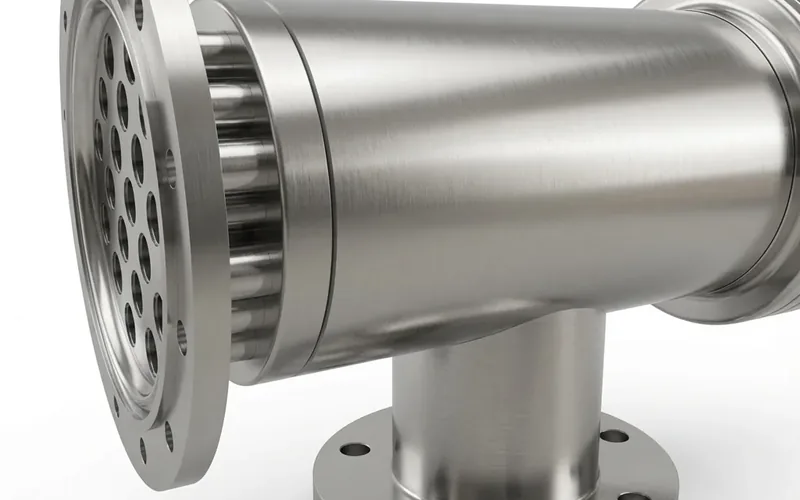
CONTAINMENT • PRODUCT
Double Tubesheet
Where a tube leak could put utility fluid into product and nobody would see it happen.
+ Learn More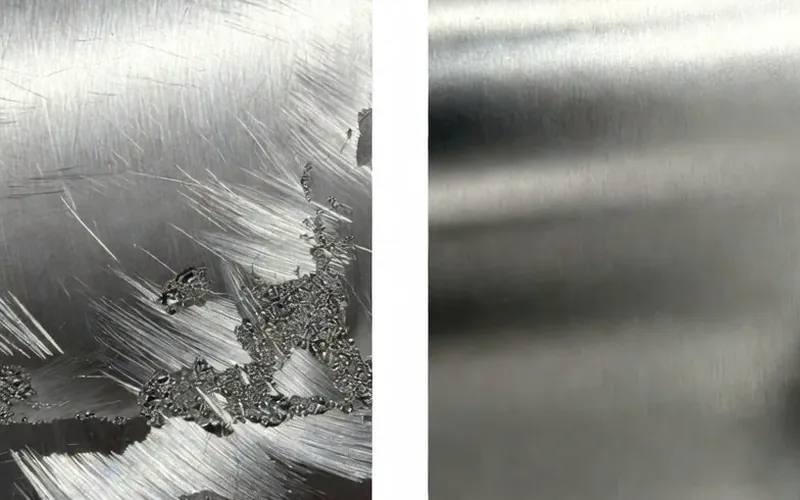
FINISH • HIGH PURITY
Electropolished
Lower achievable Ra and a passive chromium-rich layer, for duty where mechanical polish is not enough.
+ Learn More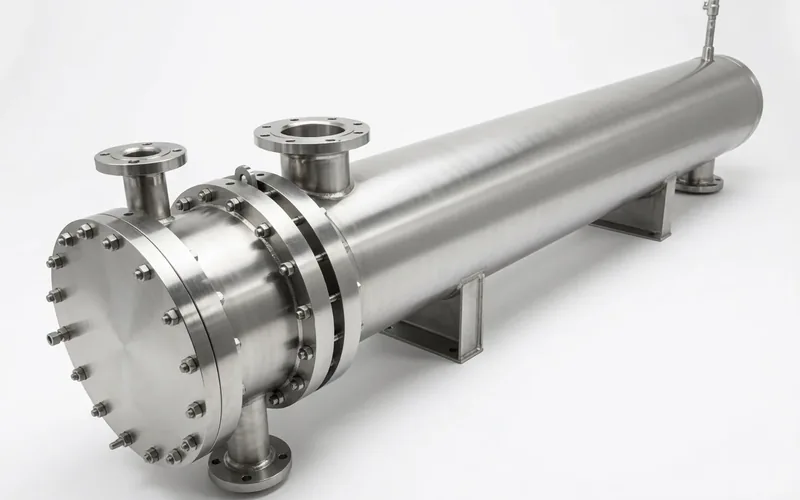
CONNECTIONS • CLAMP
Tri-Clamp Units
Clamp sizing, gasket selection and temperature limits on the sanitary process connections.
+ Learn More