
1-805-484-2992
Quotes - Engineering - SalesOrientation and Mounting
Orientation is usually decided by available space, and then everything else has to live with the consequence. Venting, draining, support design and the room you need to pull the bundle all follow from it.
A horizontal exchanger on saddles is the default and suits most duty. A vertical unit saves floor space, drains under gravity and self-vents, at the cost of overhead clearance for bundle removal. A tank-mounted bundle entering through a manway flange is a different animal entirely, heating the contents of a vessel rather than a stream passing through.
- Horizontal is the default. Saddle supported, straightforward to pipe, and the arrangement most standard units are designed around.
- Sliding and fixed saddles. One saddle fixed, one slotted, sized for calculated shell growth. Fixing both transmits thermal load into the nozzles and the pipework.
- Bundle pull clearance. Clear space at least equal to bundle length in line with the shell, plus handling room. The most commonly forgotten item in a layout.
- Vertical saves floor space. Gravity drainage of condensate, self-venting at the top, and a much smaller footprint on a crowded plot.
- Overhead lift on vertical units. The equivalent constraint to horizontal pull clearance, and just as easy to overlook.
- Tank mounted bundles. A U-bundle entering through an ANSI manway flange to heat vessel contents directly, with no external circulation loop.
Orientation is decided by the room you have, then everything else follows.
- Horizontal on saddles is the default and suits most duty
- Vertical saves floor space, self-vents and drains by gravity
- Immersion bundles heat the tank contents with no external circuit
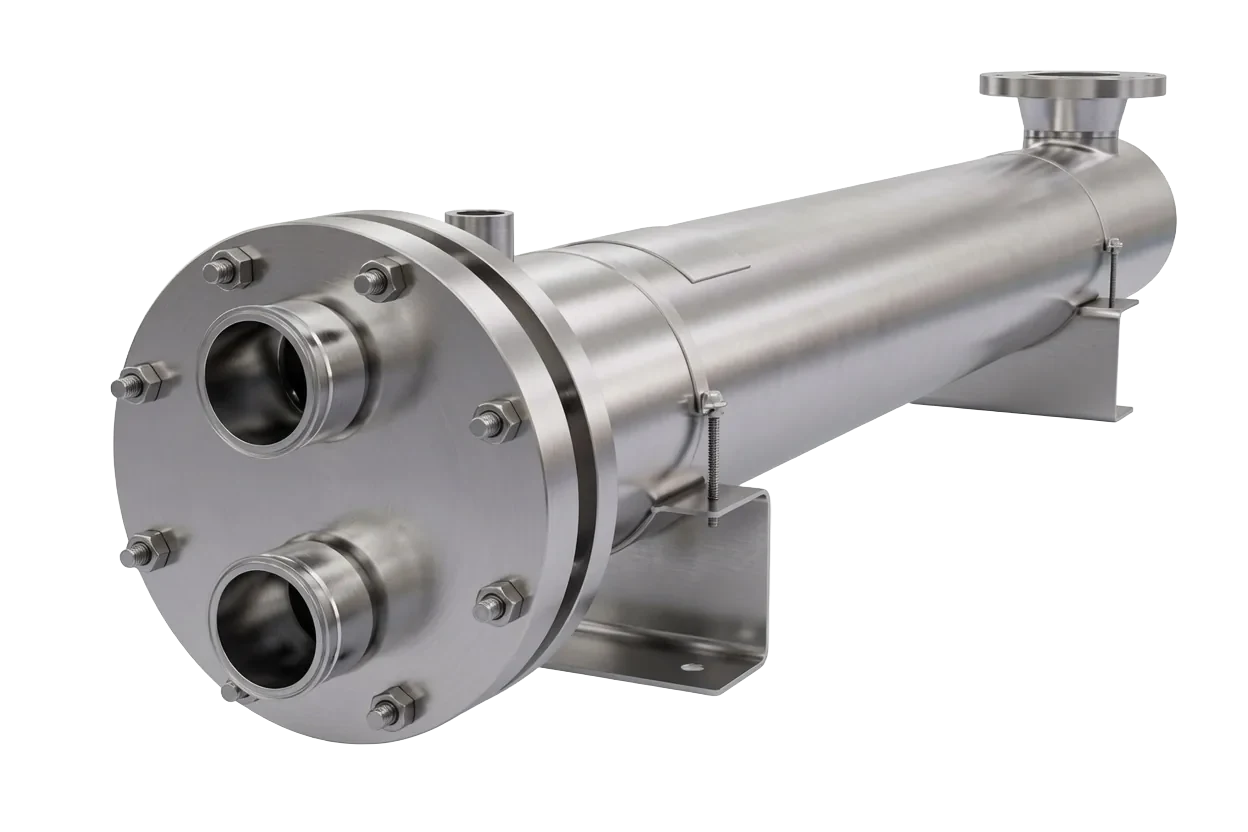
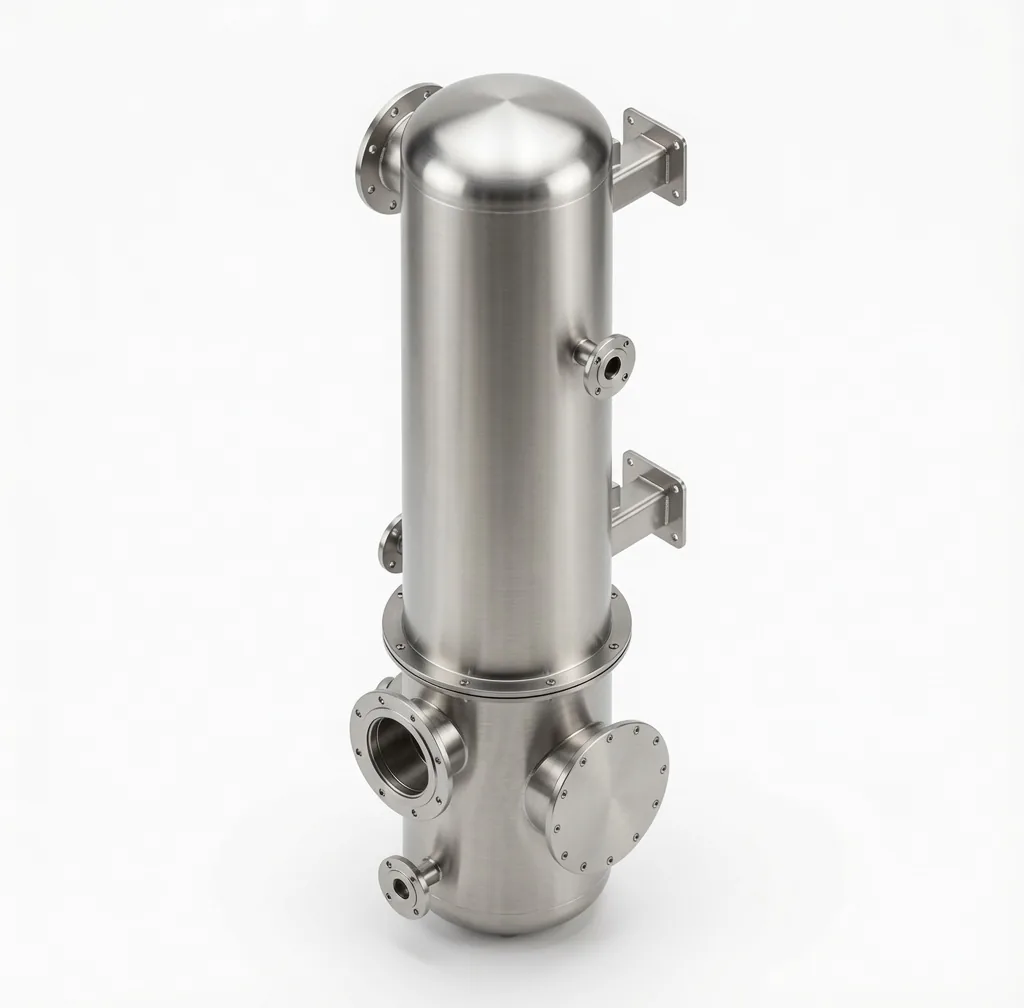
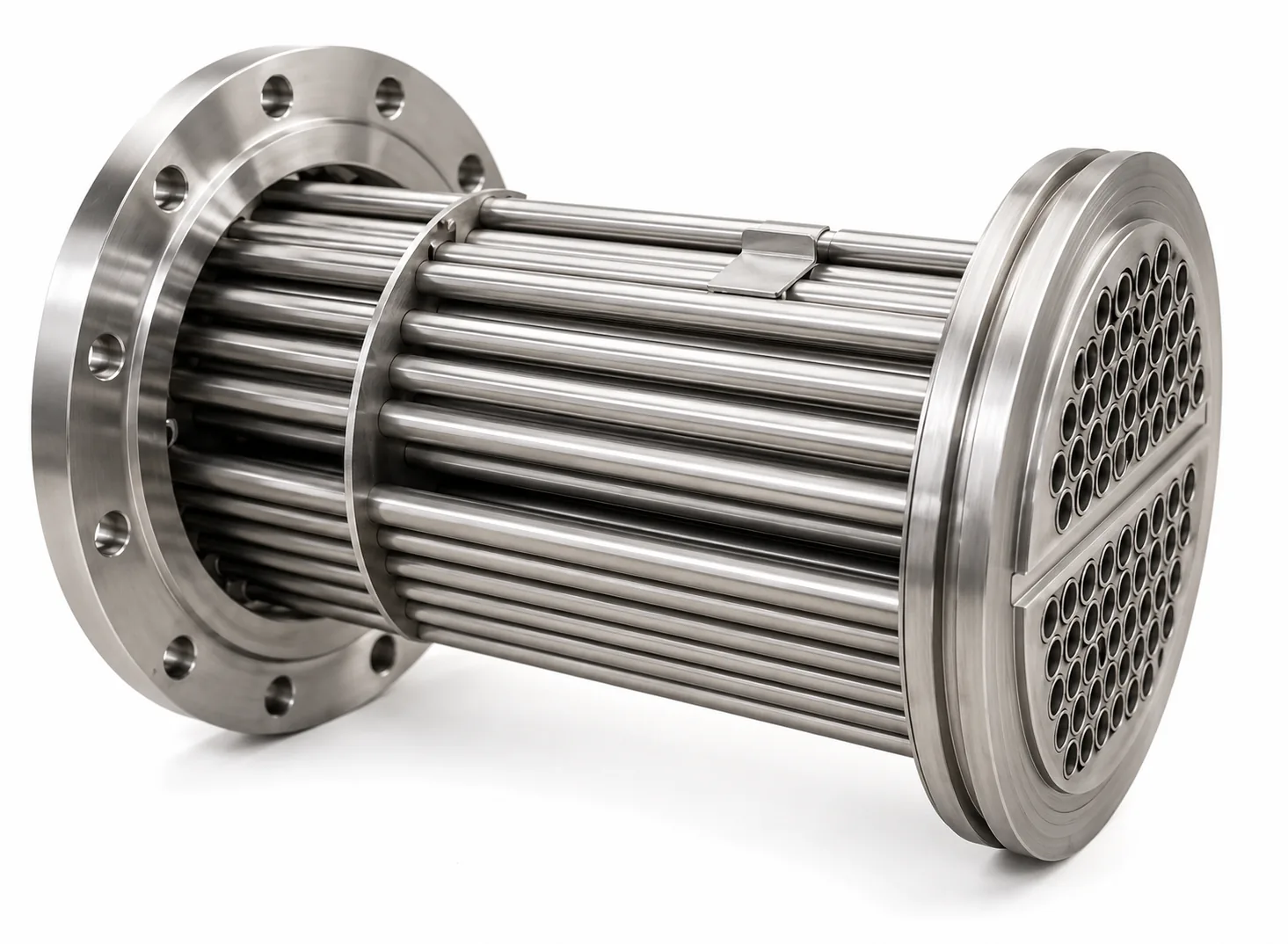
Orientation and Mounting
Venting and Draining Follow Orientation
A horizontal shell traps gas at the top and liquid at the bottom, so it needs a vent at the high point and a drain at the low point, both located against the installed slope rather than the drawing.
A vertical shell largely solves both by geometry: gas rises to the top connection and liquid falls to the bottom. On condensing and sanitary duty that is a significant advantage and often decides the orientation on its own.
Plan the Maintenance Access First
The removable bundle is the reason to buy a U-tube exchanger. If the layout does not leave room to remove it, you have paid for a feature you can not use.
On horizontal units a davit arm makes bundle removal a manageable operation rather than a crane job. On vertical units, confirm the lift height and the route before the steelwork is set.
Orientation and Mounting
CONFIGURATION • TEMA
TEMA U-Tube Types
BEU, AEU, BKU and DEU, and what the front head decides.
+ Learn More
CONFIGURATION • TEMA
U-Tube vs Other Designs
Honest comparisons, including where U-tube is wrong.
+ Learn More