
1-805-484-2992
Quotes - Engineering - SalesPharmaceutical U-Tube Heat Exchangers
Pharmaceutical construction sits a level above sanitary. The metallurgy is similar; what changes is that every weld, every surface and every material is documented, because a unit you cannot qualify is a unit you cannot use.
An exchanger destined for a validated system is bought twice: once as hardware and once as evidence. ASME BPE governs weld procedures and examination, surface designations, dead-leg ratios, slope and drainability, and the turnover package that follows the unit through qualification. A U-tube bundle suits this work because the single tubesheet end makes a double tubesheet straightforward, and the removable bundle makes the shell side inspectable.
- ASME BPE construction. Weld procedures, welder qualification and examination records to the standard, with material traceability from mill certificate through to nameplate.
- Documented surface finish. SF designations rather than a bare Ra number, verified and certified on the surfaces the specification names.
- Dead-leg control. Nozzle projections, instrument connections and vents kept inside the specified L/D ratio so nothing holds stagnant fluid.
- Double tubesheets. A vented interspace wherever a tube leak could reach product, WFI or clean steam without announcing itself.
- Slope and drainability. Designed to drain in the installed orientation, because a validated cleaning cycle has to leave nothing behind.
- Turnover package. Material certificates, weld maps, finish and passivation certification, hydro records and the ASME U-1 form, delivered with the unit.
- Removable bundle
- Free thermal expansion
- ASME code available
- Removable bundle
- Free thermal expansion
- ASME code available
- Removable bundle
- Free thermal expansion
- ASME code available
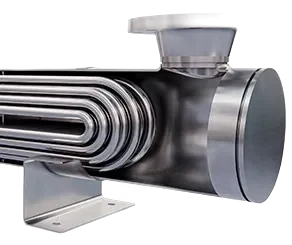
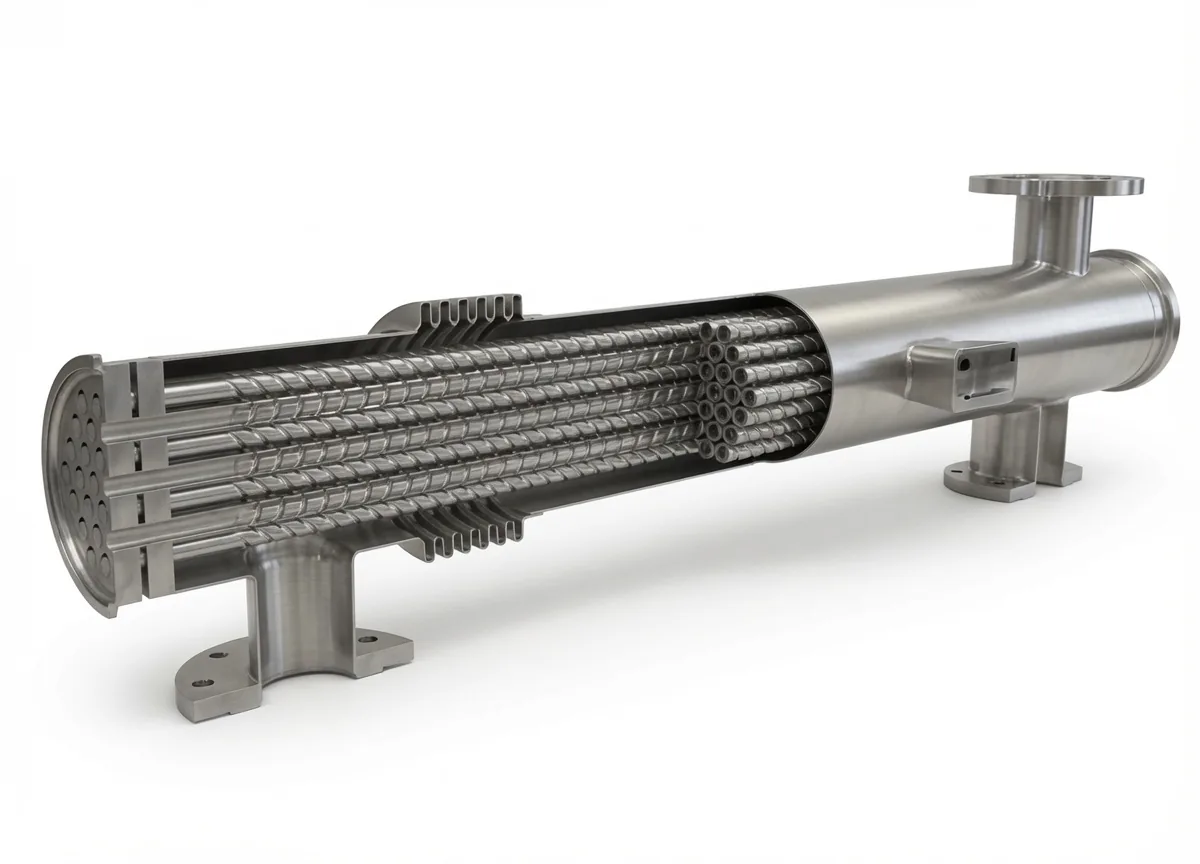
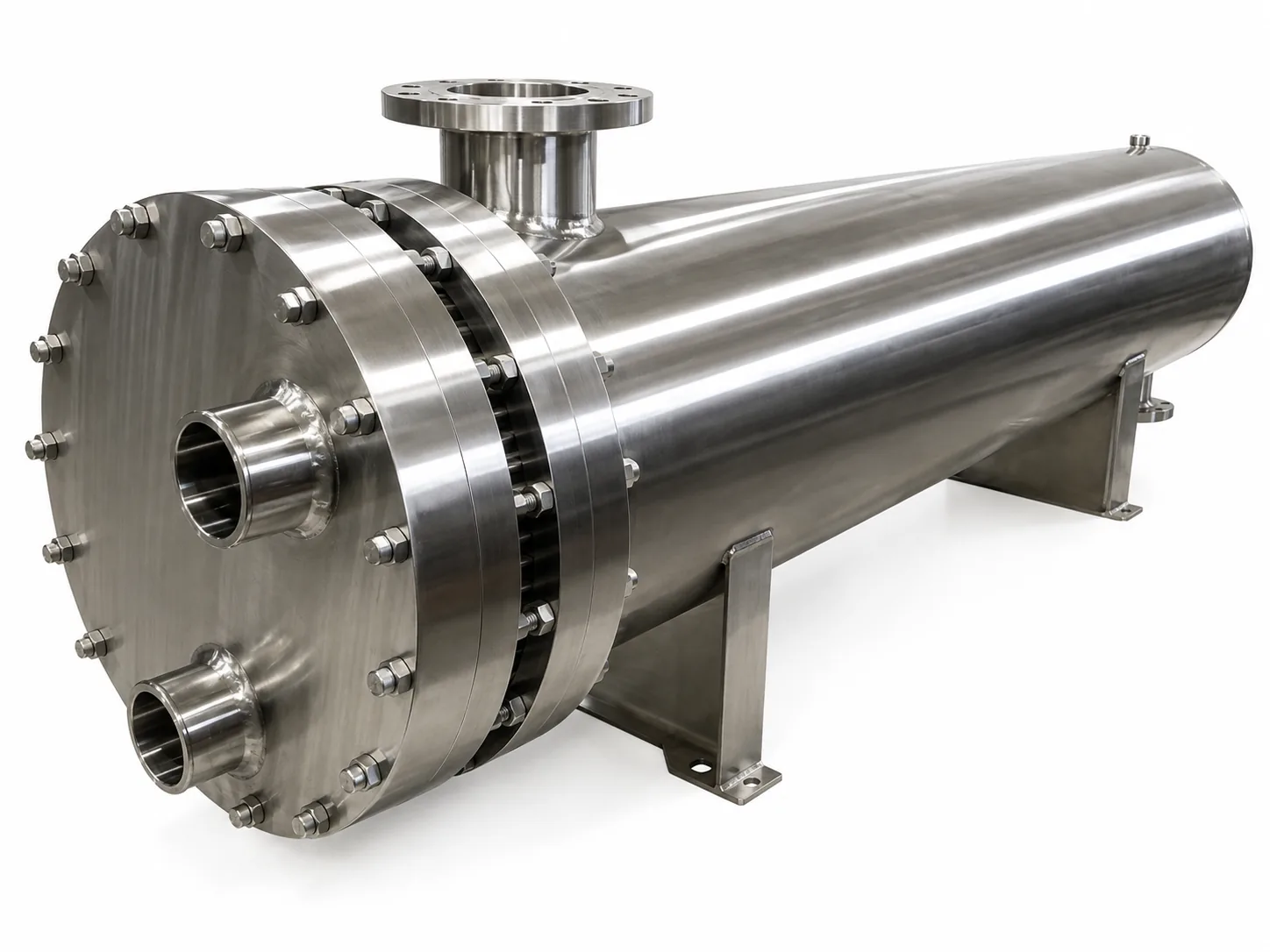
Pharmaceutical U-Tube Heat Exchangers
Qualification Starts at the Purchase Order
The most expensive mistake on pharmaceutical equipment is treating documentation as something that gets assembled after fabrication. Weld maps have to be produced as welds are made. Material traceability has to survive from mill certificate through cutting and forming to the finished assembly. Finish verification has to happen while surfaces are still accessible.
Tell us at quotation what your IQ and OQ protocols will ask for. Adding a requirement during fabrication is possible; reconstructing evidence afterward frequently is not.


Where Pharmaceutical Duty Differs From Sanitary
Food and dairy work is governed largely by cleanability. Pharmaceutical work adds containment, traceability and change control on top of it. The same 316L bundle can serve both; the difference is the specification around it.
The practical consequences are a heavier documentation package, tighter control on weld ferrite and heat tint, more frequent use of double tubesheets, and a strong preference for electropolished surfaces on high-purity water and bioprocess duty.
Pharmaceutical U-Tube Heat Exchangers

U-TUBE • CONSTRUCTION
Industrial U-Tube
Code stamped, TEMA R, B or C, carbon steel to alloys.
+ Learn More
U-TUBE • CONSTRUCTION
Stock & Custom Units
Shelf units that ship in days, or an engineered build.
+ Learn MoreQualification and Build Answers
Dimensional check against the approved drawing, a witnessed hydrostatic test, surface finish readings at the points the specification names, borescope inspection of accessible product-contact welds, and a drainability demonstration in the installed orientation. The turnover package is reviewed against its index at the same visit. Riboflavin coverage testing is added where the cleaning validation asks for it. The FAT is where a missing certificate or an out-of-range Ra is found while the unit is still at the shop and the surface can still be reworked. Send the FAT protocol with the order so the fabrication plan carries the hold points.
The heat number is transferred to each tube length before cutting and again to each U after bending, with the transfer recorded in the material traceability log, so every tube in the finished bundle traces to its mill certificate. The same applies to tubesheet plate, nozzles and ferrules. ASME BPE requires that traceability on product-contact material and the turnover package has to show it. Where a tube is replaced during fabrication, the record shows the change and the new heat number.
ASME BPE controls both through material chemistry and weld acceptance criteria rather than a single number. Tubing for orbital welding is specified with sulfur held in a narrow range so penetration is predictable, and heat tint is judged against a published color referance with the darker grades rejected on product-contact surfaces. Ferrite in the weld is kept low because it corrodes preferentially and roughens the surface. A shielding gas purge on the product side during welding is what holds tint within the acceptable grades, and the weld map records the purge.
As a like-for-like replacement when it is built to the original approved drawing, material specification and finish, with a turnover package that mirrors the first one. The quality group then reviews it under change control rather than requalifying the system. Any deviation, including an alloy upgrade or a different gasket, is a change and needs its risk assessment before the order is placed. Keep the original drawing number and revision on the replacement so the record stays continuous.