1-805-484-2992
Quotes - Engineering - SalesBonnet and Channel Head Options
Choosing the Front Head
One decision, two honest answers. A bonnet is cheaper and has fewer joints. A channel lets you open the tube side without touching the piping. Everything else is detail.
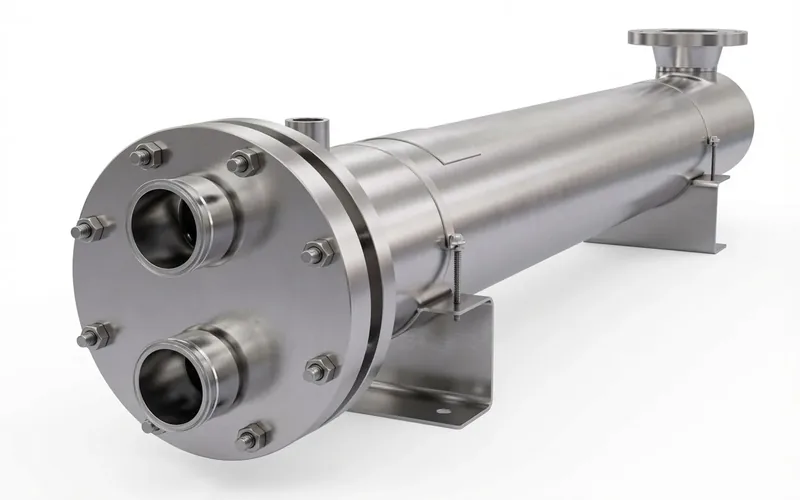
The front head carries the tube-side nozzles, houses the pass partitions and closes the tube side against pressure. TEMA type B is a bonnet: an integral head that bolts to the shell as one piece. Type A is a channel with a separately removable flat cover.
The bonnet case. Fewer gasketed joints, less flange, lower cost and lower weight. At high pressure and large diameter these advantages compound, which is why bonnets dominate the upper end of the pressure range alongside D-type closures.
Typical Construction
- Bonnet (TEMA B): Integral head, bolts to shell as one piece
- Channel (TEMA A): Cylindrical section with separately removable cover
- Tube-side access, bonnet: Requires disconnecting tube-side piping
- Tube-side access, channel: Cover removal only
- Relative cost: Bonnet lower; difference grows with diameter and pressure
- Gasketed joints: Bonnet fewer; channel more
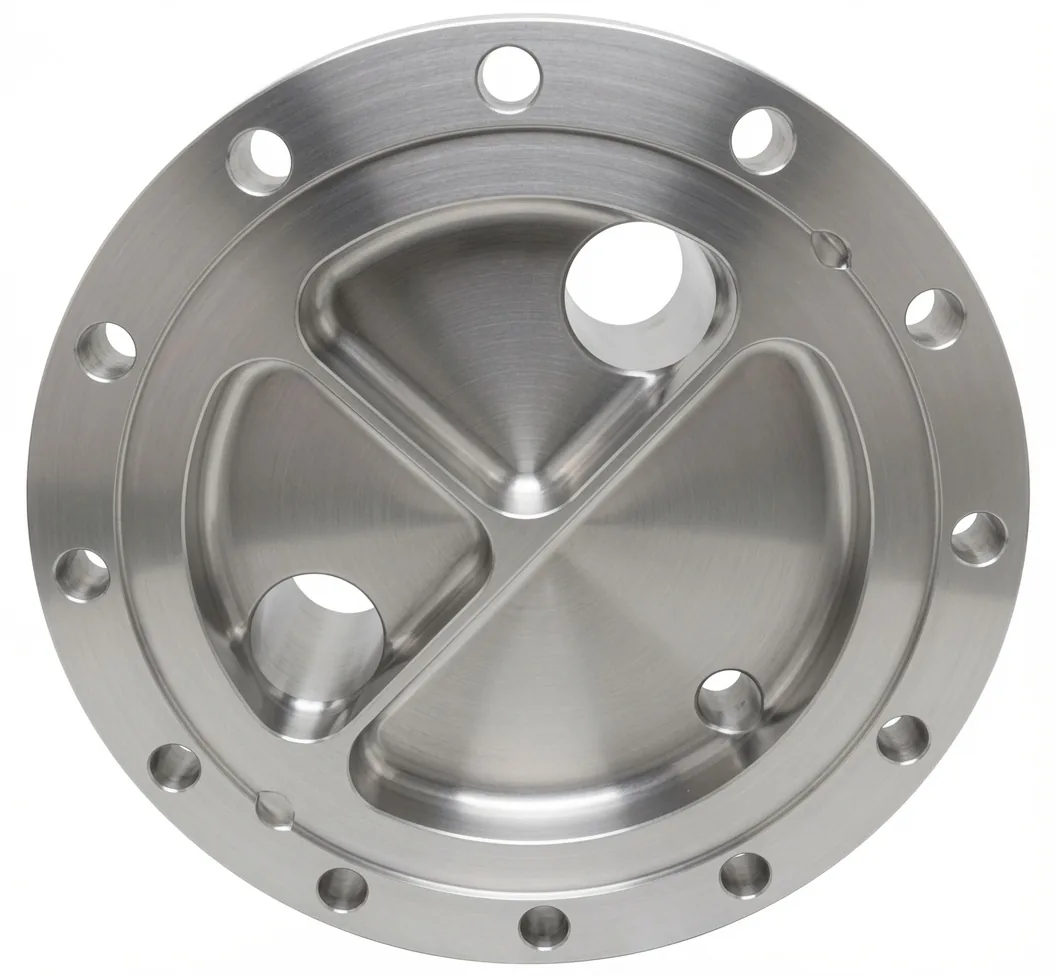
- Pass partitions: Plates with ribbed gasket in either head
- High pressure: Bonnet or D-type closure preferred
- Nozzle location: Tube-side inlet and outlet both on the front head
- Codes: ASME Section VIII, TEMA R, B or C
A TEMA type A front head: a short cylindrical section bolted to the shell with a separate flat cover on its face, so the tube side can be opened without disturbing the piping.
Bonnet and Channel Head Options
The channel case. Remove the cover and the entire tubesheet face is exposed with the tube-side piping still connected. On any unit that gets inspected, plugged or cleaned on a schedule, that saves real time repeatedly.
Pass partitions. Multi-pass tube sides need partition plates and a matching gasket rib. A partition gasket that leaks does not announce itself; it just short-circuits flow and quietly costs you duty. Reassembly detail matters here more than most people expect.
Both Tube Nozzles Are on This End
Because a U-tube bundle returns the fluid to where it started, the tube-side inlet and outlet are both on the front head. That head is also the one you have to clear to withdraw the bundle.
Plan the piping so those connections can be broken without dismantling surrounding equiptment, and leave the bundle-pull clearance in front of them. Otherwise the removable bundle is removable only on paper.
Head Choice in Practice
Yes, and it is one of the most common ways to hold cost down when only the tube-side fluid is corrosive. The head, the tubesheet face and the tubes see the tube-side fluid; the shell sees only the shell-side fluid. A stainless or 90/10 CuNi head on a carbon steel shell is a normal build. With a bonnet the whole head is alloy. With a channel the barrel is alloy or clad, and the flat cover can be clad on its wetted face only, which saves real money on a thick cover. The mistake is an alloy head bolted to a bare carbon steel tubesheet in water service, which puts a galvanic couple exactly where the gasket seals.
With a channel head, yes: remove the cover, find the tube, drive a tapered plug into each end. Locate it by holding air pressure on the shell side and watching the tubesheet face for bubbles. With a bonnet you first break the tube-side piping and lift the head, which turns a two-hour job into a full shift. Both ends of a U-tube are on the same tubesheet, so each failed tube takes two plugs and removes its whole length from service. Keep a plug map for the unit.
Watch tube-side pressure drop. Fouling raises it while duty falls; a partition bypass lowers it while duty falls, because the leaking fluid skips the tube passes entirely. Compare the drop at a known flow against the commissioning reading. A drop below the as-new figure with a short outlet temperature means the gasket rib has lifted off the partition plate. It usually follows a reassembly where the cover bolts were tightened unevenly or the rib was set a few degrees off the plate. The fix is a new gasket seated on the rib and bolts brought up in a star pattern to the specified torque, then a fresh pressure-drop baseline.
Yes, on either head type, and the bonnet needs them more because it cannot be opened to check. In a 2-pass head the inlet pass sits on one side of the partition and the outlet pass on the other. Whichever is on top traps air at its high point; whichever is on the bottom holds liquid when you try to empty the unit. An air pocket in the upper pass blanks the top rows of tubes, and the symptom is a heater that only reaches rating after it has run for a while. Specify a small vent at the top of the head and a drain at the bottom, and use both at every startup.
Related
CONFIGURATION • TEMA
E-Shell Single Pass
The single-pass default shell, and its limits.
+ Learn More