
1-805-484-2992
Quotes - Engineering - SalesDesign & Construction
Bundles, Tubesheets, Materials and Codes
The difference between a U-tube exchanger that lasts twenty years and one that fails in two is usually decided before fabrication starts, in the bend radius, the joint detail and the alloy chosen for the film rather than the bulk fluid.
The construction detail that matters is spread over four sections and seventeen pages: U-Bend Radius & Bending, Tube Passes & Flow, Baffles & Tube Supports, Single Tubesheet Design, Double Tubesheet Design, Rolled vs Seal-Welded, Gaskets & Sealing, 304L & 316L Stainless, Carbon Steel, Duplex & High Alloys, Titanium & Copper-Nickel, Polish, Passivation & Ra, ASME Section VIII, TEMA Classes R, C & B, 3-A Sanitary Standards, ASME BPE and API 660, PED & CRN. Each one explains the choice, the trade-off and the specification wording that gets you the right result.
Request a Quote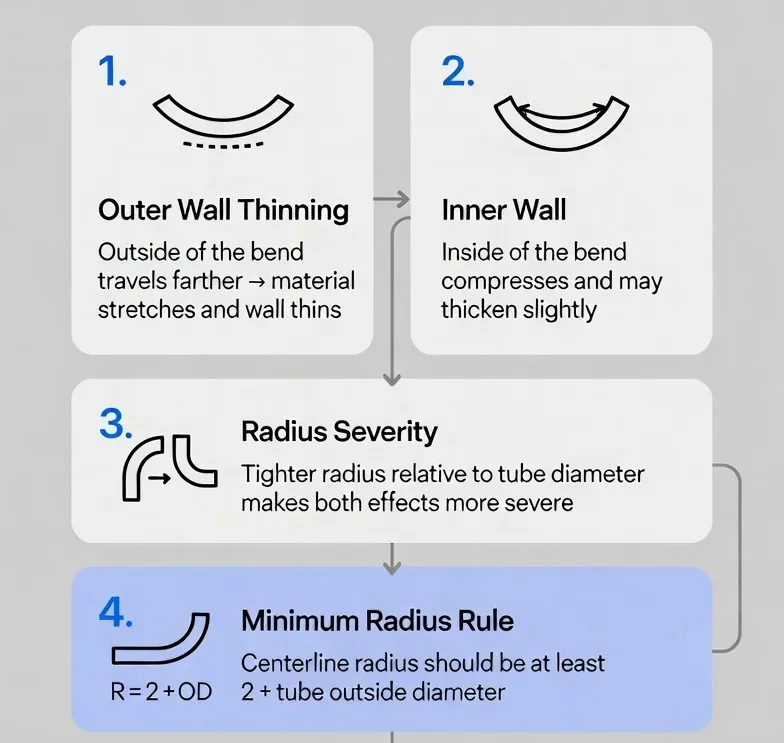




Construction
Decisions
1.
Tube Bundle Design
Bend radius, pass arrangement, baffle spacing and unsupported span. The geometry that decides how much surface fits in the shell and whether the bundle survives flow-induced vibration.
2.
Tubesheets & Joints
One tubesheet is the U-tube's defining feature and its single most critical joint. Rolled, seal-welded, strength-welded, or a double tubesheet with a vented interspace.
3.
Materials & Finishes
304L and 316L cover most duty. Duplex, Alloy 20, Hastelloy, AL-6XN, titanium and copper-nickel exist for the services that eat stainless, and the U-bend affects which of them you can use.
4.
Codes & Standards
ASME Section VIII, TEMA class R, C or B, 3-A for sanitary work, ASME BPE for pharmaceutical, plus API 660, PED and Canadian CRN when the site requires them.
Specify the Detail, Not Just the Duty
A U-tube exchanger is rated from it's duty, but it is bought on its construction detail: the bend radius and how it was formed, the tube-to-tubesheet joint, the baffle pitch, the alloy pairing between bundle and shell, the surface finish and the code or standard the paperwork has to satisfy. Two units that carry the same thermal rating can be years apart in service life because of those choices. Start with the bundle design section for the geometry, move to tubesheets and joints for where leaks start, materials and finishes for what the fluids demand, and codes and standards for what the inspector and the auditor will ask for.
Call and talk it through with an engineer: 1-805-484-2992.