
1-805-484-2992
Quotes - Engineering - SalesReflux & Overhead U-Tube Condensers
Where the Condenser Is Part of the Separation
On a column overhead the condenser is not a utility. It is part of the separation, and how tightly it controls the condensing curve decides product composition as much as the trays below it do.
An overhead condenser takes vapor leaving the top of a distillation column, fractionator, stripper or absorber and returns part of it as reflux. A total condenser condenses everything and sends liquid to a reflux drum. A partial condenser returns liquid and passes vapor product on, which makes it a separation stage in its own right.
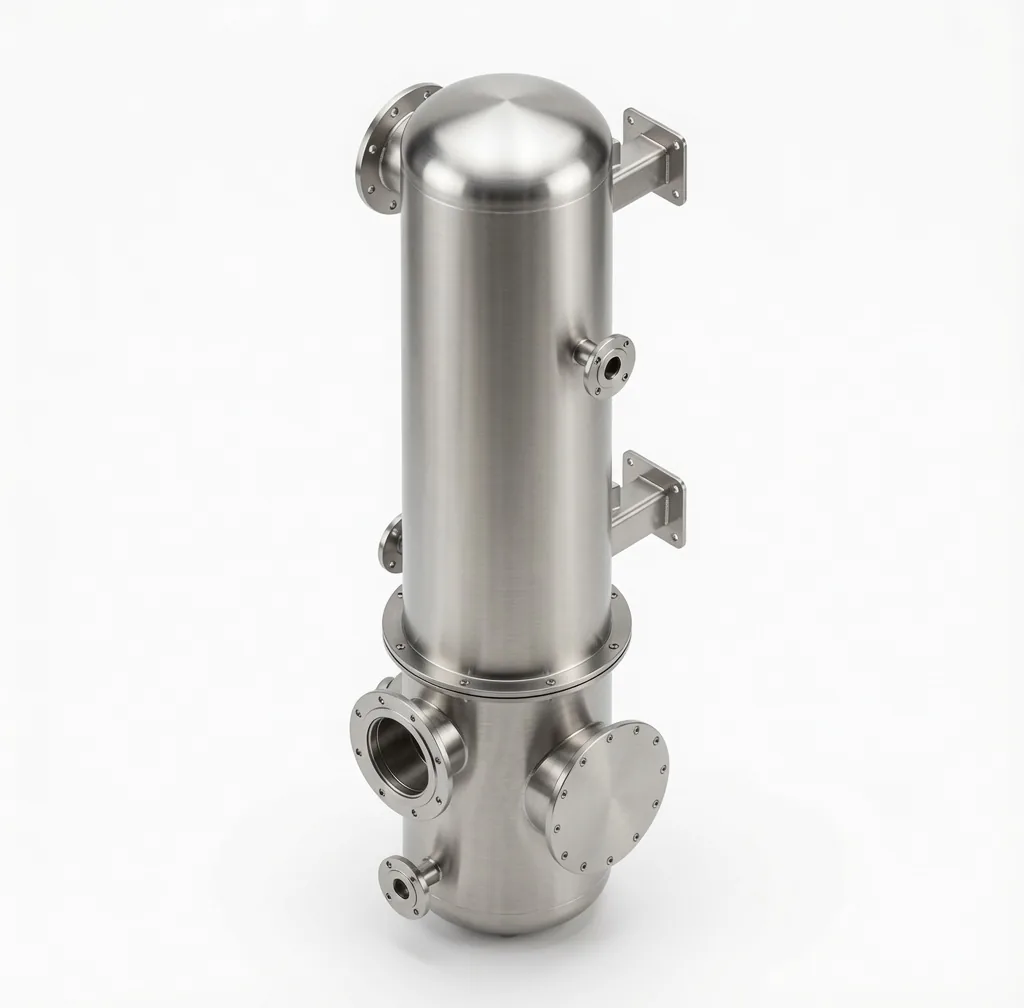
Knock-back and dephlegmator service. Mounting the condenser vertically on the column lets condensate run back down against the rising vapor. That countercurrent contact performs a genuine separation stage inside the exchanger, enriching the vapor that passes through. It is the most demanding arrangement thermally and the one where U-tube construction earns its place, because the temperature profile through the unit is steep and the duty cycles with the column.
Pressure drop costs separation. Whatever is lost across the overhead system raises column pressure, and column pressure changes relative volatility and sets bottoms temperature. On a vacuum tower protecting a heat-sensitive bottoms product that link is the binding constraint. Even at moderate pressure, overhead pressure drop costs reboiler duty. This is why low pressure drop arrangements dominate column service and why an exchanger chosen purely on surface area per dollar can quietly cost throughput or purity.
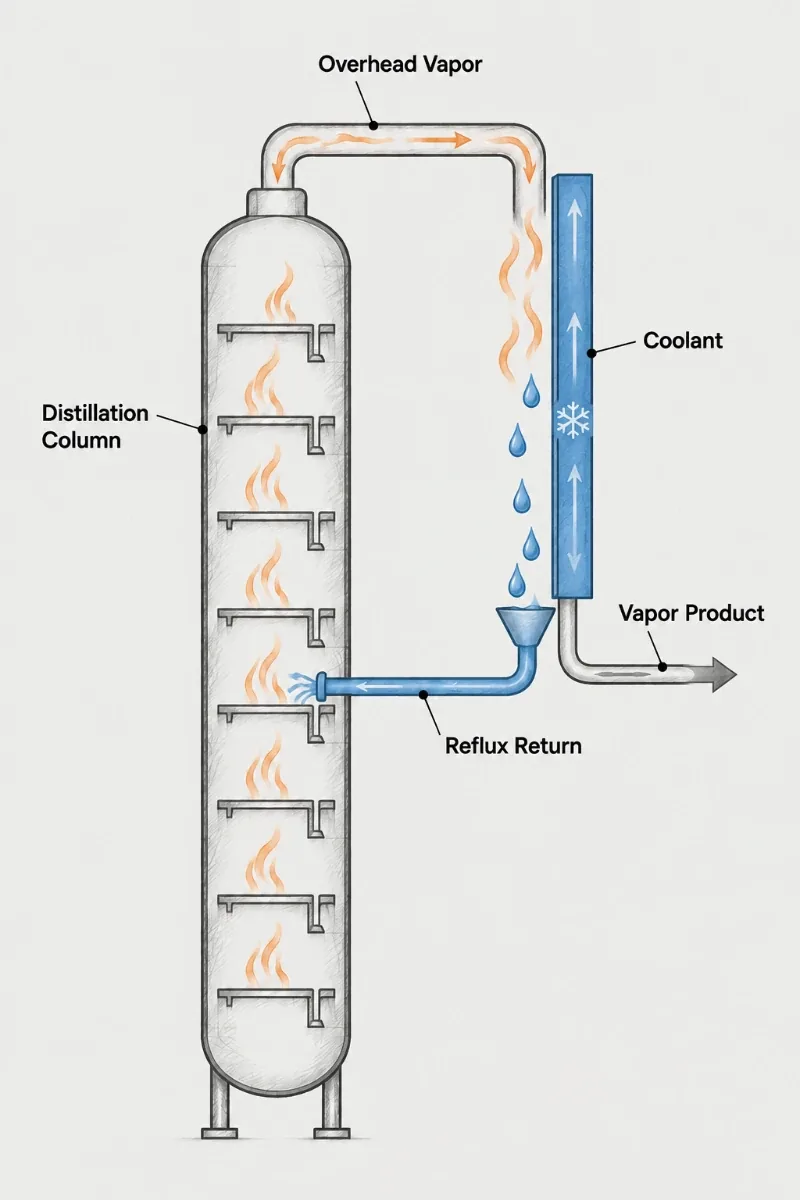
Vertical mounting lets condensate run back against rising vapor, which adds a separation stage. It also settles venting, because the high point is unambiguous.
Request a QuoteReflux & Column Overhead
Design Notes
Fouling concentrates at the cold end. Whatever is marginally soluble in the overhead becomes insoluble as the stream cools. Polymer-forming components cross-link, salts precipitate as water condenses, and heavy ends drop out. Because this happens preferentially where the temperature is lowest, fouling is rarely uniform through the bundle and it concentrates where it does most damage to the approach.
Overhead corrosion is a chemistry problem before it is a metallurgy problem. The classic case is aqueous condensation at the dew point concentrating whatever acid is present into a small volume of very aggressive water. The bulk vapor analysis can look benign while the first droplets of condensate are severely corrosive, and chloride concentration in that film is what puts austenitic stainless at risk of pitting and stress-corrosion cracking regardless of the bulk figure. On a U-bundle the residual stress at the bend makes that risk concrete.
Turndown changes venting behavior. At low vapor rates velocities fall and noncondensables can accumulate where they were previously swept along. A condenser that behaves well at design rate can misbehave at half rate for reasons that have nothing to do with surface area, so the operating envelope matters more here than on utility duty.
Related pages: vapor condensing, vertical mounting, BKU kettle reboilers and duplex and high alloys.
Column Service Answers
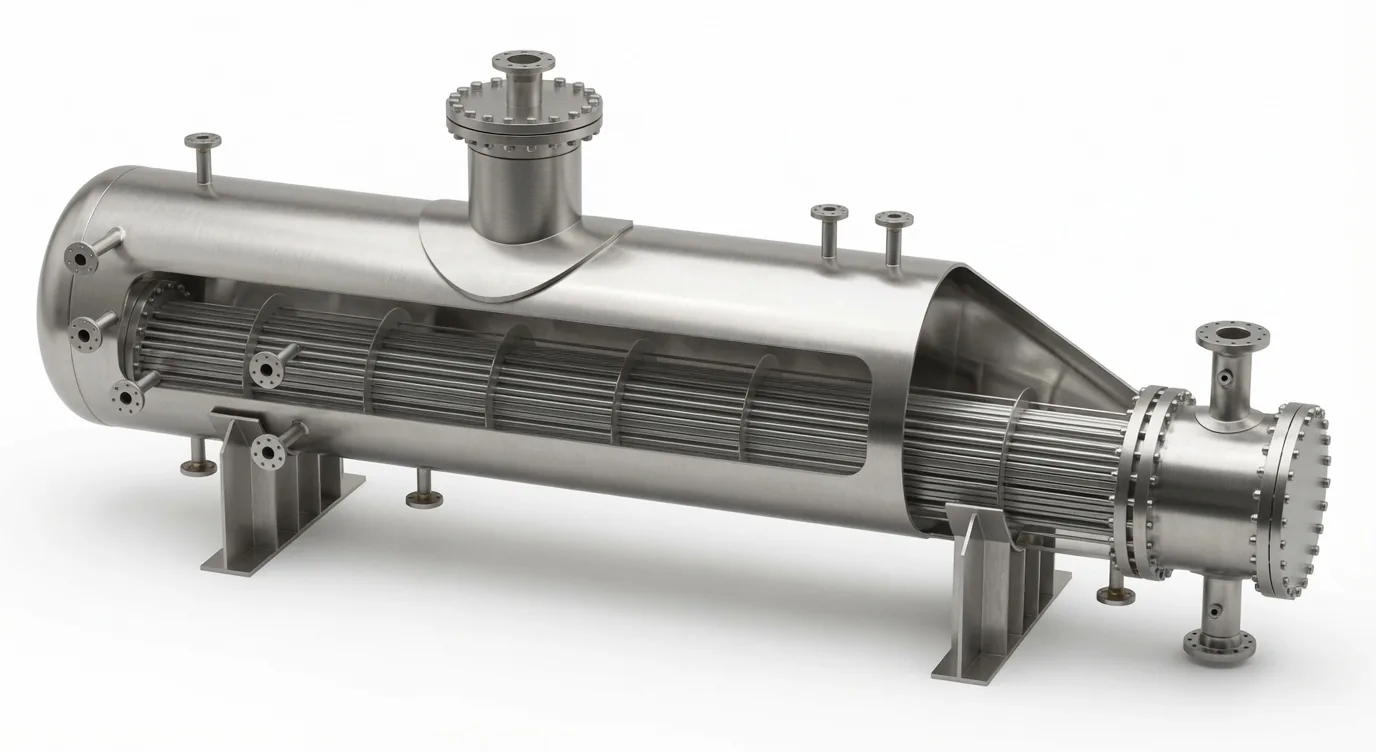
As little as the reflux drum and pump allow, typically only enough to keep the pump from cavitating. Every degree of subcooling in the reflux is heat the top tray must put back by condensing more vapor internally, which raises the internal reflux and the reboiler duty behind it while the column runs away from the reflux ratio it was rated at. On a shell-side condensing U-tube unit, subcooling creeps in when condensate pools against the bottom tubes, so the drain nozzle is sized and located to hold the level below the bundle. If the process genuinely needs cold reflux, specify a separate subcooling section rather than letting it happen uncontrolled in the condenser.
Yes, and for most column overheads it should, because vapor volumes are large and shell-side pressure drop can be held low with wide baffle spacing or none at all. Tube-side condensing is reserved for vertical knock-back units where condensate must run down the bore against rising vapor. Shell-side condensing also puts any polymer or salt on the outside of the tubes, where the bundle pulls and the surface is reachable, while tube-side deposits cannot be rodded past the bend. Chloride-bearing overheads lean toward shell-side condensing with cooling water in the tubes.
Column pressure is held by changing how much condensing surface is active, so the condenser is the control element. Flooding the bottom tubes with condensate removes surface and raises pressure; draining them lowers it. A hot-vapor bypass does the same job by warming the reflux drum surface. Either scheme needs the condenser rated with the control range in mind, because a unit sized exactly to design duty has no surface to give up. State the turndown ratio and the control method on the inquiry so the bundle carries the margin and the drain nozzle elevation matches the level the controller will hold.
Tower water whenever the overhead dew point sits comfortably above the warmest cooling water supply of the year. Refrigerated coolant costs several times more per BTU removed and is justified only when the overhead is light enough that water cannot reach the condensing temperture. One trap: a refrigerated condenser on a water-sensitive overhead can run the tube wall below the water dew point, so water condenses first and concentrates acid exactly where you least want it. Rate the cold-end wall temperature, not just the outlet, and choose the alloy accordingly.
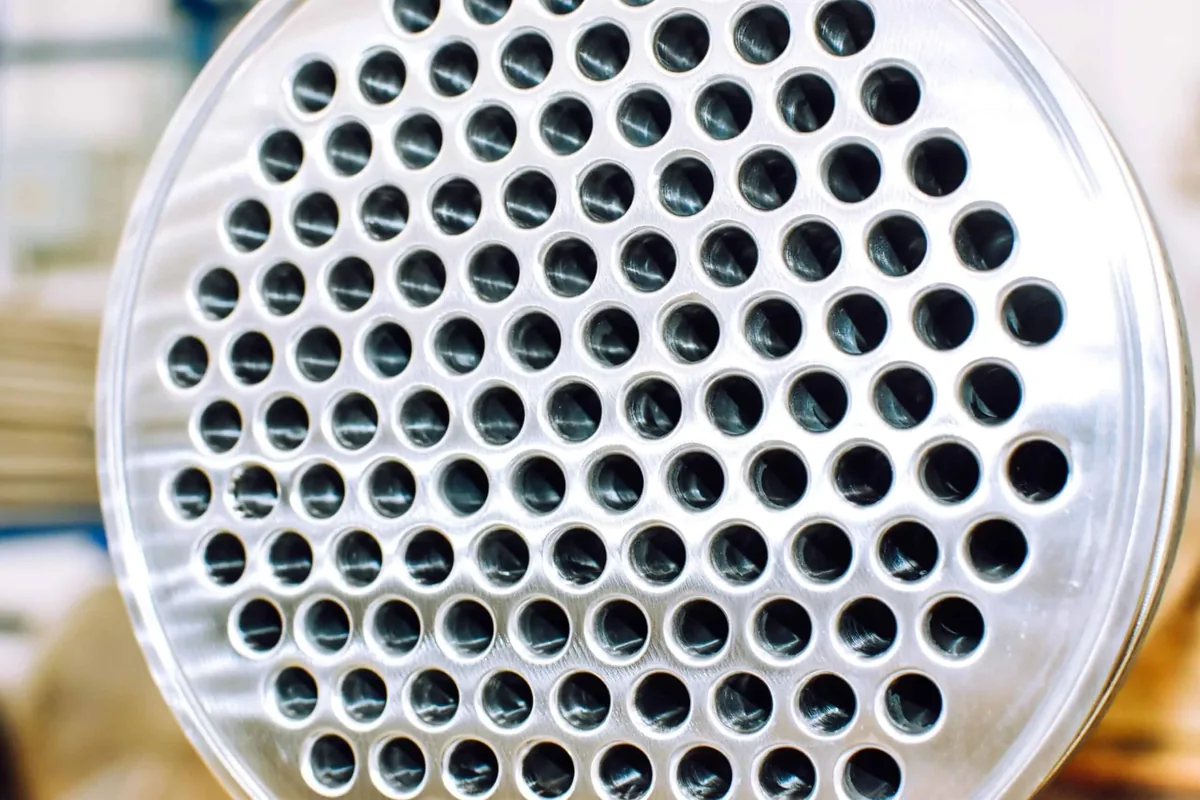
It raises the threshold but does not remove the risk. Stress relief takes out the residual tensile stress in the bend that chloride stress-corrosion cracking feeds on, which is why bends on alloy bundles are stress relieved as standard. Austenitic stainless can still crack once a chloride-bearing condensate film forms on a hot wall, so an overhead with any chloride carry-over normally moves to duplex, and to titanium when the chloride is high. Send the overhead analysis with chloride stated separately from the bulk; a bundle selected on the bulk number is the one that comes back cracked at the bend.