1-805-484-2992
Quotes - Engineering - SalesReplacement U-Tube Bundles
Matching an Existing Shell
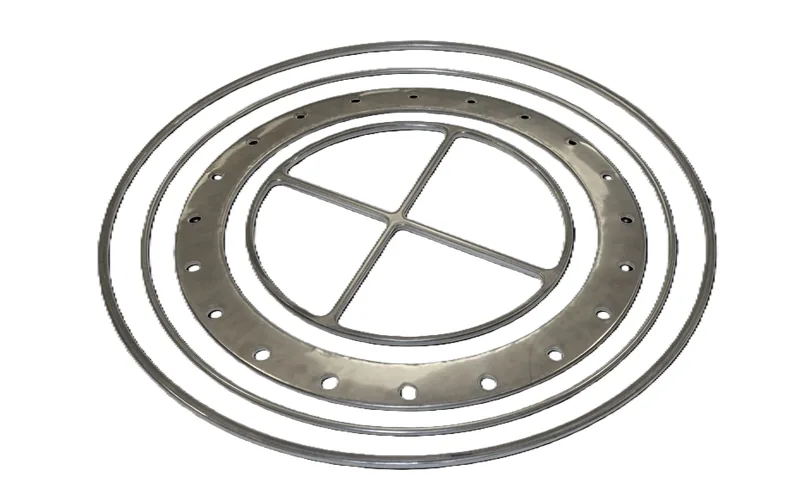
A bundle that fits is worth more than a bundle that is merely equivalent. Nozzle geometry, tubesheet thickness, bolt circle and gasket detail all have to match, and getting them right is most of the job.
Replacing a bundle is a dimensional exercise before it is a thermal one. The new assembly has to seat in the same shell, seal against the same faces, and clear the same nozzles. Once that is settled, the tube material and count can be reconsidered on their merits.
Stock sanitary bundles. Common sizes are held in 304L and 316L with a polished finish and O-ring or PTFE gasket sealing, which covers a large share of standard sanitary steam-to-liquid exchangers.
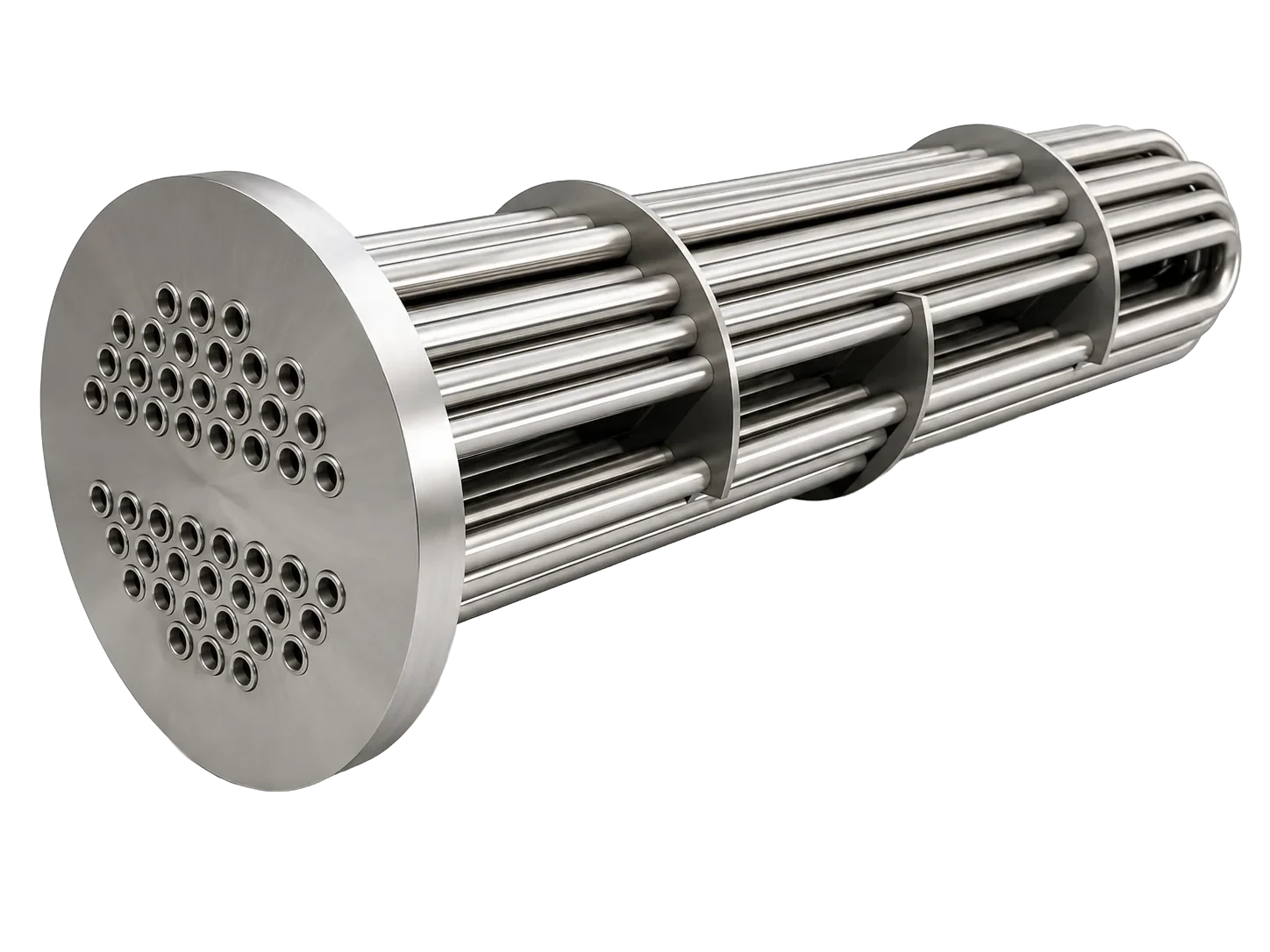
| PRODUCT | STYLE | TEMA TYPE | BUNDLE |
| U-Tube Heat Exchanger | U-Tube, single tubesheet | BEU / AEU / BKU | Removable |
Typical Construction
- Stock sizes: Common sanitary diameters and lengths held in inventory
- Stock materials: 304L and 316L stainless steel
- Stock finish: Polished product contact surfaces
- Sealing: O-ring or PTFE gasket, supplied with the bundle
- Custom builds: Matched to existing shell geometry
- Source data: Drawings, U-1 data report, or nameplate plus field measurements
- Alloy upgrades: 304L to 316L, duplex, high alloys or titanium
- Tube joints: Rolled, roll-plus-seal-weld or strength welded to match or improve
- Testing: Hydrostatic test with documented records
- Codes: ASME Section VIII where the original was code stamped
Replacement U-Tube Bundles
Built to match. Everything else is fabricated to the existing shell. With drawings or a U-1 form this is straightforward. Without them, a nameplate photograph and a set of field measurements is normally enough to reconstruct the geometry.
Upgrade while you are there. A replacement is the cheapest opportunity to change tube alloy, adjust tube gauge, or correct a pass arrangement that never suited the duty. The fit stays identical; the exchanger gets better.
What to Measure If Nothing Survives
Shell inside diameter and overall length. Tubesheet outside diameter, thickness, bolt circle and hole pattern. Tube outside diameter, wall thickness, count, pitch and layout angle. Nozzle sizes, ratings and locations. Baffle spacing if the old bundle can be examined. Gasket dimensions and type.
That list looks long and takes about an hour with a tape and a caliper. Photographs of the tubesheet face and the withdrawn bundle help considerably, and we will happily talk it through on the phone while someone is standing at the equipment.
Fit Problems That Show Up at Installation
Three recur. Gasket thickness that differs from the original, which changes the compressed stack height and the bolt load. Baffle-to-shell clearance that was generous on the original and tight on the replacement, or the reverse, which changes shell-side bypass and therefore performence. And nozzle projection that interferes with insulation or adjacent pipework.
All three are avoidable by measuring rather than assuming, which is why we would rather ask a few extra questions at quotation than solve them on site.
Matching the Existing Shell
Yes; a replacement bundle is built to the shell's inside diameter, tubesheet bolt pattern and nozzle positions, and those are dimensions rather than a brand, so the original maker's name does not limit it. What does limit it is information: a bundle for a shell whose drawings are lost needs a field measurement visit or a careful set of photographs with a tape in frame. Nameplate ratings transfer to the new bundle, and where the original was code stamped the new bundle is built and tested so the shell keeps its registration. State whether the shell is stamped.
Measure the shell and the tubesheet instead; tube count, pitch and layout angle survive in the tubesheet holes long after the tubes have wasted, and the shell sets everything else. Tube wall thickness is the one figure corrosion erases, and it is chosen fresh from the design pressure rather than copied. Count the holes in one row, measure center-to-center between two adjacent holes, and note whether the rows run square or triangular to the pass partition. A photograph of the face with a ruler across it answers most of this.
Match the count and layout unless the duty has changed, because they fix the shell-side flow pattern the baffles were designed around; gauge can be changed as long as the code calculation holds. A heavier gauge on the same outside diameter gives extra years in a corroding service at a small loss of inside diameter, and it is the cheapest upgrade available. Dropping the innermost tubes to open a lane for a larger bend radius trades a little surface for a bundle that bends without excessive wall thinning. State the service history and the choice is made on the drawing.
Yes; every bundle is pressure tested on the tube side to the code test pressure for the original design pressure, with the bundle in the open so every tube joint is in view, and the test record ships with it. The shell-side test, which proves the bundle-to-shell seal, can only be made with the bundle in your shell, so plan a hydro at installation before the piping is reconnected. That is the test that catches a gasket at the wrong thickness, and it is cheaper done with a hand pump on the shell than discovered on the first hot start.
Related